

Lab-grown moissanite is the most practical ethical choice in fashion jewelry right now. It scores a Mohs hardness of ~9.25, costs significantly less than comparable mined diamonds, and arrives with a fully traceable origin because every jewelry-grade stone is grown in a lab. No mining. No conflict financing. No vague sourcing claims. Merijaan’s lifetime warranty and profit-to-makers model add a layer of accountability most jewelry brands skip entirely.
Why this matters for your next purchase:
- Style flexibility: intense fire and consistent lab quality work across bridal, everyday, and editorial looks
- Traceable origin: lab-grown means the supply chain is short, documented, and conflict-free
- Real affordability: the price gap frees budget for larger stones or finer settings
- Low maintenance: no surface coating to wear off; mild soap keeps it brilliant for years
Table of Contents
- What lab-grown moissanite actually is
- Why moissanite fits contemporary fashion so well
- The real environmental and social impact of choosing lab-grown
- Cost, durability, and what to expect at resale
- How to choose ethical lab-grown moissanite with confidence
- Lab-grown moissanite is gaining ground as a long-term style choice
- How to care for lab-grown moissanite without overcomplicating it
- Key Takeaways
- The case for building a jewelry brand around makers, not margins
- Merijaan’s moissanite jewelry: built for style, backed by ethics
What lab-grown moissanite actually is
Moissanite is silicon carbide (SiC) grown in controlled laboratory environments. Natural moissanite exists, but it is so rare that commercial supply has always been lab-grown. The process starts with a silicon carbide seed crystal, which grows under precise heat and pressure conditions, then gets cut and polished like any fine gem. The result is a stone with a fully traceable chain of custody from growth chamber to setting.
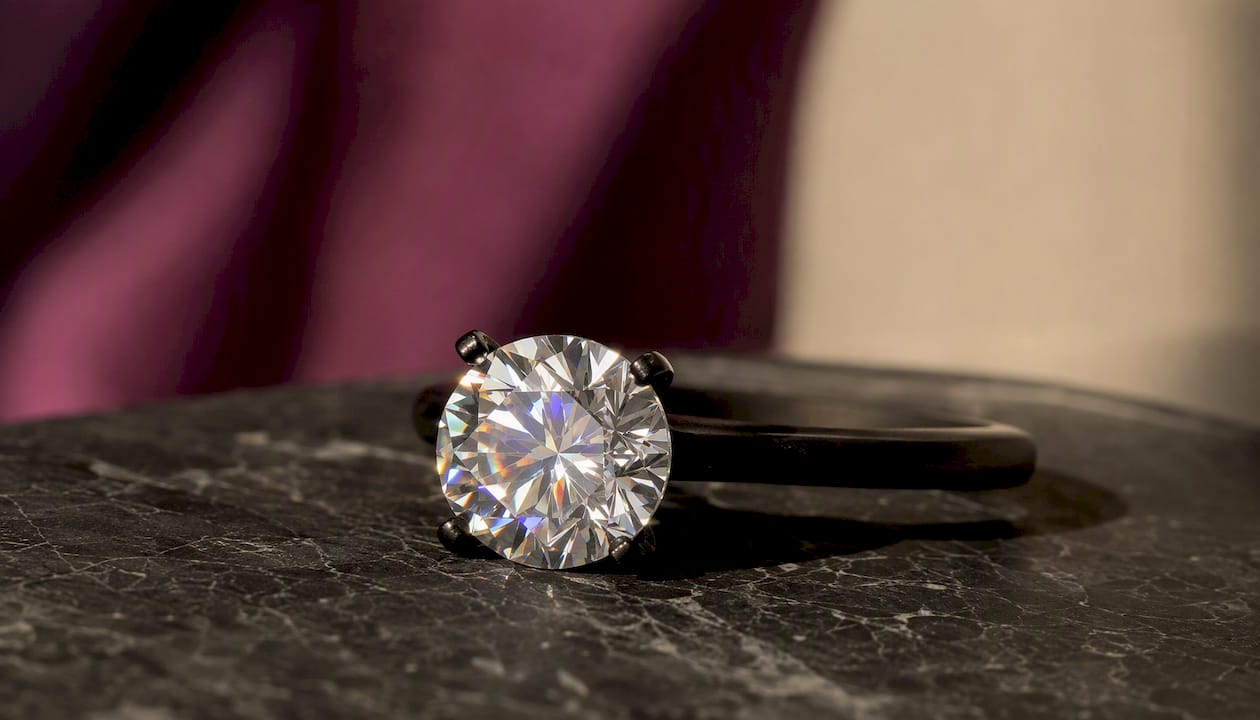
What makes moissanite genuinely interesting from a fashion standpoint is its optical behavior. It is birefringent, meaning it splits light into two rays, which produces the intense rainbow “fire” that distinguishes it visually from diamonds. Diamonds deliver cooler white-light brilliance; moissanite throws color. That difference is not a flaw. For fashion jewelry, it is often the point.
| Property | Moissanite | Notes |
|---|---|---|
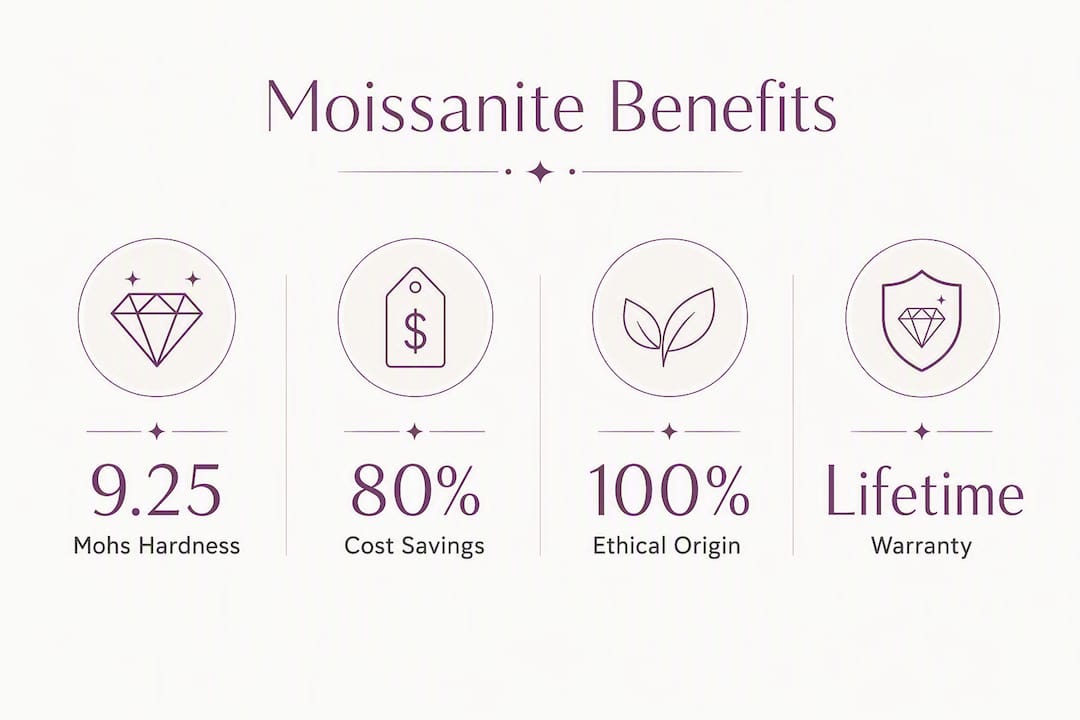
| Mohs hardness | ~9.25 | Highly scratch-resistant; suitable for daily wear |
| Refractive index | Higher than diamond | Produces stronger fire and colorful flashes |
| Color grades | Near-colorless to colorless | Lab consistency allows matched sets |
| Surface coating | None | Sparkle is intrinsic to the stone’s structure |
| Origin | 100% lab-grown | Fully traceable; no mining required |
Why moissanite fits contemporary fashion so well
The impact of ethical gems in fashion goes beyond the origin story. Moissanite’s price point changes what designers and buyers can actually do.
Style use-cases where moissanite outperforms mined alternatives:
- Bridal: a center stone two sizes larger than a diamond budget allows, without compromise on cut quality
- Everyday statement pieces: rings and pendants worn daily benefit from the 9.25 hardness rating
- Stacking and layering: lab consistency means matched stones for eternity bands and tennis bracelets, uniform in color and size
- Editorial and red-carpet looks: the intense fire photographs dramatically under studio lighting
- Cultural and occasion jewelry: ethical gems are reshaping how South Asian buyers approach occasion dressing, with traceability becoming a meaningful part of the story
Fashion buyers are also reallocating savings into finer metalwork. Rose gold and yellow gold amplify moissanite’s warm fire; platinum and white gold cool it toward a cleaner sparkle. That choice is now a real design decision, not a budget constraint.
Pro Tip: Choose a round brilliant or cushion cut to maximize fire in photos. If you prefer a subtler flash for everyday wear, an oval or elongated radiant cut softens the rainbow effect while keeping the stone’s brilliance high.
The real environmental and social impact of choosing lab-grown
Lab-created moissanite avoids land disruption, large-scale waste, and the complex supply chains tied to extraction. No open-pit mining. No displacement of ecosystems. No risk of conflict financing embedded in the supply chain. The controlled production process also supports traceability in a way that bulk mined supply simply cannot match.
Buyers who prioritize ethical sourcing often value traceability and warranty language as highly as the origin claim itself. Clear lab reports and transparent return policies are what convert a skeptical shopper into a confident one. A brand that cannot show you documentation is a brand worth questioning.
Buyer checklist for verifying ethical claims:
| What to verify | What to ask |
|---|---|
| Lab origin | “Can you provide a lab report or certificate for this stone?” |
| Traceability | “Where is this stone grown, and how is the chain of custody documented?” |
| Energy sourcing | “Does your lab use renewable energy or offset production emissions?” |
| Warranty | “Is there a lifetime warranty, and what does it cover?” |
| Profit model | “How does your business model support the people who make the jewelry?” |
Merijaan publishes its profit-to-makers commitment openly: 100% of profits go back to the people who craft the jewelry. That is a structural ethical claim, not a marketing line, and it is the kind of conscious luxury standard worth holding other brands to.
Cost, durability, and what to expect at resale
The 80–90% price gap versus comparable mined diamonds is the most immediate practical fact. On a fixed budget, that gap means a noticeably larger center stone, a more intricate setting, or both. Fashion buyers increasingly use this strategically: upsize the stone or redirect savings into a designer metal.
Durability holds up in daily wear. At Mohs 9.25, moissanite resists scratching from almost everything a normal day throws at it. Its sparkle is inherent to the stone’s internal structure, not a coating, so there is nothing to wear off or re-apply. A soft brush, mild dish soap, and warm water every few weeks is genuinely all the maintenance required. Ultrasonic cleaners are generally safe for moissanite set in solid metal, though prong settings with very fine wires are better cleaned by hand.
Resale is a different story. The secondary market for moissanite is limited; prices do not hold the way diamonds do. Buy moissanite for what it delivers right now: beauty, wearability, and a clear conscience. It is not a financial instrument.
How to choose ethical lab-grown moissanite with confidence
Numbered buyer checklist:
- Verify lab origin. Ask for a lab report or grading certificate that confirms the stone is lab-grown moissanite, not a simulant.
- Check cut and color grade. Near-colorless (equivalent to G–H diamond range) is the sweet spot for most settings; colorless grades cost more with minimal visible difference.
- Inspect the metal and setting. Sterling silver, 925 silver, and solid gold all hold moissanite securely; avoid plated-only settings for daily wear pieces.
- Confirm the warranty and return policy. A lifetime warranty signals confidence in the product. Unlimited exchanges for members, as Merijaan offers, go further.
- Read the ethical statement. Look for specific claims about profit distribution, maker welfare, and supply-chain transparency, not just “ethically sourced.”
Questions to ask before you buy:
- “What lab report comes with this stone, and can I see it before purchase?”
- “What does your lifetime warranty actually cover?”
- “How are the people who make this jewelry compensated?”
- “Can I exchange or return this if the fit or style isn’t right?”
Red flags:
- Vague phrases like “responsibly sourced” with no documentation
- No lab report, certificate, or grading information available
- No stated return or exchange policy
- Warranty language that excludes normal wear
- Pressure to buy before you have reviewed the details
Pro Tip: Request product photos in both natural daylight and indoor lighting before buying online. Moissanite’s fire reads very differently under warm incandescent light versus cool daylight, and knowing which look you prefer helps you choose the right cut and metal tone.
Lab-grown moissanite is gaining ground as a long-term style choice
Celebrities and editors are increasingly choosing ethical jewelry not as a compromise but as a deliberate style statement. That shift is moving moissanite from “diamond alternative” to a category with its own aesthetic identity. The intense fire, the consistent lab quality, and the ethical sourcing story are all part of the appeal now, not just the price.
Trend-wise, the move toward sustainable gems in fashion is accelerating. Stacking rings, mixed-metal layering, and statement pendants in moissanite are showing up in editorial shoots and on social media in ways that would have been unusual five years ago. The design vocabulary around lab-grown stones is maturing fast.
How to care for lab-grown moissanite without overcomplicating it
Moissanite does not need special treatment. Its brilliance is structural, so the goal is simply keeping the surface clean and the setting secure.
Weekly routine: Soak the piece for a few minutes in warm water with a drop of mild dish soap. Use a soft-bristle toothbrush to gently work around the prongs and under the stone. Rinse thoroughly and pat dry with a lint-free cloth.
What to avoid: Harsh chemicals, chlorine bleach, and abrasive cleaners can damage metal settings even if they leave the stone itself unaffected. Remove moissanite jewelry before swimming in chlorinated pools or applying chemical-based beauty products.
Storage: Keep pieces in a soft pouch or lined box, separated from harder stones. Moissanite at 9.25 Mohs can scratch softer gems if stored together loosely.
Setting checks: Once or twice a year, examine prongs under good light or take the piece to a local jeweler for a quick inspection. A loose prong caught early costs almost nothing to fix.
Key Takeaways
Lab-grown moissanite delivers ethical sourcing, near-diamond durability, and strong style versatility at a fraction of the cost of mined stones, making it the most practical choice for fashion-forward, eco-conscious buyers.
| Point | Details |
|---|---|
| Ethical origin | Lab-grown moissanite avoids mining entirely, eliminating conflict risk and land disruption. |
| Durability for daily wear | Mohs hardness ~9.25 means high scratch resistance and no surface coating to maintain. |
| Affordability advantage | Moissanite typically costs about 80–90% less than diamonds of comparable visual size and quality, freeing budget for better settings or larger stones. |
| Resale expectations | Secondary-market value is limited; buy for present beauty and wearability, not appreciation. |
| Merijaan’s offer | Merijaan sells lab-grown moissanite rings, necklaces, bracelets, and stacking sets with a lifetime warranty and 100% of profits returned to makers. |
The case for building a jewelry brand around makers, not margins
The conventional wisdom in ethical jewelry is that you pay a premium for doing the right thing. Merijaan’s model flips that assumption. Lab-grown moissanite already costs a fraction of mined diamonds, so the savings do not have to disappear into a retailer’s margin. Returning 100% of profits to the people who actually make the jewelry is a structural choice, not a marketing gesture, and it changes what “ethical” means in practice.
What most buyers underestimate is how much the warranty and exchange policy signal about a brand’s confidence in its own product. A lifetime warranty on a lab-grown stone is easy to offer when the stone genuinely holds up. Merijaan offers it because the material earns it. That combination, traceable origin plus real accountability plus a business model that benefits makers, is what separates a brand worth trusting from one that just uses the right vocabulary.
Merijaan’s moissanite jewelry: built for style, backed by ethics
Every piece Merijaan makes starts with lab-grown moissanite and ends with a lifetime warranty. The collection covers women’s rings, necklaces, bracelets, and stacking sets, all designed for buyers who want genuine sparkle without the ethical compromises of mined stones. Club members get unlimited exchanges, so your style can evolve without waste. And because 100% of profits go back to the makers, every purchase directly supports the craftspeople behind the piece.
The price point makes it possible to own multiple pieces, stack confidently, and wear fine jewelry daily rather than saving it for occasions. Browse the full ring collection or explore the necklace range to find your next piece.
Recommended
- Why Moissanite Is the Future of Ethical Jewelry in 2026 – The Meri Jaan
- Eco-Friendly Elegance: Why Moissanite Is the Sustainable Jewelry Choice – The Meri Jaan
- Why Meri Jaan Uses Moissanite | Ethical, Sustainable Luxury – The Meri Jaan
- What Is Ethical Jewelry? A Guide for Conscious Shoppers – The Meri Jaan

