

Yes, you can negotiate jewelry prices online, and the best single move is to lead with a documented price comparison and ask for a specific concession. Online retailers typically offer modest discounts on fixed-price SKUs, while small independent e-tailers may offer somewhat larger concessions with the right evidence and escalation. This gap is smaller than in-store, where somewhat higher discounts can be achievable, but add-ons like free resizing and extended warranties often close the difference.
The fastest moves, in order:
- Pull comparable listings for the exact SKU or GIA report number and screenshot them with timestamps.
- Open a live chat and ask for a price match or cart discount before you check out.
- If the sticker price won’t move, ask for free resizing, a warranty upgrade, or expedited shipping.
- Time your outreach for mid-week, end of month, or the July–September slow season.
- For purchases over $2,000, escalate to a manager, who has more pricing authority than front-line chat agents.
Table of Contents
- How does online negotiation differ from in-store bargaining?
- What should you research before making an offer?
- Which online negotiation tactics actually work?
- Scripts you can copy and paste right now
- When is the best time to negotiate jewelry online?
- What red flags should stop you from buying?
- What savings can you realistically expect?
- How does buying from a DTC lab-grown brand change the math?
- Key Takeaways
- The part most buyers get wrong
- Why Merijaan is worth checking before you negotiate elsewhere
- Useful sources for further research
How does online negotiation differ from in-store bargaining?
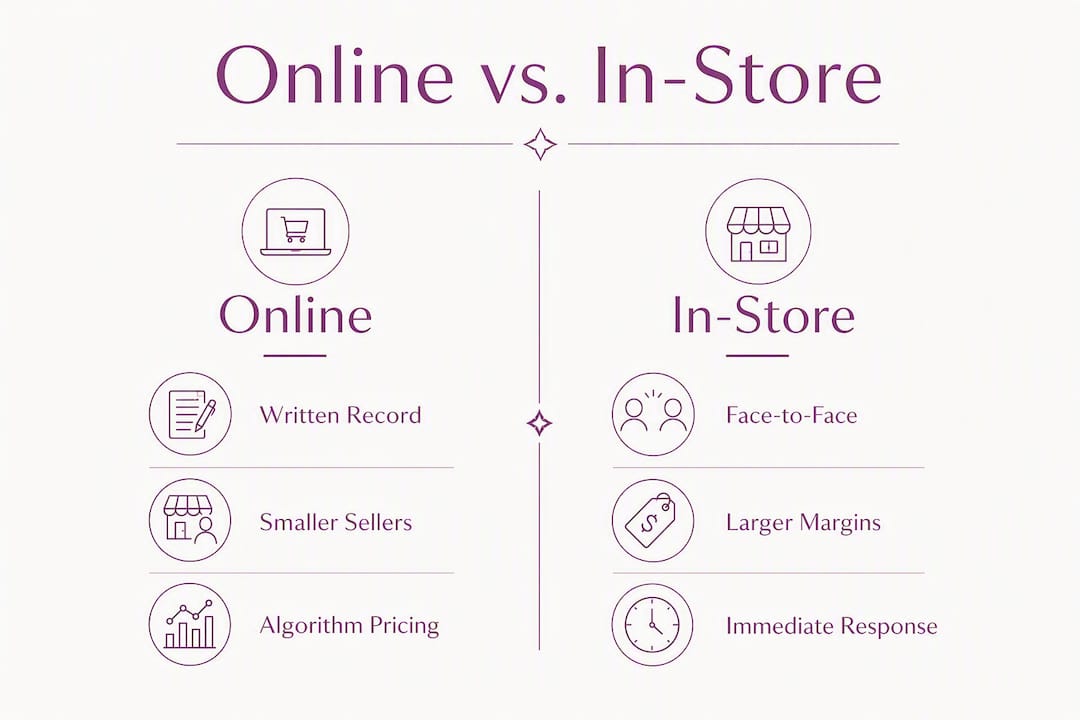
Walk into a traditional jewelry store and the salesperson has a lot of room to work with. Margins are built into the price, the manager is twenty feet away, and your body language signals how serious you are. Online, most of those levers disappear.
Large e-commerce retailers run algorithmic pricing tied to publicly visible SKUs. Their margins are thinner because they carry less overhead, and their prices are indexed against competitors in real time. That makes a 20% discount nearly impossible to get from a major online chain. What you can get is a price match, a cart-abandonment discount (many retailers trigger these automatically after 24–48 hours), or a bundle deal when you buy multiple pieces.
Where online negotiation genuinely wins is with small independent e-tailers and direct-to-consumer (DTC) brands. These sellers set their own prices, often have a human on the other end of the chat, and can make judgment calls. A well-crafted email with three comparable listings attached lands differently with an independent seller than it does with a big-box retailer’s automated support queue.
The other online advantage: everything is in writing. A chat transcript or email thread is a record of every agreed term, which protects you in a way that a verbal in-store conversation does not.
What should you research before making an offer?
Negotiating without preparation is the most common mistake buyers make. Demonstrating knowledge of the 4Cs and current market rates signals to a seller that you are a serious buyer, not someone fishing for a random discount.
Build your negotiation file before you send a single message:
- Exact SKU or GIA report number. For diamonds, request the GIA report number upfront and verify it at GIA’s online report check. Certified stones are directly comparable across sellers, which is your strongest pricing leverage.
- Three to five comparable listings. Find the same stone or a closely matched one (same cut, color, clarity, carat) at other reputable online sellers. Screenshot each listing with the URL and date visible.
- Seller return and warranty policy. A 30-day return window with no restocking fee is the baseline to expect from a trustworthy seller. Confirm it before you negotiate, not after.
- Recent sale prices. If the item went on sale last month, that sale price is your anchor.
- Setting and metal details. Setting style directly affects retail pricing, and knowing what you are paying for each component strengthens your case.
How to set a fair target price
Average the prices from your comparable listings. That number is your market benchmark. Set your opening offer 8–10% below it, and decide your walk-away price before you start. Knowing your walk-away in advance prevents you from agreeing to a deal that felt like a win in the moment but wasn’t.

For diamonds specifically, the 4Cs (cut, color, clarity, and carat) are the universal grading language. A GIA or AGS certificate converts those grades into verifiable, comparable data points. Without certification, you are negotiating blind.
Pro Tip: Save every screenshot as a PDF with the date in the filename (e.g., “competitor-listing-june2026.pdf”). Sellers take evidence more seriously when it looks organized, and you will have a clean paper trail if a dispute arises.
Which online negotiation tactics actually work?
Ranked from lowest effort to highest leverage, these are the tactics worth your time.
| Tactic | Best For | Effort | Likely Outcome |
|---|---|---|---|
| Promo/coupon stacking | Any purchase | Low | 5–15% off sticker |
| Abandoned-cart discount | Under $500 | Low | 5–10% auto-triggered |
| Live chat price match | $200–$1,000 | Medium | 0–5% or add-ons |
| Email with evidence | $500–$2,000 | Medium | 5–10% or free services |
| Phone escalation to manager | Over $2,000 | High | 10–15% or significant add-ons |
| Bundle negotiation | Multiple pieces | High | 10–20% across bundle |
Promo and coupon stacking is the easiest win. Before you open a chat, search “[retailer name] promo code” and check browser extensions like Honey or Capital One Shopping. Stack a site-wide discount with a newsletter signup offer when the retailer allows it.
Abandoned-cart discounts require patience but almost no effort. Add the item to your cart, create an account, and leave. Many online retailers send a discount code within 24–48 hours. This works best on purchases under $500 where the retailer’s automation is most aggressive.
Live chat price match is your go-to for mid-range purchases. Open the chat, share your comparable listings, and ask directly: “I found this same stone graded identically at [competitor] for $X less. Can you match that price?” Price-match requests and abandoned-cart discounts are two of the most effective online levers, even when the percentage savings are modest.

Email with evidence works better than chat for purchases over $500 because it gives the seller time to review your comparables and escalate internally without the pressure of a live conversation. Attach your screenshots, state your target price, and make clear you are ready to buy today.
Phone escalation is worth the call for anything over $2,000. Sales staff typically have narrow pricing authority; managers can authorize larger concessions. Ask for the manager by name if you have spoken before, or simply say you would like to discuss a purchase with someone who has pricing flexibility.
Pro Tip: Combine tactics sequentially rather than all at once. Start with a promo code, then try a price-match chat, then escalate to email or phone. Each step signals increasing seriousness without burning your leverage early.
Scripts you can copy and paste right now
Live chat: cart discount or price match
Keep it short. One ask, one alternative. Chat agents respond better to a clear, easy-to-approve request than a long negotiation pitch.
Email: price match with evidence
Subject: Price match request — [Item Name/SKU]
Phone script: escalation to manager
- Open with: “I’m calling about [item name/SKU] and I’m ready to purchase today. I have some comparable pricing I’d like to discuss.”
- If the rep can’t help: “I understand. Could I speak with someone who has pricing flexibility? I want to make sure we can work something out before I decide.”
- With the manager: “I’ve done some research and found comparable pieces at $[X]. I’d like to purchase from you, but I need the price to be closer to $[target]. What can you do?”
- If price is firm: “I understand. In that case, could you include [free resizing / extended warranty / gift packaging] to make this work?”
Tone matters more than the exact words. Using evidence and readiness-to-buy signals consistently outperforms aggressive bargaining. Never reveal your maximum budget. Never say “I can’t go higher than $X” — that hands the seller your ceiling.
Pro Tip: If the first rep declines, don’t argue. Say “I appreciate that. Could you check with your manager or flag this for review?” Silence after that question is your friend. Let them fill it.
When is the best time to negotiate jewelry online?
Timing is a strategic variable, not a nice-to-have. Mid-week, end-of-month, and slow seasons like July through September are when retailers are most motivated to move inventory and hit quotas.
The best negotiation windows: Tuesday through Thursday, the last three business days of any month, and the post-holiday lull from late January through March. Avoid the two weeks before Valentine’s Day, Mother’s Day, and the winter holidays — sellers have no incentive to discount when demand is high.
For abandoned-cart discounts, wait at least 24 hours before returning. Some retailers trigger a second, deeper discount at the 48-hour mark. Check your email before going back to the cart.
Follow-up cadence: Send your initial message, then wait 48–72 hours before a polite second message. After that, one final note stating you are considering other options. Three touches is the ceiling. More than that shifts you from persistent to annoying, and sellers remember.
Pro Tip: For email negotiations, send your first message Tuesday morning. Sellers are more responsive mid-week, and you give them time to escalate internally before the weekend.
What red flags should stop you from buying?
A good price means nothing if the seller is unreliable. These are the hard stops.
Walk away if you see:
- No GIA, AGS, or equivalent certification for a diamond or fine gemstone.
- A return window shorter than 14 days, or any restocking fee on an unworn item.
- Pressure language like “only 2 left” or “price expires in 10 minutes” on a listing that has been up for months.
- No secure checkout (look for HTTPS and a recognized payment processor).
- No physical address, no phone number, and no verifiable business history.
- Product photos that look stock or watermarked, with no real-item images.
Before you agree to any negotiated deal, confirm in writing:
- The GIA or AGS report number (verify it at GIA’s report check tool).
- The full return and warranty policy, not just a link to a page that could change.
- The complete price breakdown: item cost, taxes, shipping, and any handling fees.
- The agreed concessions (free resizing, warranty extension) stated explicitly in the order confirmation or email thread.
Chubb’s buyer guidance recommends researching the seller’s reputation and reading buyer reviews before committing. Cross-check the seller on the Better Business Bureau and look for patterns in negative reviews, not just the star rating. A seller with a 4.2-star average but a cluster of complaints about missing certifications is a different risk than one with occasional shipping delays.
For a practical checklist of quality signals in affordable jewelry, verify metal stamps, stone settings, and finish quality from the product photos before you negotiate.
What savings can you realistically expect?
Set your expectations before you start, or you will either leave money on the table or waste time chasing discounts that don’t exist.
| Channel | Typical Discount | Best Lever | Time to Resolution |
|---|---|---|---|
| Large online chain | 0–5% | Promo codes, price match | Same day |
| Small independent e-tailer | 5–15% | Email with evidence, escalation | 1–5 days |
| Traditional in-store jeweler | 10–20% | In-person, manager, timing | Same day |
| DTC lab-grown brand | 0–5% (already lower base price) | Add-ons, warranty, bundle | Same day |
The numbers above reflect what buyers with solid preparation and good timing can realistically achieve. Without evidence or a clear ask, expect the lower end of each range.
Purchase size scales the outcome. A $500 purchase might yield a $25–$50 discount or a free resizing. A $3,000 purchase justifies a phone call to a manager and could yield $200–$400 off or a meaningful warranty upgrade. Bundling two or three pieces in one order is one of the most underused levers online: sellers are more willing to discount when the total order value is higher.
A typical successful negotiation runs like this: Day 1, send the price-match email with evidence. Day 2–3, receive a response (or follow up). Day 3–5, agree on terms and complete the purchase. Escalations to managers add one to two days. Abandoned-cart discounts arrive within 24–48 hours automatically.
How does buying from a DTC lab-grown brand change the math?
The negotiation dynamic shifts entirely when you buy from a direct-to-consumer lab-grown brand. The markup structure is different from the start.
Traditional retail jewelry carries multiple layers of markup: manufacturer, wholesaler, and retailer. Each layer adds margin, which is also what gives in-store salespeople room to negotiate. DTC brands cut those layers out. Their posted prices are already closer to cost, which means the discount room is smaller, but the starting price is lower.
Lab-grown gemstones, including moissanite and lab-grown diamonds, usually cost 50–80% less than mined equivalents. That price difference changes what you should be negotiating for. Instead of chasing a percentage cut off an inflated retail price, you are evaluating whether the posted price is already fair, and then asking about warranty terms, return flexibility, and bundling.
Merijaan is a good example of this model. Their lab-grown moissanite pieces are priced with DTC margins, which means the sticker price reflects a lower markup than you would find at a traditional retailer. The negotiation conversation with a brand like Merijaan shifts from “can you lower the price?” to “what does the lifetime warranty cover?” and “can I bundle two pieces for a better rate?” Those are faster, lower-friction conversations that typically resolve the same day.
Pro Tip: When evaluating any DTC lab-grown seller, ask three specific questions before purchasing: What does the warranty cover and for how long? What is the return window and are there any fees? Can I verify the stone’s specifications in writing? A seller who answers all three clearly is worth buying from.
Key Takeaways
Online jewelry negotiation works best when you lead with documented price comparisons, ask for specific concessions, and time your outreach for off-peak periods when sellers are most motivated to close.
| Point | Details |
|---|---|
| Benchmark before you ask | Screenshot three comparable listings with URLs and dates before contacting any seller. |
| Realistic online savings | Large online chains yield 0–5%; small independent e-tailers can reach 5–15% with evidence. |
| Ask for add-ons when price is firm | Free resizing, warranty upgrades, and expedited shipping are often easier to get than a price cut. |
| Timing increases success | Mid-week, end-of-month, and July–September outreach reaches sellers when they are most motivated. |
| Merijaan as a low-friction option | Merijaan’s DTC lab-grown moissanite pricing starts lower, shifting the conversation to warranty and bundling rather than price cuts. |
The part most buyers get wrong
The conventional advice on jewelry negotiation focuses almost entirely on percentage discounts. Ask for 10% off, show a competitor price, walk away if they say no. That framework works reasonably well in a physical store. Online, it misses the point.
The buyers who consistently get the best outcomes online are not the ones who push hardest on price. They are the ones who understand what the seller can actually give. A large online retailer running algorithmic pricing cannot authorize a 15% discount through a chat window. Their agent does not have that authority, and no amount of persistence changes that. Pushing harder just ends the conversation.
What those same retailers can often do: apply a loyalty code, trigger a cart discount, throw in free shipping or gift packaging, or match a price from a verified competitor. Those concessions are within the agent’s authority, and asking for them specifically gets results.
The other thing most buyers underestimate is the value of the ask itself. Many sellers, especially independent e-tailers, expect buyers to negotiate. They build a small buffer into their pricing for exactly this reason. If you do not ask, you do not get it. The ask costs you nothing.
One more thing: document everything. A negotiated price that exists only in a chat window you did not screenshot is not a negotiated price. Save the transcript, confirm the terms by email, and check the order confirmation against what was agreed before you pay.
Why Merijaan is worth checking before you negotiate elsewhere
Most of the negotiation work described in this guide exists because traditional retail jewelry pricing has multiple markup layers baked in. You are essentially trying to negotiate those layers back out.
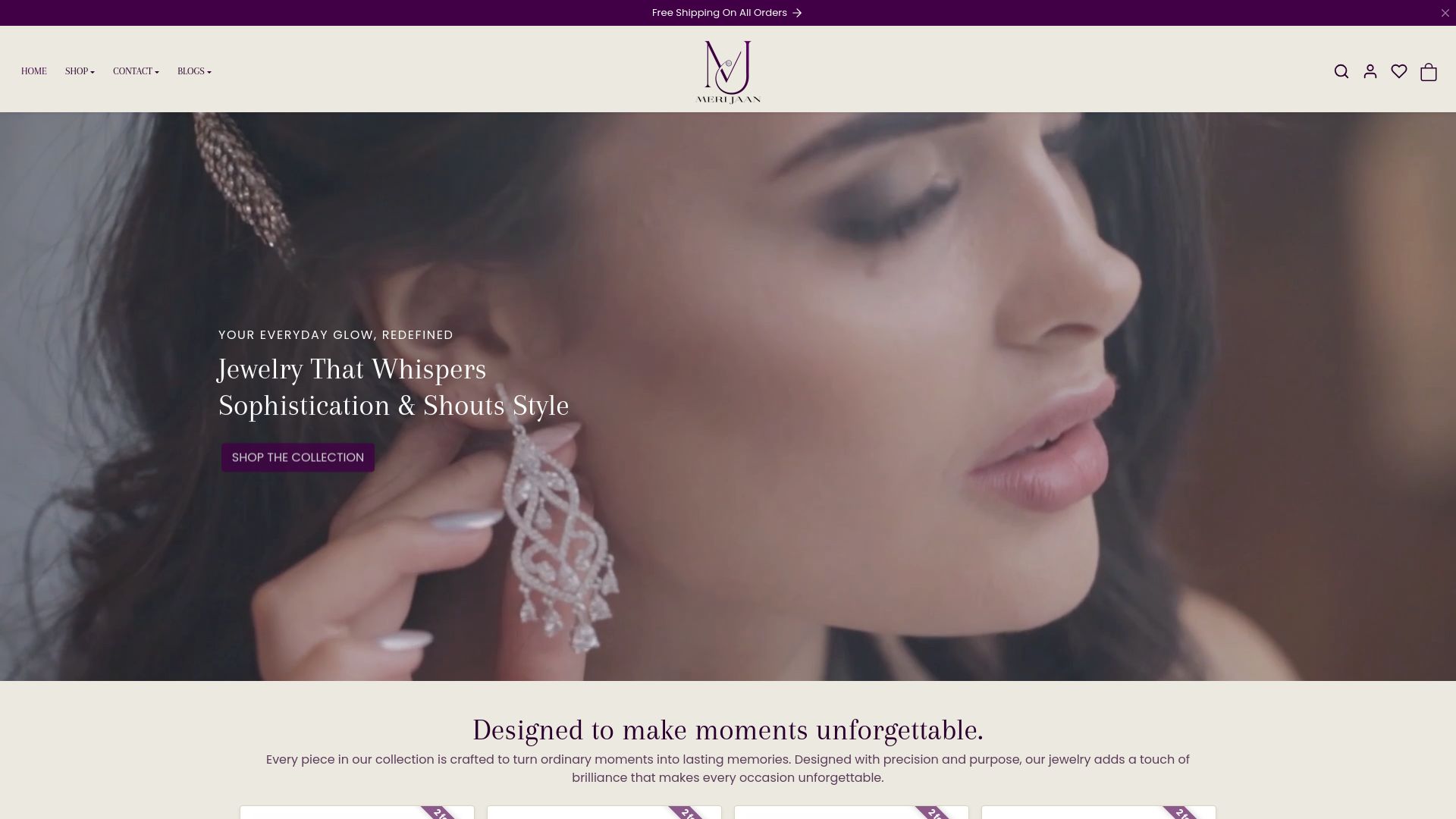
Merijaan takes a different approach. Their lab-grown moissanite pieces are sold direct-to-consumer, which means the price you see already reflects lower markups than a traditional retailer or chain store. The Frauenfeld Necklace, for example, is a D-color moissanite necklace in real 925 sterling silver with transparent product specifications and a lifetime warranty, priced at a fraction of what a comparable mined-diamond piece would cost. There is no haggling required because the margin was never inflated in the first place.
Before you spend an afternoon negotiating with a traditional retailer, check Merijaan’s product pages. Review the warranty terms, the return policy, and the stone specifications. If the posted price already beats what you could negotiate elsewhere, that is the better deal, and you get there in five minutes instead of five days.
Useful sources for further research
These are the authoritative references used throughout this guide.
- GIA Report Check — Verify any diamond’s GIA report number before purchasing; the single most reliable way to confirm stone specifications.
- The Knot: Can You Negotiate Engagement Ring Prices? — Jeweler perspectives on when and how negotiation works, including the role of buyer knowledge.
- Chubb: 5 Critical Things to Do Before Buying Jewelry Online — Buyer-safety checklist covering seller verification, return policies, and secure checkout.
- Merijaan — DTC lab-grown moissanite jewelry with transparent pricing, lifetime warranty, and full product specifications.

