

Heirloom jewelry is any piece that carries lasting family meaning and is intentionally kept, cared for, and passed down across generations. The concept has nothing to do with age or price. A simple gold band worn daily for forty years can outrank a diamond necklace bought last year and never touched again.
Three things to hold onto as you read:
- Emotional value and provenance matter most. The story behind a piece, who wore it and why, is what makes it an heirloom, not the carat count.
- Durability and craftsmanship make inheritance possible. Without solid materials and sound construction, even the most meaningful piece won’t survive to be passed down.
- You can build new heirlooms intentionally. Choosing the right materials, settings, and documentation today is how a modern piece becomes a family treasure tomorrow.
If you’re deciding what to keep, redesign, or buy with legacy in mind, the checklist in Section 6 is where to go first.
Table of Contents
- What heirloom jewelry really means: significance and emotional value
- What makes a piece an heirloom: practical criteria and a usable checklist
- Common heirloom pieces and the occasions that create them
- Modern heirloom jewelry: making new pieces meant to be passed down
- How to choose or commission an heirloom-ready piece today
- Care, repair, insurance, and documenting provenance
- What to do with an inherited piece: wear, repair, resize, redesign, or sell
- Key Takeaways
- Why craft and story are inseparable in heirloom jewelry
- Merijaan’s lab-grown moissanite pieces are built to last
- Authoritative sources and further reading
What heirloom jewelry really means: significance and emotional value
Heirloom status is earned, not assigned. A piece becomes an heirloom through story, repeated use, and the deliberate choice to preserve it. The Cambridge Dictionary defines an heirloom simply as “a valuable object that has been given by older members of a family to younger members of the same family over many years.” But that definition undersells the emotional mechanics at work.
Think about a grandmother’s locket. It may have cost very little when purchased. What makes it irreplaceable is the photograph inside, the fact that she wore it to every family gathering, and the memory of her fastening it before leaving the house. That accumulated meaning is what transforms an object into an heirloom. Any piece can evolve into one if it is cherished, maintained, and preserved across family lines.
Monetary appraisal rarely captures this. Industry experts consistently note that the story a piece carries, the person, the event, the repeated wearing, is the primary source of heirloom value. A low-cost silver ring given at a first anniversary can hold more weight than a high-end piece bought without personal context.
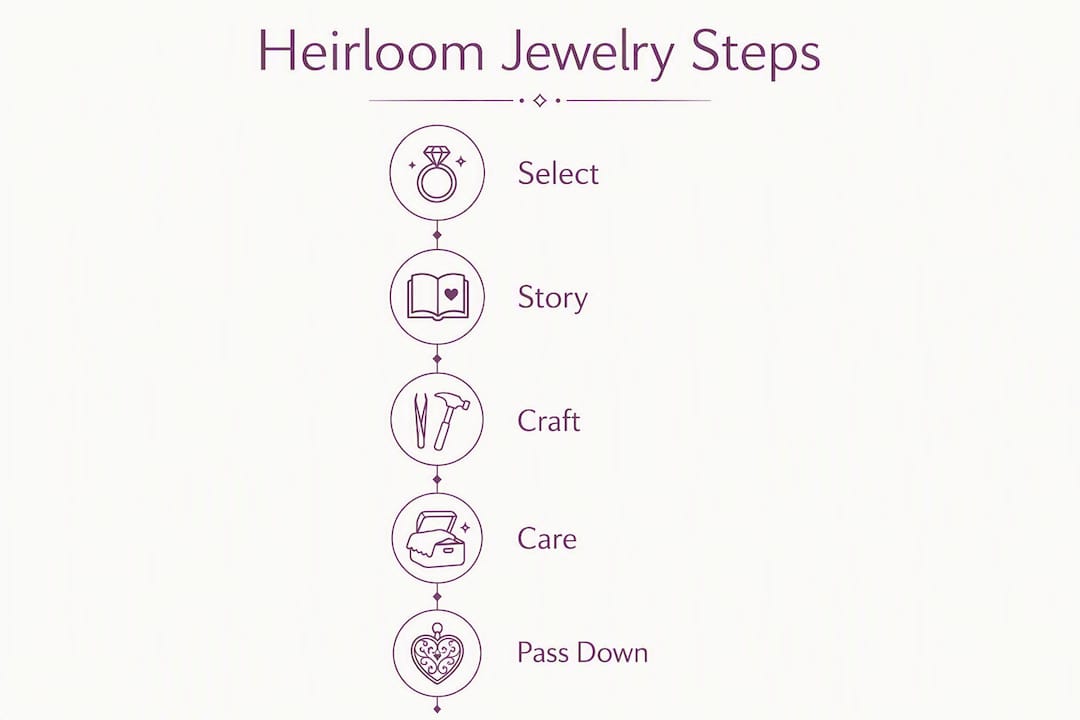
Certain milestones tend to generate heirlooms naturally: weddings, births, graduations, and anniversaries. These are moments when jewelry is chosen with intention and worn with awareness. The piece absorbs the memory of the occasion. Over time, it becomes a physical record of a life lived.
What makes a piece an heirloom: practical criteria and a usable checklist
Not every piece you love will survive to be passed down. The heirloom jewelry concept requires both emotional significance and physical durability. Here’s what to look for:
Criteria checklist:
- Material permanence. Solid 14k or 18k gold, sterling silver, or platinum. These metals hold up across decades without wearing through.
- Construction integrity. Thick walls, solid solder joints, and secure clasps. Thin or hollow construction fails faster.
- Timeless design. Clean proportions and classic forms age better than trend-driven shapes. A piece that looks dated in ten years won’t be worn, and unworn pieces don’t become heirlooms.
- Provenance and personal story. A clear connection to a person, event, or milestone. This is what gives the piece meaning beyond its materials.
- Repairability and serviceability. Can a jeweler resize it, re-tip a prong, or replace a clasp? Pieces that can’t be serviced have a shorter useful life.
Red flags to avoid:
- Gold plating or vermeil on pieces meant for daily wear. The finish wears through, and re-plating is a recurring cost.
- Glued-in stones. These cannot be re-set and are nearly impossible to repair properly.
- Proprietary or non-standard settings that no independent jeweler can service.
- Trend-driven designs with no classic reference point.
Pro Tip: Ask your jeweler specifically about the setting type before you buy. Bezel settings physically enclose the stone, reducing the risk of loss over decades. Prong settings are beautiful but require periodic inspection and re-tipping. For a piece meant to last generations, a bezel or channel setting is the more forgiving choice.
Common heirloom pieces and the occasions that create them
Some jewelry types survive across generations more reliably than others, partly because of their construction and partly because of the occasions they mark.
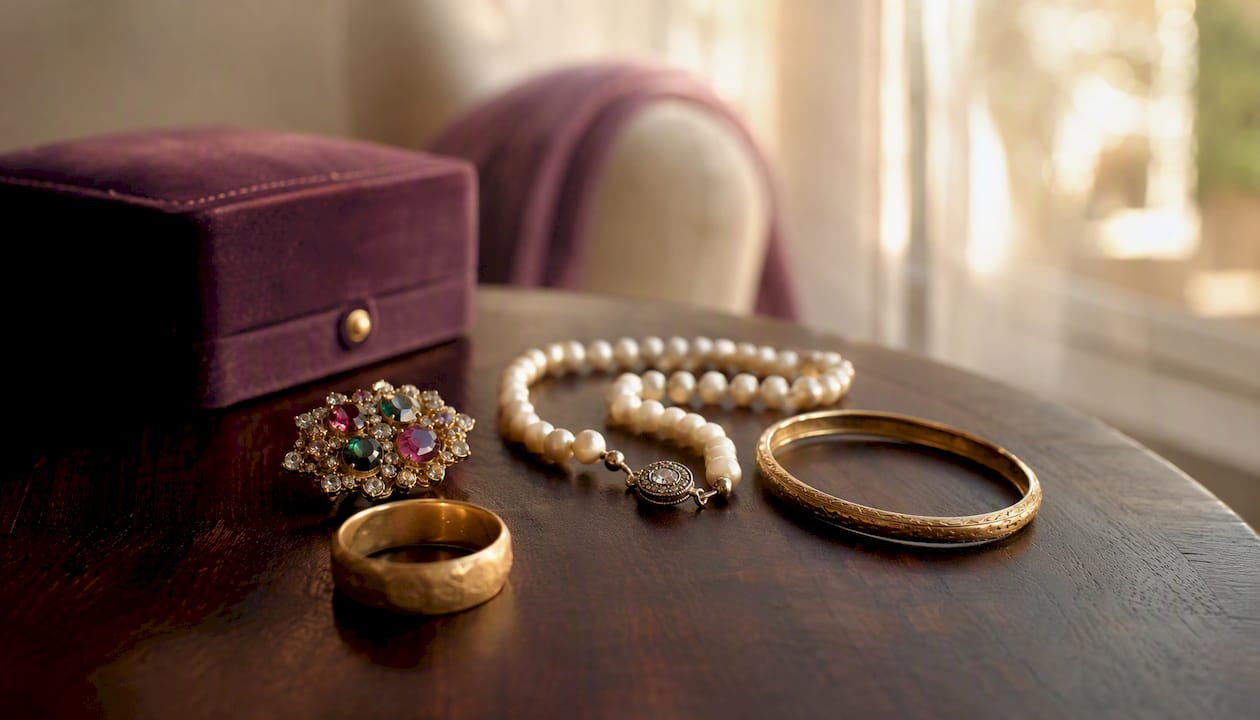
Rings are the most common heirloom type. A wedding band worn daily for decades accumulates a kind of physical history, small scratches and worn edges that tell the story of a life. Engagement rings carry the weight of a proposal and often become the first piece a family considers passing down.
Necklaces and pendants endure because they’re versatile. A simple gold chain can be worn with almost anything, which means it gets worn, which means it gets remembered. Lockets are a particular case: the ability to hold a photograph or a lock of hair gives them a narrative function no other piece can replicate.
Brooches fell out of everyday fashion in the mid-20th century, but they’ve held on as heirlooms precisely because they were often given at significant moments, a mother’s gift to a daughter, a gift from a grandmother at a graduation. They’re also structurally durable, with no delicate chains to break.
Bracelets and bangles tend to become heirlooms when they’re worn constantly. A gold bangle worn daily over a long period carries a different weight than one kept in a box.
Cultural context shapes all of this. In South Asian traditions, gold jewelry given at weddings carries both sentimental and financial significance, and passing it down is a formal act. In many Western families, the engagement ring is the default heirloom. In some cultures, the left hand carries the wedding ring; in others, the right. Which pieces get passed down, and when, varies widely. The common thread is intentionality: someone decided this piece mattered enough to keep.
Modern heirloom jewelry: making new pieces meant to be passed down
The modern heirloom concept is straightforward: design or buy a piece today with the explicit goal of it surviving your lifetime and your children’s. That requires thinking about materials, construction, and aesthetics differently than you would for fashion jewelry.
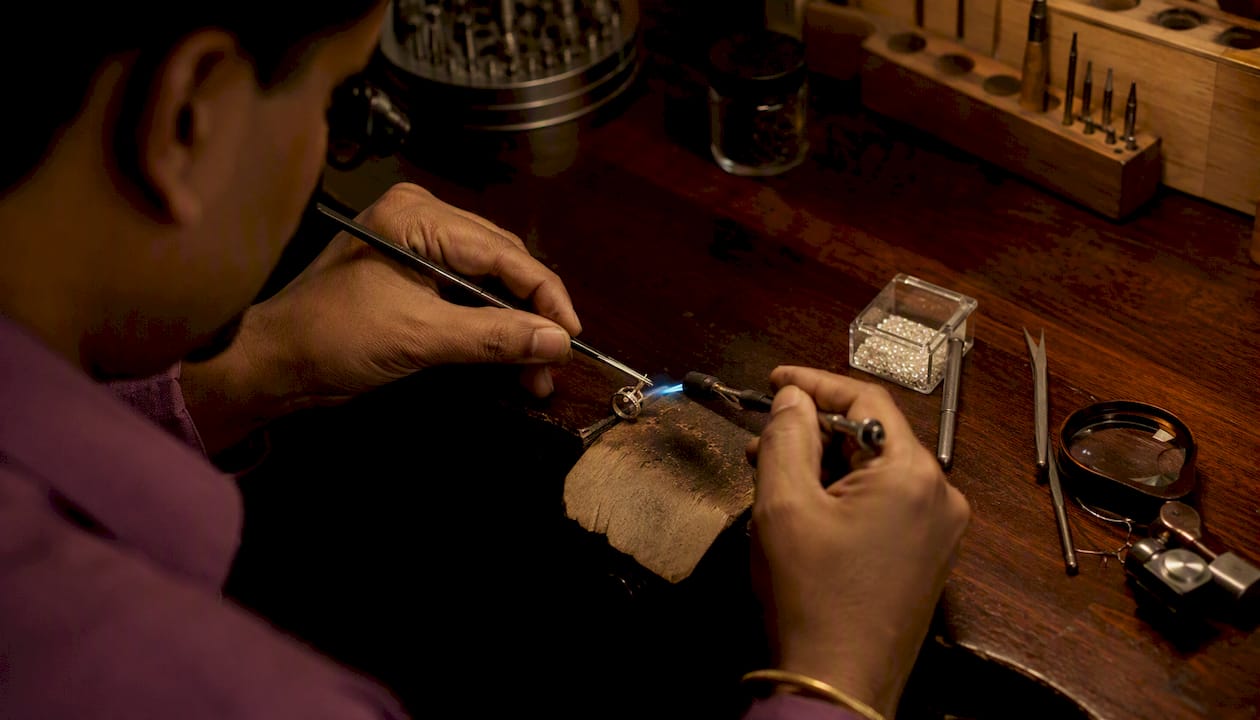
Modern heirloom pieces use durable materials and timeless design so they can be worn daily and passed down without immediate repair. The key shift is moving away from trend-driven choices toward pieces with classic proportions and solid construction.
Materials comparison:
- Solid 14k or 18k gold is the practical standard. It does not oxidize or wear through the way plated finishes do. It can be resized, repaired, and re-polished indefinitely.
- Gold-plated and vermeil pieces look similar initially but the surface wears away with daily use. Not suitable for pieces meant to last generations.
- Gold-filled is more durable than plating but still not equivalent to solid gold for long-term wear.
- Natural gemstones have a long track record in heirloom pieces. Diamonds, sapphires, and rubies are hard enough to survive decades of wear.
- Lab-grown moissanite is a strong modern alternative. It rates 9.25 on the Mohs hardness scale, making it one of the most scratch-resistant stones available. It’s also ethically sourced by definition, with no mining impact. For buyers who want a stone that performs like a diamond without the supply-chain concerns, moissanite is a practical and sustainable choice.
The ethical dimension matters more than it used to. Buyers who care about provenance, not just of the story attached to a piece but of the materials themselves, are choosing lab-grown stones and transparent supply chains. A piece with documented ethical sourcing carries a cleaner provenance story to pass down.
Merijaan designs its moissanite pieces with repairability and lifetime service in mind, which is exactly the commitment a modern heirloom requires. A warranty and repair policy from the maker is worth asking about before any significant purchase.
How to choose or commission an heirloom-ready piece today
Buying for legacy is different from buying for fashion. These are the questions and checks that matter.
Buying checklist:
- Confirm the metal is solid, not plated. Ask for the karat stamp and verify it.
- Check the setting type. Bezel and channel settings offer more long-term security than open prong settings.
- Ask about stone certification. For diamonds, GIA certification is the standard. For moissanite, look for GRA certification.
- Ask specifically: “What is your repair and resize policy?” A maker who won’t commit to future service is a red flag.
- Request the maker’s provenance. Who made it, where, and with what materials? This becomes part of the piece’s story.
- Confirm the piece can be resized. Some settings and metals can’t be adjusted without damaging the piece.
- Ask about warranty terms in writing.
Questions to ask a jeweler when commissioning:
- What is the exact metal content and karat?
- What setting type do you recommend for daily wear over decades?
- Can this piece be resized or repaired by an independent jeweler if needed?
- What is the stone’s origin and certification?
- Do you offer a written warranty or repair policy?
- What are the limits on resizing this specific design?
Materials and construction comparison:
| Feature | Solid precious metal | Gold-filled | Gold-plated / vermeil |
|---|---|---|---|
| Durability | Lasts generations with care | Moderate; surface may wear | Surface wears through with daily use |
| Repairability | Fully repairable and resizable | Limited | Difficult; re-plating required |
| Long-term suitability | Best choice for heirlooms | Acceptable for occasional wear | Not suitable for heirloom purposes |
| Cost | Higher upfront | Mid-range | Lowest upfront |
A high price does not guarantee heirloom quality. Weak construction or plated finishes will fail across generations regardless of what you paid. Craftsmanship and materials are what matter. For timeless design guidance that holds up across decades, the principles are consistent: clean proportions, classic forms, and construction that a skilled jeweler can service.
Care, repair, insurance, and documenting provenance
A piece can only be passed down if it survives. That requires regular care, occasional professional service, and documentation that travels with the piece.
Maintenance schedule:
| Frequency | Task |
|---|---|
| Daily | Remove before swimming, applying lotion, or heavy physical work |
| Weekly | Wipe with a soft, lint-free cloth to remove skin oils and residue |
| Monthly | Inspect clasps, prongs, and settings for looseness or wear |
| Yearly | Professional cleaning and inspection by a jeweler |
| As needed | Re-tipping prongs, re-polishing, clasp replacement, resizing |
Many inherited pieces arrive needing repair. Common issues include broken chains, loose settings, and worn hinges. Buying or commissioning pieces with robust construction reduces how much restoration future heirs will face. Thicker walls, solid solder joints, and quality clasps are not luxuries; they’re what makes a piece serviceable fifty years from now.
Insurance and appraisal:
- Get a professional appraisal from a certified gemologist (GIA-trained appraisers are the standard in the US) every three to five years, since replacement values shift.
- Add the piece to a homeowner’s or renter’s insurance policy as a scheduled item, or use a specialty jewelry insurer. Standard policies often cap jewelry coverage at amounts that won’t cover a significant piece.
- Keep the appraisal document with the piece’s other records.
Provenance documentation tips:
- Keep the original receipt or purchase record.
- Photograph the piece from multiple angles, including any hallmarks or engravings.
- Write a short note, or record a voice memo, explaining who gave it, when, and why. Simple documentation like this makes it far easier for future heirs to understand a piece’s origin.
- Store physical records in a fireproof box or safe. Keep digital copies in cloud storage.
- Tell the story out loud to the person who will inherit it. Written records matter, but a conversation is harder to lose.
For practical care and maintenance advice that applies to daily-wear pieces, the principles are consistent across metal types: keep it clean, keep it dry, and get it checked annually.
What to do with an inherited piece: wear, repair, resize, redesign, or sell
Inheriting a piece of jewelry can feel like receiving a responsibility you weren’t sure you wanted. Here’s a practical framework for deciding what to do.
Decision flow:
- Assess the condition first. Is it wearable as-is, or does it need structural repair before anything else?
- Gauge the emotional weight. Does this piece carry strong family meaning, or is it more of an object than a memory?
- Consider wearability. Will you actually wear it? A piece that stays in a drawer doesn’t become part of your story.
- Involve other family members before making any irreversible decision, especially redesign or sale.
Options and tradeoffs:
- Wear as-is. The simplest path. Keeps the piece intact and adds your own chapter to its story. Works best when the piece fits your style and is in good condition.
- Repair. Restores wearability without changing the piece. The right choice when structural issues are the only barrier. Get a quote from a trusted jeweler before committing.
- Resize. Practical for rings that no longer fit. Most solid gold rings can be resized up or down by a skilled jeweler, though some settings limit how much adjustment is possible.
- Redesign or repurpose. Stones from an old piece can be reset into a new design. This is a meaningful option when the original setting is damaged or unwearable but the stone or metal has value. The tradeoff is that the original form is gone.
- Sell or donate. Sometimes the honest answer is that a piece has no emotional connection for the current heir. Selling through a reputable estate jeweler or donating to a museum or charity is a legitimate choice. Document the decision and the reason so future family members understand what happened.
Involving family:
Before redesigning or selling, ask. A sibling or cousin may have a stronger connection to the piece than you realized. A brief family conversation, or even a group text with a photo, can surface feelings that weren’t obvious. If there’s genuine disagreement, consider keeping the piece for a defined period before making a final call. The goal is a decision everyone can live with, not a fast resolution.
Key Takeaways
Heirloom jewelry requires both emotional provenance and physical durability: a piece with a powerful story but fragile construction won’t survive to be passed down, and a structurally perfect piece with no personal meaning won’t be kept.
| Point | Details |
|---|---|
| Story creates heirloom status | Emotional significance and personal history matter more than price or age. |
| Materials determine longevity | Solid 14k or 18k gold and hard gemstones like moissanite outlast plated alternatives by generations. |
| Settings affect survival | Bezel and channel settings protect stones better than open prongs over decades of daily wear. |
| Documentation preserves meaning | Receipts, photos, and a written or recorded story help future heirs understand what they’ve inherited. |
| Merijaan’s approach | Merijaan’s lab-grown moissanite pieces are built for repairability and backed by a lifetime warranty, making them a practical starting point for intentional modern heirlooms. |
Why craft and story are inseparable in heirloom jewelry
Most articles about heirloom jewelry focus on materials, and materials do matter. But the conversation that gets skipped is the one about maker commitment. A piece is only as repairable as the jeweler behind it is willing to support it.
The pieces I’ve seen survive three generations share two things: they were made with enough material to be worked on again, and someone cared enough to keep them. Thin settings, hollow shanks, and proprietary designs that no independent jeweler can service are not just construction choices. They’re decisions about how long a piece is meant to last.
My single practical recommendation: before you buy or commission anything with heirloom intent, ask for the repair and warranty policy in writing. A maker who stands behind their work will have one. A maker who doesn’t is telling you something important about how they built it.
Merijaan’s lab-grown moissanite pieces are built to last
If you’ve read this far and you’re thinking about starting a new heirloom rather than inheriting one, Merijaan is worth a serious look. Every piece is made with lab-grown moissanite, a stone that rates 9.25 on the Mohs hardness scale and carries a clean, fully documented ethical provenance. The metal is solid sterling silver or 18k gold plating over 925 silver, and every piece comes with a lifetime warranty backed by a team where 100% of profits go directly to the people who make the jewelry.
That combination, ethical sourcing, hard-wearing stones, and a maker who commits to long-term service, is exactly what the heirloom jewelry concept requires in a modern piece. The Frauenfeld Necklace and the Naters Necklace are strong starting points if you want to see what intentionally designed, repairable moissanite jewelry looks like in practice. Browse the full collection at merijaan.co and ask about the warranty policy when you’re ready to choose.
Authoritative sources and further reading
These are the strongest references for readers who want to go deeper on specific aspects of heirloom jewelry, from material science to redesign ethics.
- Cambridge English Dictionary: Heirloom definition — The standard lexical definition, useful for grounding any conversation about what the term actually means.
- Joseph Jewelry: Heirloom glossary entry — A jeweler’s working definition that emphasizes generational transfer and sentimental value alongside design.
- L’Heritage Jewelry: What makes a piece truly heirloom-worthy? — Honest, craft-focused perspective on materials and construction from a working jeweler.
- L’Heritage Jewelry: GIA Gemologist’s buying guide — Specific guidance on what a trained gemologist looks for when evaluating heirloom potential.
- Antoanetta: Heirloom jewelry guide — Covers materials durability and the distinction between heirloom-quality and fashion jewelry.
- Foster Jewelry: Heirloom jewelry meaning — Strong on the emotional and provenance side; useful for understanding why story outweighs price.
- Forbes: What to know before investing in heirloom jewelry — Practical buyer perspective with real-world repair and construction considerations.
- Alexandria: What makes jewelry heirloom quality — Technical detail on settings, particularly bezel vs. prong, and their long-term implications.
For pieces with high sentimental or monetary value, consult a GIA-certified gemologist directly before making any repair, redesign, or sale decision.

