

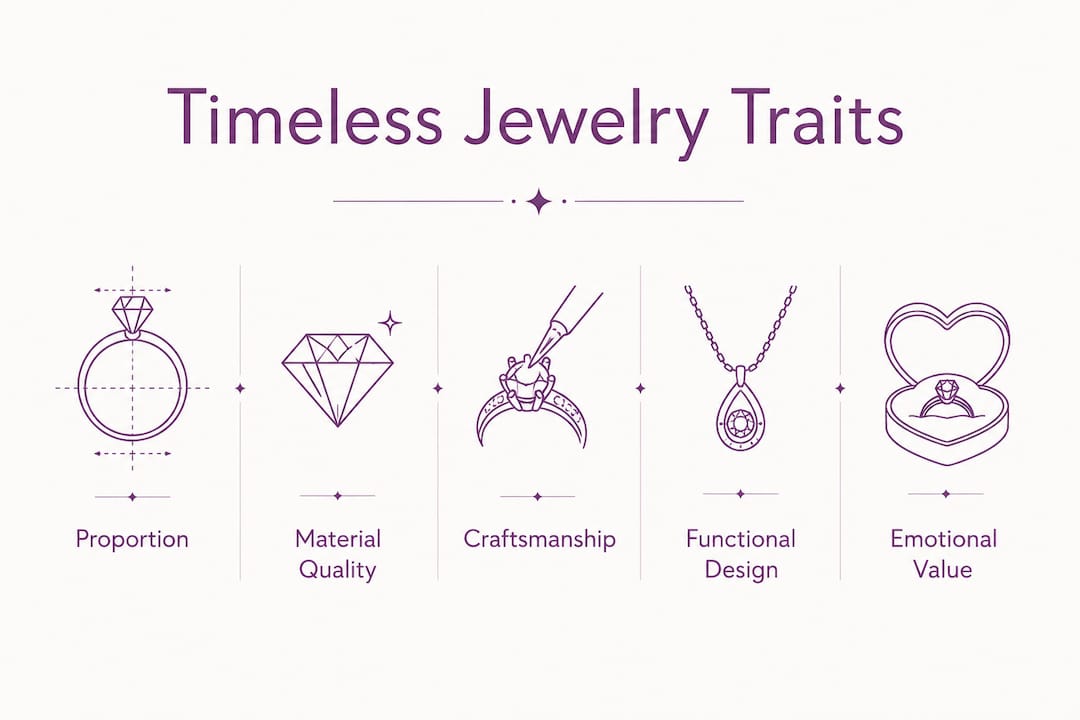
Timeless jewelry design is defined as the practice of creating pieces whose aesthetic and structural qualities remain elegant regardless of changing fashion cycles. The industry term for this discipline is “classic fine jewelry design,” and it rests on three pillars: proportion, material quality, and restraint. Unlike trend-driven pieces, timeless design prioritizes simplicity, symmetry, and durable precious metals such as 14K gold and platinum. Understanding what is timeless jewelry design helps you build a collection that holds meaning, value, and beauty across decades. Merijaan applies these exact principles to every piece it crafts, combining ethical lab-grown materials with enduring silhouettes.
What is timeless jewelry design, and why does it matter?
Timeless jewelry design is not about age or vintage status. True timeless design is ageless, fitting modern wearers as naturally as it fit past generations and will fit future ones. That distinction matters because many jewelry lovers confuse “old” with “timeless,” when the two are entirely separate concepts.
The real measure of timeless design is what designers call a “grammar”: an inherent compatibility between the piece’s silhouette, the wearer’s anatomy, and natural movement. A well-proportioned gold pendant, for example, sits flat against the collarbone and catches light without competing with the wearer’s face. That structural logic is what separates a classic piece from a merely old one.
Timeless jewelry transcends fashion trends by emphasizing harmony, functionality, and emotional resonance. Those qualities compound over time. A piece that works with a 1990s blazer works equally well with a 2026 linen dress, because its design logic is rooted in human proportion, not seasonal color palettes.
What are the key characteristics of timeless jewelry?
Seven key elements define timeless jewelry: simplicity, quality metals, symmetry, craftsmanship, versatility, durability, and the absence of fleeting trends. Together, these elements create pieces that remain visually balanced and elegant across every fashion era.
- Simplicity. Clean lines and uncluttered forms let the material speak. A plain gold band communicates more refinement than a heavily engraved novelty ring.
- Quality metals. Gold, platinum, and sterling silver age gracefully. They resist tarnish, hold settings securely, and develop a patina that adds character rather than diminishing value.
- Symmetrical proportions. Balanced geometry reads as visually calm. Asymmetry can be beautiful, but it tends to feel tied to a specific era.
- Craft refinement. Smooth finishing, secure prong settings, and polished edges signal that a piece was made to last, not just to sell.
- Versatility. A timeless piece works dressed up or down. Diamond studs move from a board meeting to a beach dinner without adjustment.
- Durability. Physical longevity and design longevity reinforce each other. A piece built to survive daily wear also tends to be built with the structural restraint that ages well aesthetically.
- Absence of trend-dependent ornamentation. Novelty charms, logo motifs, and seasonal color palettes date a piece immediately.
Balanced color use and classic gemstone choices also contribute to lasting appeal. Gold and platinum paired with neutral or subtly accented stones maintain elegance precisely because they do not compete with the wearer’s outfit.
Pro Tip: Simplicity in jewelry does not mean plain or unfinished. The most timeless pieces show intentional refinement: every curve, every millimeter of metal, and every facet of a stone is placed with purpose. If a detail serves no structural or aesthetic function, it is ornamentation, not design.
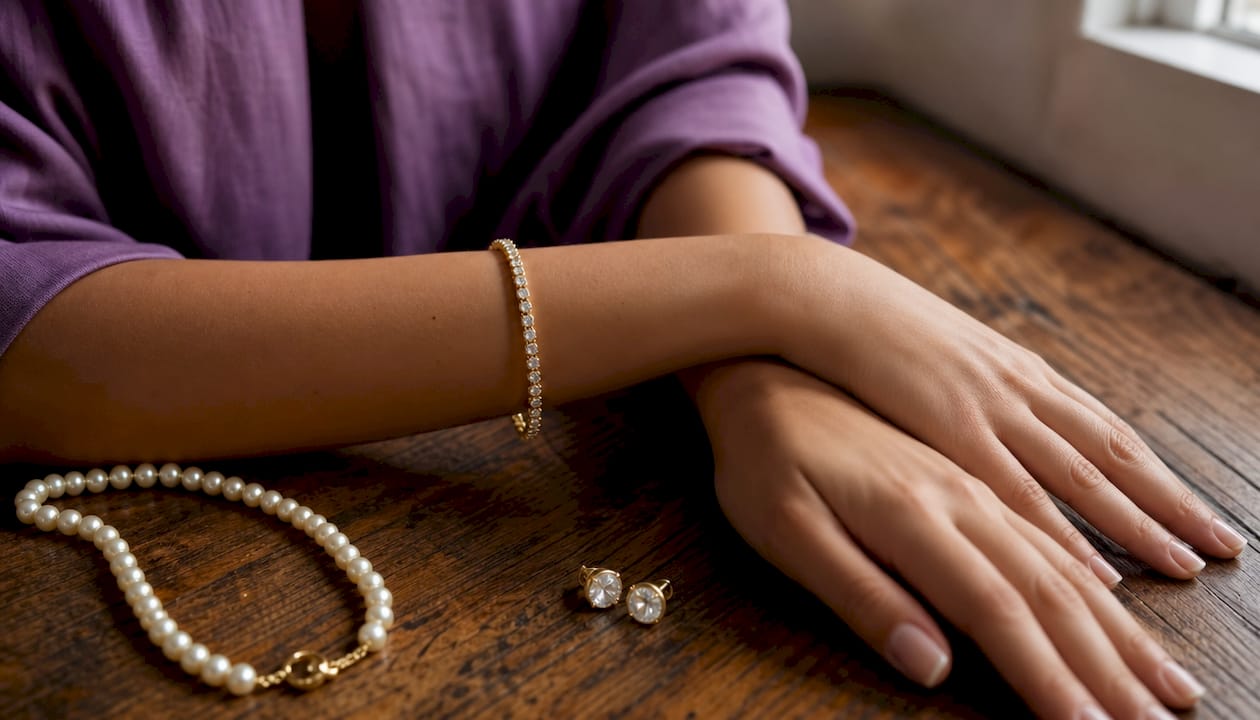
Which jewelry pieces are considered classic timeless styles?
Five foundational pieces consistently retain relevance across generations. Each is made with precious metals and traditional cuts that resist dating.
-
Diamond stud earrings. Diamond studs have been fashionable for over 100 years and remain universally flattering across ages and personal styles. The classic round brilliant cut in 0.25–1 carat per ear is the standard for timeless appeal. They work with a ponytail or a formal updo with equal ease.
-
Pearl strands or studs. Pearls have been worn as fine jewelry for over 2,000 years. Round and slightly oval shapes maintain timeless status, while trendier baroque or asymmetric forms feel more era-specific. A single strand of graduated pearls or a pair of pearl studs in 7–8mm is the benchmark.
-
Gold solitaire pendant. A single stone or simple geometric shape suspended on a fine chain is the most versatile necklace format in fine jewelry. The solitaire pendant works at every neckline and pairs with virtually any other piece in a collection.
-
Tennis bracelet. A line of evenly spaced diamonds or gemstones set in a flexible gold or platinum setting. The tennis bracelet earns its classic status through structural elegance: the stones are the design, and the setting exists only to hold them.
-
Signature ring. A well-proportioned band, whether plain, pavé, or set with a single stone, anchors any ring stack and works alone as a statement of refined taste.
| Classic piece | Typical material | Standard sizing |
|---|---|---|
| Diamond stud earrings | 14K gold or platinum | 0.25–1 carat per ear |
| Pearl strands or studs | Sterling silver or gold | 7–8mm round pearls |
| Gold solitaire pendant | 14K or 18K gold | 0.25–0.75 carat stone |
| Tennis bracelet | 14K gold or platinum | 2–5 carats total weight |
| Signature ring | 14K gold, platinum | 2–6mm band width |
Classic silhouettes like pearl studs, hoops, and tennis bracelets carry enduring cultural resonance because their proportions align with the human form rather than with a particular decade’s aesthetic.
How does craftsmanship influence timeless jewelry design?
Craftsmanship is the difference between a piece that looks timeless in a photograph and one that actually feels timeless on the body. Timeless jewelry requires intentional design discipline, focusing on visual logic and proportion rather than surface decoration. That discipline shows up in details most wearers never consciously notice but always feel.
High-end artisans customize even hidden details like clasps to enhance wearability and longevity. A lobster clasp on a fine chain, for example, should open smoothly with one hand and close with an audible click. That level of attention to a functional component signals the same care applied to every visible element. Understanding artisan jewelry craftsmanship helps you identify these quality markers before you buy.
The craftsmanship signatures worth examining in any piece include:
- Stone setting security. Prongs should be even, rounded at the tip, and flush against the stone. Uneven prongs catch fabric and signal rushed finishing.
- Metal finishing. High-polish surfaces should be free of tool marks. Brushed finishes should be uniform in direction and depth.
- Weight and balance. A well-made piece feels substantial without being heavy. It sits flat, hangs straight, and does not rotate on the wrist or finger.
- Solder joints. Invisible joins between components indicate skilled bench work. Visible seams or rough edges indicate the opposite.
Classic jewelry is defined by proportion, balance, materials, and refined design rather than by age or trend adherence. That definition places craftsmanship at the center of what makes a piece genuinely classic, not just aesthetically quiet.
Pro Tip: When evaluating a piece for timeless quality, turn it over. The back of a ring or the clasp of a necklace reveals the maker’s true standard. A beautifully finished back means the artisan cared about the whole object, not just the face presented to the world.
How to choose timeless jewelry for your collection
Choosing timeless jewelry starts with a clear framework. Timeless pieces cost less per wear over time and often become treasured family heirlooms. That long-term value shifts the buying decision from impulse to intention.
- Start with the five classics. Build your collection around diamond studs, a pearl option, a solitaire pendant, a tennis bracelet, and a signature ring before adding anything else. These five pieces cover every occasion and serve as anchors for more expressive additions.
- Prioritize material over size. A 0.5-carat stone in a well-made 14K gold setting outperforms a 1-carat stone in a poorly finished base-metal setting every time. The metal and the craft determine longevity.
- Choose neutral metal tones. Yellow gold, white gold, and platinum all qualify. Rose gold is beautiful but more trend-adjacent. If you want a piece to work across 30 years of style changes, yellow gold or platinum is the safer choice.
- Combine timeless pieces with modern fashion thoughtfully. A classic tennis bracelet pairs naturally with minimalist outfits, while diamond studs anchor bolder contemporary looks without competing with them.
- Maintain your pieces properly. Proper jewelry care preserves both the physical and aesthetic quality of classic pieces. Store each piece separately, clean gold and platinum with warm soapy water, and have prong settings checked annually.
- Buy for emotional resonance, not just aesthetics. Timeless jewelry carries investment potential, emotional significance, and sustainability across generations. A piece tied to a meaningful moment compounds in personal value in ways a trend purchase never does.
Jewelry and self-expression are deeply connected. The pieces you wear consistently reveal your aesthetic values, and timeless choices signal a preference for quality and intention over novelty.
Key Takeaways
Timeless jewelry design succeeds because it prioritizes proportion, material quality, and craftsmanship over ornamentation, ensuring pieces remain elegant across every fashion cycle.
| Point | Details |
|---|---|
| Definition of timeless design | Pieces built on proportion, quality metals, and restraint outlast every trend cycle. |
| Seven defining characteristics | Simplicity, quality metals, symmetry, craftsmanship, versatility, durability, and no trend ornamentation. |
| Five classic pieces | Diamond studs, pearl studs or strands, gold solitaire pendant, tennis bracelet, and signature ring. |
| Craftsmanship is the differentiator | Hidden details like clasps and solder joints reveal a maker’s true standard of quality. |
| Long-term value | Classic pieces cost less per wear over time and carry emotional and heirloom significance. |
Why design restraint is the hardest skill in jewelry
The most common mistake I see jewelry lovers make is equating timeless with boring. They look at a plain gold band or a simple diamond stud and assume the designer played it safe. That reading misses everything.
Restraint in jewelry design is genuinely difficult. Every embellishment you add is a decision you do not have to defend. Every element you remove forces you to trust the material, the proportion, and the finish to carry the entire piece. That is a much harder standard to meet. Intentionally refined design requires the maker to highlight material beauty rather than hide behind elaborate decoration.
What I have found, after years of studying fine jewelry, is that the pieces people reach for every single day are almost always the quiet ones. The diamond studs they put in first thing in the morning. The gold pendant they forget they are wearing until someone asks about it. Those pieces work because they have no friction with the wearer’s identity. They do not demand attention. They simply belong.
The practical implication is this: when you are choosing between a piece that makes you say “wow” in the store and a piece that makes you feel like yourself, choose the second one every time. The “wow” fades within a season. The feeling of wearing something that fits your identity does not.
— Ammar
Merijaan’s approach to enduring jewelry design
Merijaan builds each piece around the same principles that define classic fine jewelry: clean proportions, quality materials, and craftsmanship that holds up to daily wear. The difference is the material. Merijaan uses lab-grown moissanite and diamonds that deliver the same optical brilliance as mined stones, with a significantly lower environmental and financial cost.
Every profit Merijaan generates goes directly back to the artisans who make the jewelry. That means the craftsmanship you see in the finish and the setting reflects makers who are invested in their work. If you are building a collection around timeless pieces, Merijaan’s lab-grown diamond designs offer a starting point that combines enduring aesthetic principles with ethical sourcing. Browse the full collection at Merijaan’s timeless jewelry to find pieces built to last a lifetime.
FAQ
What is timeless jewelry design in simple terms?
Timeless jewelry design is the practice of creating pieces whose proportions, materials, and craftsmanship keep them elegant regardless of changing fashion trends. It prioritizes simplicity, quality metals, and structural refinement over seasonal ornamentation.
What are the most recognized examples of classic jewelry design?
The five most recognized classic pieces are diamond stud earrings, pearl strands or studs, gold solitaire pendants, tennis bracelets, and signature rings. Each relies on precious metals and traditional cuts that resist dating.
How do I know if a jewelry piece is truly timeless or just currently popular?
A timeless piece works across multiple style contexts, uses quality metals like 14K gold or platinum, and carries no trend-dependent ornamentation. If removing the piece from its current fashion moment makes it look dated, it is not timeless.
What metals are best for timeless jewelry?
Gold (14K or 18K), platinum, and sterling silver are the standard metals for timeless jewelry. They age gracefully, hold settings securely, and pair with neutral or subtly accented gemstones that maintain elegance across decades.
Why does craftsmanship matter so much in timeless jewelry?
Craftsmanship determines whether a piece holds its structural and aesthetic quality over years of wear. Details like secure prong settings, smooth finishing, and well-made clasps signal that a piece was built to last, not just to look good at the point of sale.

