
Fair trade jewelry is jewelry produced under verified ethical standards that guarantee fair wages, safe working conditions, environmental responsibility, and full supply chain transparency. It’s not a marketing label any brand can self-apply. The term connects to formal frameworks, most notably the World Fair Trade Organization (WFTO) and Fairtrade Gold certification, both of which require third-party audits and documented compliance before a single piece can carry the designation.
What separates fair trade jewelry from conventional jewelry isn’t just the materials. It’s the entire chain of accountability, from the miner extracting gold in a Peruvian cooperative to the artisan shaping the final piece. Conventional jewelry supply chains are often opaque, with labor abuses and environmental damage hidden behind layers of intermediaries. Fair trade jewelry breaks that pattern by requiring transparency at every stage.
Here’s what that looks like in practice:
- Fair wages: Artisans and miners receive pay above the market floor, not the minimum a buyer can negotiate.
- Safe conditions: Workplaces must meet occupational health and safety standards, including proper ventilation and chemical handling protocols.
- Environmental stewardship: Certified operations restrict mercury use, protect water sources, and minimize land disturbance.
- Community investment: A portion of proceeds funds schools, clean water projects, and healthcare in mining communities.
- No child or forced labor: Certification bodies audit for compliance, not just self-reported claims.
- Artisan empowerment: Particularly for women, fair trade initiatives create economic pathways and legal protections that conventional supply chains rarely provide.
For consumers focused on ethical jewelry purchasing, understanding these foundations is the starting point for making purchases that actually reflect their values.
What fair trade principles actually require from jewelry producers
The WFTO’s 10 Fair Trade Principles form the ethical backbone of fair trade jewelry production. They aren’t aspirational guidelines. They’re enforceable standards that certified organizations must demonstrate through audits.
- Creating opportunities for economically disadvantaged producers. Fair trade prioritizes cooperatives and artisan groups in developing regions, giving them direct market access they couldn’t otherwise reach.
- Transparency and accountability. Every participant in the supply chain must disclose their practices and finances to partners and certification bodies.
- Fair trading practices. Buyers commit to long-term relationships and advance payments when producers need them, rather than squeezing margins at every negotiation.
- Fair payment. Wages must cover the cost of living, not just the legal minimum. For miners, this includes the Fairtrade Premium, a fixed payment above market price directed to community development.
- No child or forced labor. This is non-negotiable. Certified operations are audited specifically for compliance, and violations result in decertification.
- Commitment to non-discrimination and gender equity. Women, who make up a large share of artisan jewelry workers globally, receive equal pay and protection from harassment under certified standards.
- Good working conditions. Safe facilities, reasonable hours, and access to protective equipment are baseline requirements, not optional upgrades.
- Capacity building. Fair trade organizations actively support artisans in developing their skills, improving their businesses, and gaining financial literacy.
- Promoting fair trade. Certified brands are expected to educate their customers about fair trade, not just use the label as a selling point.
- Respect for the environment. Production methods must minimize ecological damage. For mining, this means restrictions on mercury, protection of forests and water sources, and responsible land management.
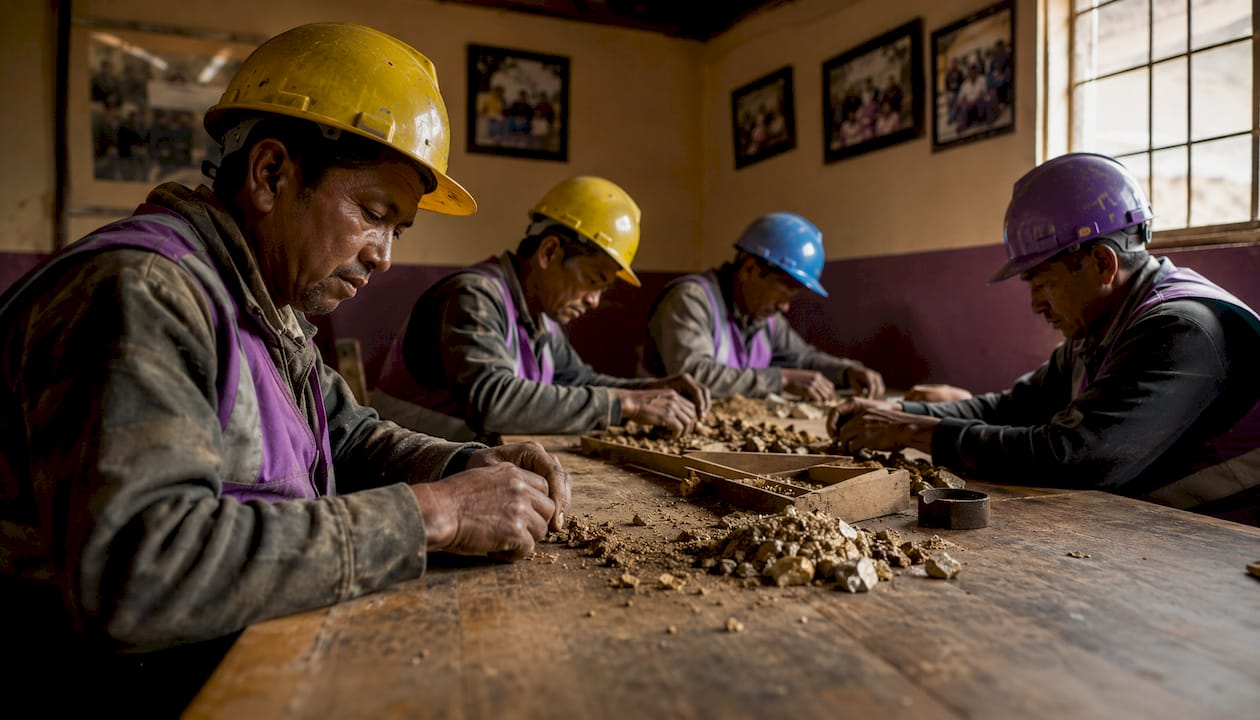
The ripple effect of these principles extends well beyond individual artisans. When a mining cooperative in Colombia or Peru operates under Fairtrade standards, the premium payments fund community infrastructure. Children attend better-equipped schools. Families access clean water. The economic stability created by fair wages reduces the desperation that drives unsafe practices in the first place.
How to identify real fair trade certifications on jewelry
Not every “ethical” or “responsible” claim on a jewelry tag carries the same weight. Three certification frameworks stand out for their rigor and third-party verification.
- Fairtrade Gold: Owned jointly by Fairtrade International and the Fairtrade Foundation, this is the strongest consumer-facing signal for responsibly sourced artisanal gold. It requires a minimum price guarantee referenced to the London Bullion Market Association spot price, plus a fixed premium paid directly to certified cooperatives. Third-party audits are conducted by FLOCERT, Fairtrade’s independent certification body.
- WFTO membership: Organizations that carry WFTO membership have been assessed against the 10 Fair Trade Principles and participate in ongoing monitoring. It covers the entire organization, not just a single product line.
- FLO-Cert (FLOCERT) verification: FLOCERT audits certified producers and traders in the Fairtrade system, providing independent confirmation that standards are being met.
| Certification | Governing body | Key criteria | Verification method |
|---|---|---|---|
| Fairtrade Gold | Fairtrade International / Fairtrade Foundation | Minimum price, fixed premium, safe conditions, no child labor | FLOCERT third-party audit |
| WFTO membership | World Fair Trade Organization | 10 Fair Trade Principles across full organization | WFTO monitoring and peer review |
| Fairmined | Alliance for Responsible Mining | Ethical ASM mining, environmental standards, fair wages | Third-party audit |
| Responsible Jewellery Council | RJC | Business ethics, human rights, environmental impact | Third-party audit |
Fairmined, run by the Alliance for Responsible Mining, covers similar ground to Fairtrade Gold but operates through a different certification structure. The Responsible Jewellery Council (RJC) applies to larger supply chain participants and covers a broader range of business ethics criteria, though critics note it is less prescriptive on wages than Fairtrade Gold.
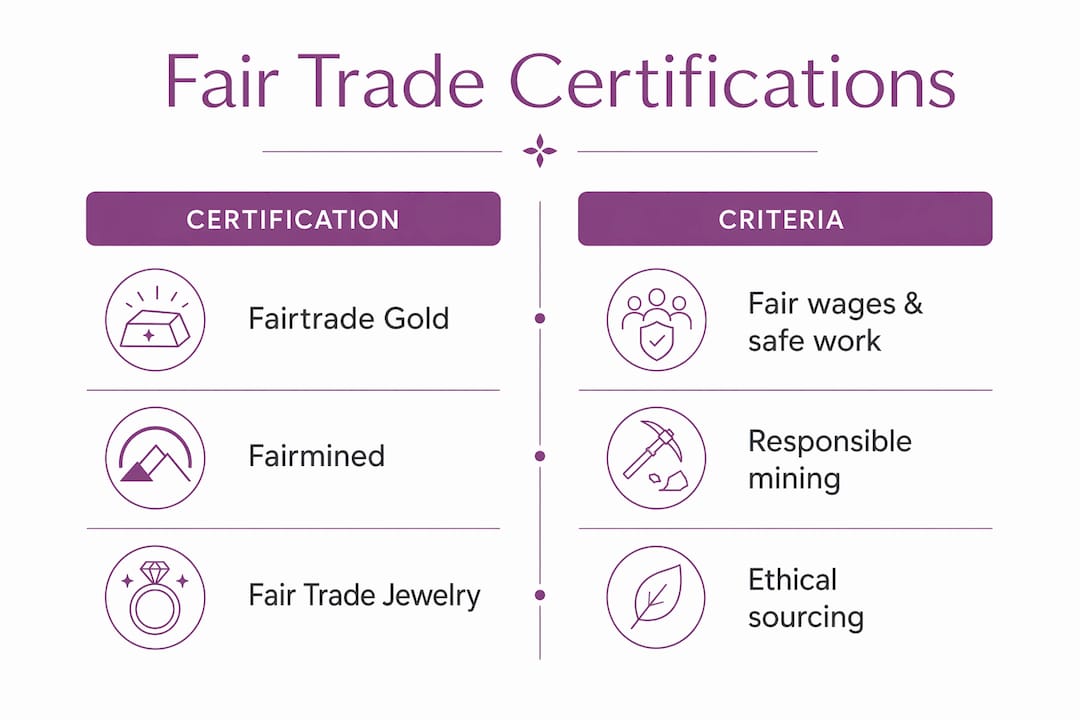
The practical problem for consumers: brands can make vague “ethically sourced” claims with no certification backing them. A brand citing Fairtrade Gold should be able to provide a current license number and name the specific cooperative supplying their gold, such as Sotrami or Cecomip in Peru, both of which have supplied certified gold since the standard’s early years. Claims without that specificity don’t hold up under scrutiny.
Pro Tip: Before buying, search the Fairtrade Foundation’s licensed manufacturer and retailer list. If a brand claims Fairtrade Gold but doesn’t appear there, the claim is unverified.
What materials go into fair trade jewelry, and why they’re chosen
Fairtrade Gold is the cornerstone material in certified fair trade jewelry. It comes exclusively from artisanal and small-scale mining (ASM) operations organized as cooperatives, since large industrial mines are ineligible for certification. An estimated 100 million people worldwide depend on artisanal and small-scale mining for their livelihoods, making it the second-largest employment sector after agriculture globally.
Beyond gold, fair trade jewelry commonly incorporates:
- Recycled precious metals: Silver and gold reclaimed from existing jewelry, electronics, or industrial sources, reducing the need for new mining entirely.
- Ethically sourced gemstones: Stones traced to mines with documented labor and environmental standards, often from smaller operations with direct buyer relationships.
- Lab-grown gemstones: Moissanite and lab-grown diamonds carry no mining footprint at all. Merijaan’s use of lab-grown moissanite reflects exactly this logic: the stone delivers genuine brilliance without the environmental and social costs of extraction.
- Recycled or upcycled materials: Some artisan jewelry incorporates reclaimed wood, glass, or other materials as a way to minimize waste.
The environmental case for these materials is direct. Responsible mining practices under fair trade standards reduce pollution risks and conserve natural resources including water and forests. Mercury, which causes severe neurological damage and contaminates waterways, is restricted under Fairtrade Gold requirements. That restriction alone protects both miners and the ecosystems surrounding their operations.
Expert perspective: why craftsmanship and ethics belong together
That perspective cuts to something the certification frameworks don’t always capture: the quality of the work itself. Artisans who work in safe conditions, earn stable wages, and have creative freedom tend to produce better jewelry. The connection between ethical treatment and craft excellence isn’t incidental.
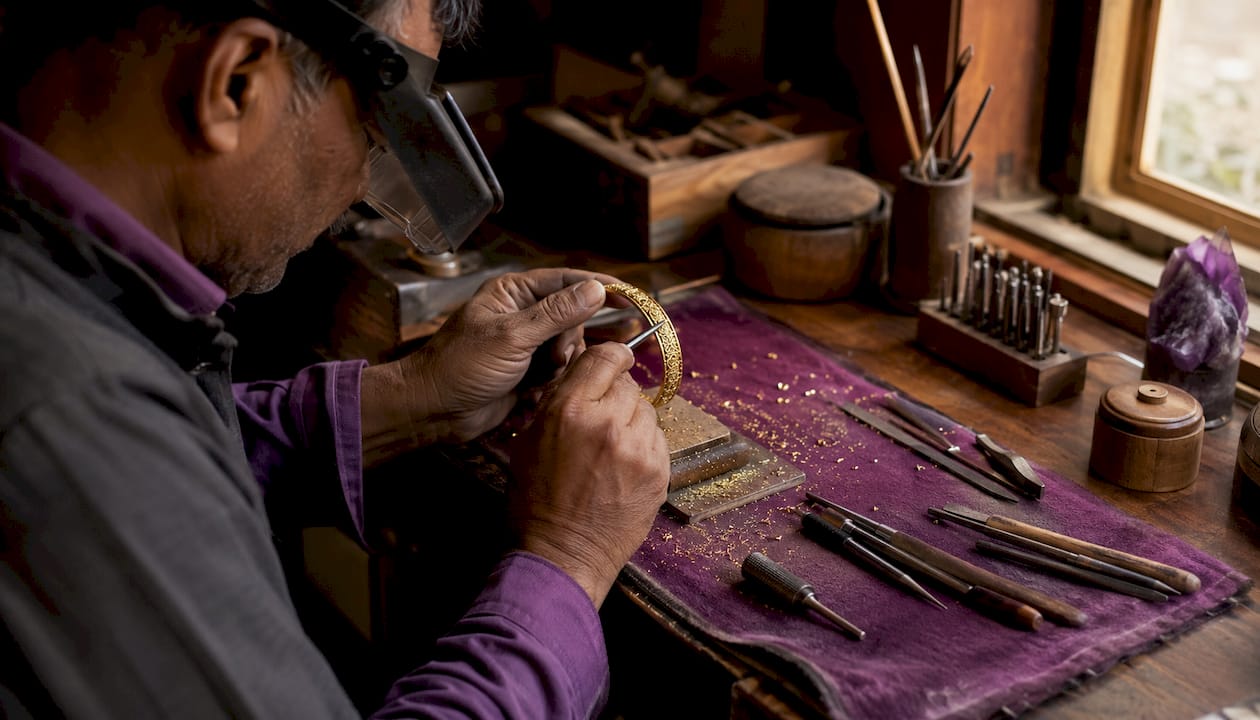
Fairtrade standards mandate occupational health and safety, strict chemical handling, women’s rights protections, and child labor prevention. Those requirements create the conditions for skilled work to flourish. A jeweler who isn’t worried about toxic exposure or economic desperation can focus on the craft.
Fair trade jewelry also preserves traditional techniques that industrial production erases. Cooperatives in West Africa, South Asia, and Latin America carry centuries of metalworking knowledge. Fair trade’s emphasis on artisan empowerment creates a market for that knowledge rather than replacing it with factory output.
The Fairtrade Premium paid to certified cooperatives gets allocated democratically by the miners themselves, funding healthcare, education, and infrastructure. That community investment compounds over time. A school built with premium funds educates the next generation of skilled artisans. The fair trade in beauty movement draws on the same logic: ethical sourcing and quality aren’t in tension. They reinforce each other.
Pro Tip: When evaluating a fair trade jewelry brand, look for named cooperatives, specific countries of origin, and audit documentation. Vague “ethically sourced” language without those details is a flag, not a credential.
Merijaan’s approach to sustainable jewelry reflects this same commitment: lab-grown moissanite eliminates extraction entirely, and 100% of profits return directly to the artisans who make each piece.
Discover ethical jewelry that puts artisans first

Merijaan crafts lab-grown moissanite jewelry where every purchase directly supports the people behind each piece. 100% of profits go back to the artisans who make them. If you want jewelry that’s beautiful and backed by genuine accountability, explore Merijaan’s collection and see what ethical luxury actually looks like.
Key Takeaways
Fair trade jewelry is defined by verified ethical standards covering fair wages, safe conditions, environmental responsibility, and community investment, with Fairtrade Gold’s premium as the most concrete financial mechanism in the sector.
| Point | Details |
|---|---|
| Core definition | Fair trade jewelry meets verified standards for fair wages, safe conditions, and supply chain transparency. |
| Fairtrade Gold premium | Certified cooperatives receive a fixed premium of $2,000 per kilogram above the market price for community development. |
| Artisanal mining scale | An estimated 100 million people depend on artisanal and small-scale mining globally. |
| Certification verification | Look for a current Fairtrade license number and a named cooperative, not just a general “ethical” claim. |
| Materials matter | Fairtrade Gold, recycled metals, and lab-grown stones like moissanite each reduce extraction’s social and environmental costs. |

