
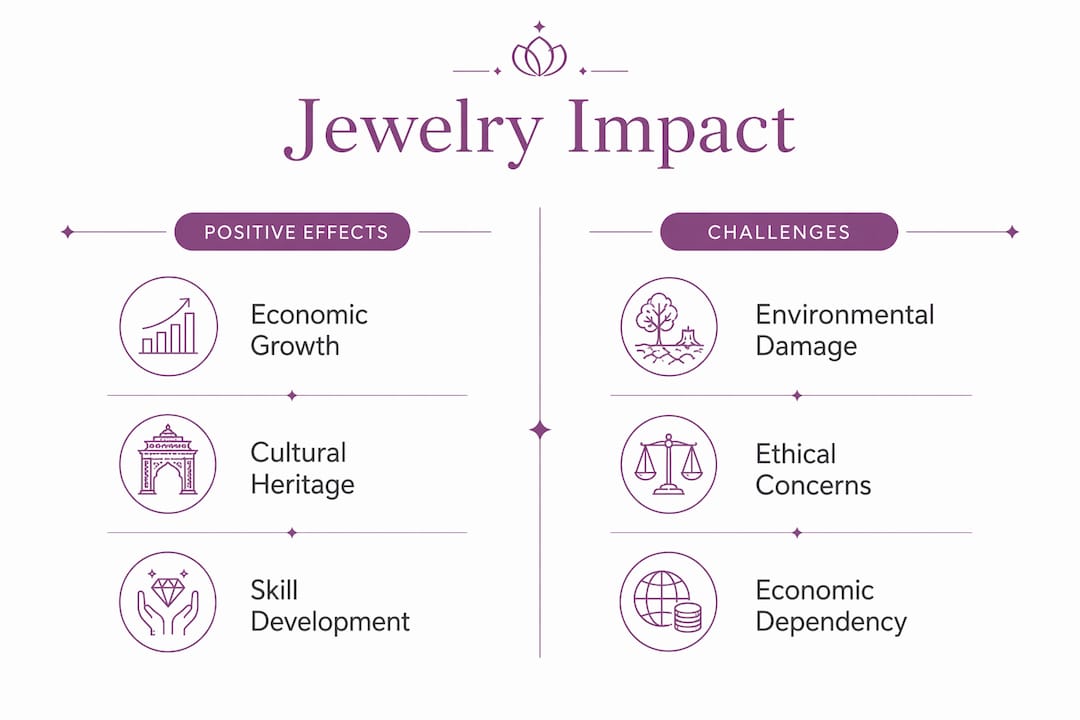
Jewelry does far more than decorate. It creates jobs, preserves cultural identity, strains ecosystems, and raises hard ethical questions about who actually benefits when a ring leaves a mine and lands in a store window. The short answer to how jewelry impacts local communities is this: the effects run deep, and whether they are positive or destructive depends almost entirely on how a piece is sourced, made, and sold. Ethical and sustainable practices are not a marketing add-on. They are the difference between a jewelry industry that lifts communities and one that extracts from them.
Here is what that looks like across the dimensions that matter most:
- Economic: Job creation, local reinvestment, tax revenue, and artisan livelihoods
- Cultural: Preservation of heritage, traditional craftsmanship, and community identity
- Environmental: Mining pollution, chemical hazards, deforestation, and the push toward sustainable sourcing
- Social: Labor abuses, child labor, conflict financing, and the growing movement toward supply chain transparency
- Ethical leadership: Brands like Merijaan that channel profits directly back to the artisans who make the work
Each of these dimensions shapes real lives in real places. The sections below break down exactly how.
How jewelry impacts local communities economically
The jewelry industry is one of the most quietly powerful economic forces in communities around the world. It generates manufacturing jobs, wholesale and retail employment, tax revenue, and export income, often in regions where few other industries operate at the same scale.
India’s gems and jewelry sector illustrates the scale clearly. The sector accounts for approximately 7% of India’s GDP, with a market size projected at $130 billion by 2030. That is not just a national headline number. It translates directly into livelihoods: over 10 million jobs are supported by the jewelry industry in India alone, spanning miners, cutters, goldsmiths, retailers, and exporters.
Stat to know: The Indian gems and jewelry sector supports over 10 million jobs and is projected to reach a $130 billion market size by 2030.
Local independent jewelers play a distinct role in this economic picture. When you buy from a local artisan or independent shop, more of that money stays in the community, circulating through wages, local suppliers, and community programs rather than flowing to a distant corporate headquarters. The economic stabilization effect is real, particularly in towns where jewelry craftsmanship is the primary industry.
Key economic contributions of the jewelry industry to local communities include:
- Direct employment across mining, manufacturing, retail, and export sectors
- Tax revenue that funds local infrastructure and public services
- Trade balance contributions through gem and jewelry exports
- Multiplier effects as artisan wages are spent locally on food, housing, and education
- Tourism stimulus when jewelry markets attract visitors and buyers from outside the region
The jewelry industry can also act as a financial stabilizer for developing economies, though heavy reliance on gold and silver imports requires careful policy to avoid inflation and trade imbalances. The economic benefits are real, but they are not automatic. They depend on whether profits stay local or leave.
How jewelry preserves and celebrates cultural heritage
Jewelry has always been a language. Long before written records, communities used rings, pendants, and beads to mark status, signal belonging, and tell stories about who they were. That function has not disappeared.
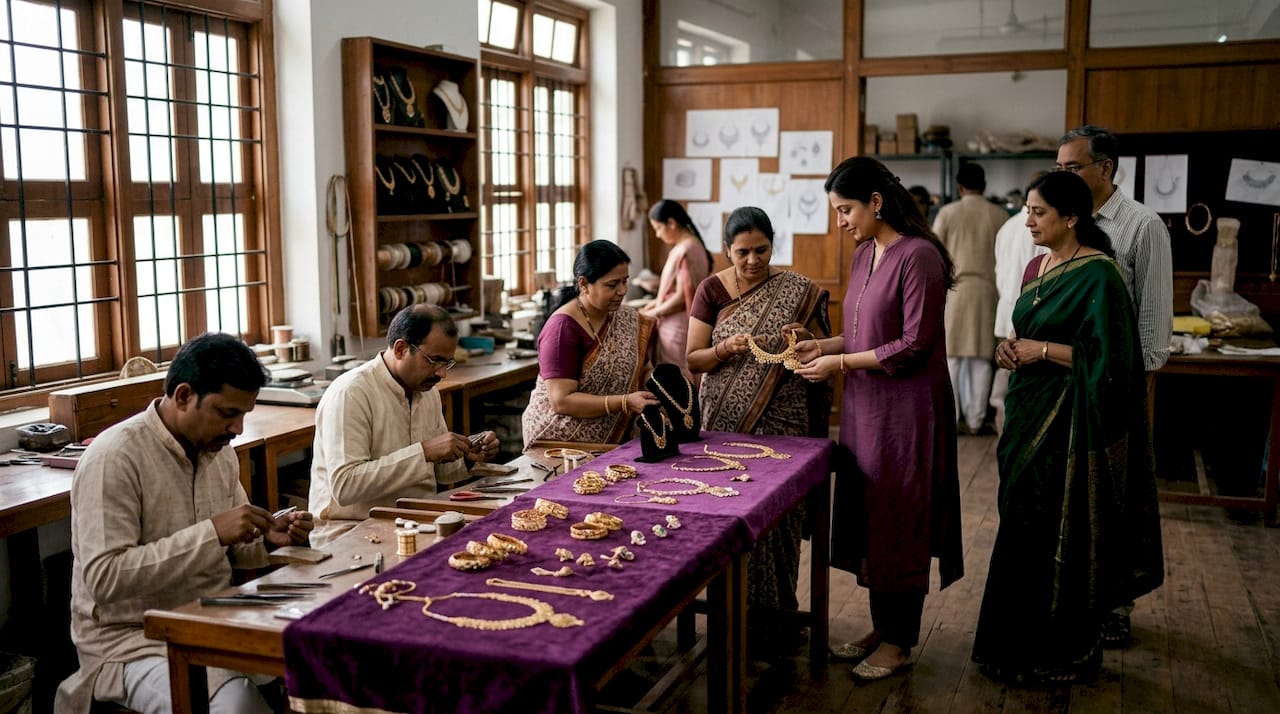
Artisan jewelry carries cultural meaning that mass-produced pieces simply cannot replicate. When a goldsmith in Oaxaca hammers a traditional filigree design, or a Navajo silversmith inlays turquoise using techniques passed down across generations, the piece carries the history of a place. Research on social life-cycle assessment of artisan jewelry confirms that a piece’s value to a local community often exceeds its material worth. The local community’s history and background give the added value to the piece, not just the metal or stone.
Cultural benefits of locally rooted jewelry include:
- Preservation of traditional techniques that might otherwise disappear within a generation
- Community identity and pride expressed through symbols, materials, and designs specific to a place
- Tourism attraction as travelers seek out authentic handcrafted pieces unavailable elsewhere
- Educational value when artisans teach their craft, passing knowledge to younger community members
- Economic dignity for artisan families who earn a living from skills their ancestors developed
Handcrafted local jewelry attracts tourism and preserves traditional creativity, enriching community life in ways that go beyond a single transaction. A thriving artisan jewelry market signals a community that has held onto something worth holding onto.
Jewelry also functions as a form of cultural self-expression that connects wearers to their roots. Exploring jewelry and self-expression reveals how the pieces people choose often reflect the communities and traditions they come from, whether consciously or not.
What does the jewelry industry’s environmental footprint actually look like?
The environmental costs of jewelry production are serious, and they fall hardest on the communities closest to mines. Gold mining, in particular, leaves a long trail of ecological damage.
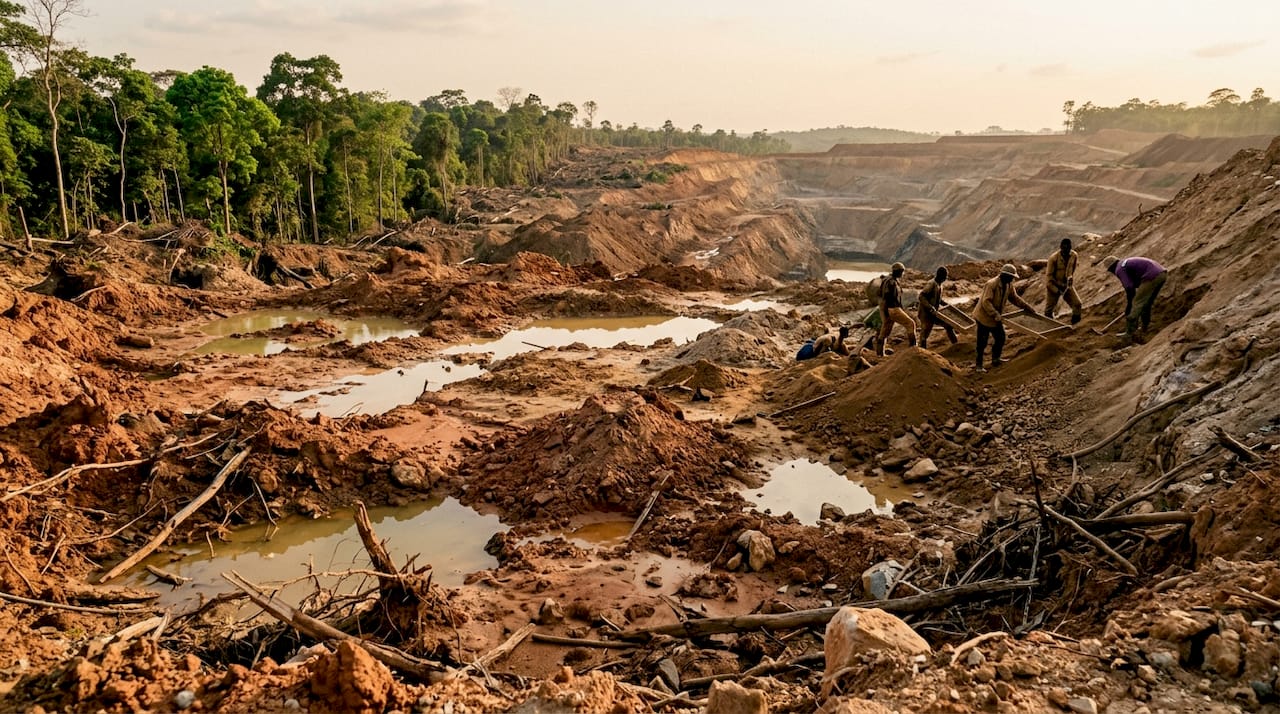
Small-scale gold mines emit an estimated 1,400 tons of mercury annually. Mercury is used in gold processing and causes damage to the nervous system. It pollutes air, water, and soil, creating health risks for workers and for communities living near mining sites. Large-scale industrial mines carry their own hazards: tailings pond failures, chemical leakages, and deforestation that strips land communities depend on for food and water.
The good news is that the industry is moving, however slowly, toward more responsible practices. Sustainable jewelry choices include responsible sourcing, upcycling materials, and eco-friendly packaging, all of which reduce ecological footprints in local communities.
Key sustainability practices gaining traction in the industry:
- Responsible sourcing from certified mines that meet environmental and human rights standards
- Lab-grown materials like moissanite that eliminate the need for destructive mining entirely
- Upcycling and recycled metals that reduce demand for newly mined gold and silver
- Eco-friendly packaging that cuts plastic waste at the retail end of the supply chain
- Traceability programs that let brands verify their materials did not come from polluted or conflict-affected sites
Pro Tip: When shopping for jewelry, look for pieces made with lab-grown stones or certified recycled metals. These choices directly reduce the pressure on mining communities and the ecosystems they depend on.
The shift toward environmental responsibility is not just ethical. It is increasingly a consumer expectation. Supply chain transparency has moved from an optional practice to a baseline requirement for brands that want to earn long-term trust.
Social impact and ethical concerns in jewelry communities
The human cost of irresponsible jewelry production is documented and specific. Artisanal mining involves 40 million workers worldwide, and for many of them, the conditions are dangerous, exploitative, or both.
Stat to know: Artisanal mining involves 40 million workers worldwide, accounting for a significant portion of the world’s gold supply.
Human rights abuses documented in mining communities include:
- Child labor in small-scale gold and diamond mining pits, where children have been injured and killed
- Forced displacement of indigenous peoples and local residents to clear land for mining operations
- Conflict financing where armed groups exploit gold and diamond mining to fund violence
- Environmental health violations as toxic chemicals contaminate water and soil used by communities
- Suppression of protest including reports of police employed by mines violently stopping community opposition
These are not edge cases. Human Rights Watch has documented them across multiple countries and supply chains. The jewelry industry’s challenge is that the same artisanal mining sector responsible for many of these abuses also provides income for millions of workers and thousands of communities. Simply cutting off artisanal suppliers is not the answer. The better path, as Human Rights Watch argues, is to support formalization and professionalization of artisanal mines while improving working conditions.
Certification schemes and NGO partnerships are making a difference. Programs like the “Just Gold” project in the Democratic Republic of Congo, supported by IMPACT (formerly Partnership Africa Canada), have registered adult miners at verified sites, established traceability, and channeled gold to legal exporters. Understanding what ethical jewelry means in practice helps buyers make choices that support these kinds of initiatives rather than undermine them.
Fair trade models and jewelry cooperatives add another layer of protection. They give artisans collective bargaining power, improve market access, and create accountability structures that individual miners cannot build alone. The role of a gemologist in custom design also matters here: professionals who prioritize supply chain transparency help ensure that the materials they specify come from responsible sources.
How Merijaan models ethical jewelry for community benefit
Merijaan was built on a straightforward premise: jewelry should be beautiful, and the people who make it should benefit from that beauty. Every piece centers lab-grown moissanite, a stone that delivers exceptional sparkle without the environmental and human costs of mined diamonds. That single material choice removes the brand from the most damaging parts of the conventional jewelry supply chain.
What sets Merijaan apart from most ethical jewelry conversations is the profit model. One hundred percent of profits go directly back to the artisans who make the jewelry. Not a portion. Not a percentage earmarked for a foundation. All of it. That structure means every purchase is a direct investment in the community of makers behind the piece.
Merijaan’s approach reflects what sustained success in ethical jewelry markets actually requires: artisan empowerment, transparency about materials and sourcing, and reinvestment in the social infrastructure of the communities where jewelry is made. Lab-grown moissanite delivers the luxury aesthetic without the ethical compromise, making it possible to offer heirloom-quality pieces at prices that do not require a mined stone’s markup.
The brand’s design philosophy, rooted in a deep, luxurious aesthetic with an emphasis on timeless craftsmanship, also honors the cultural dimension of jewelry. Each piece is made to be kept, passed down, and remembered, which is the opposite of the disposable fast-fashion jewelry model that floods markets with low-quality pieces made under unknown conditions.
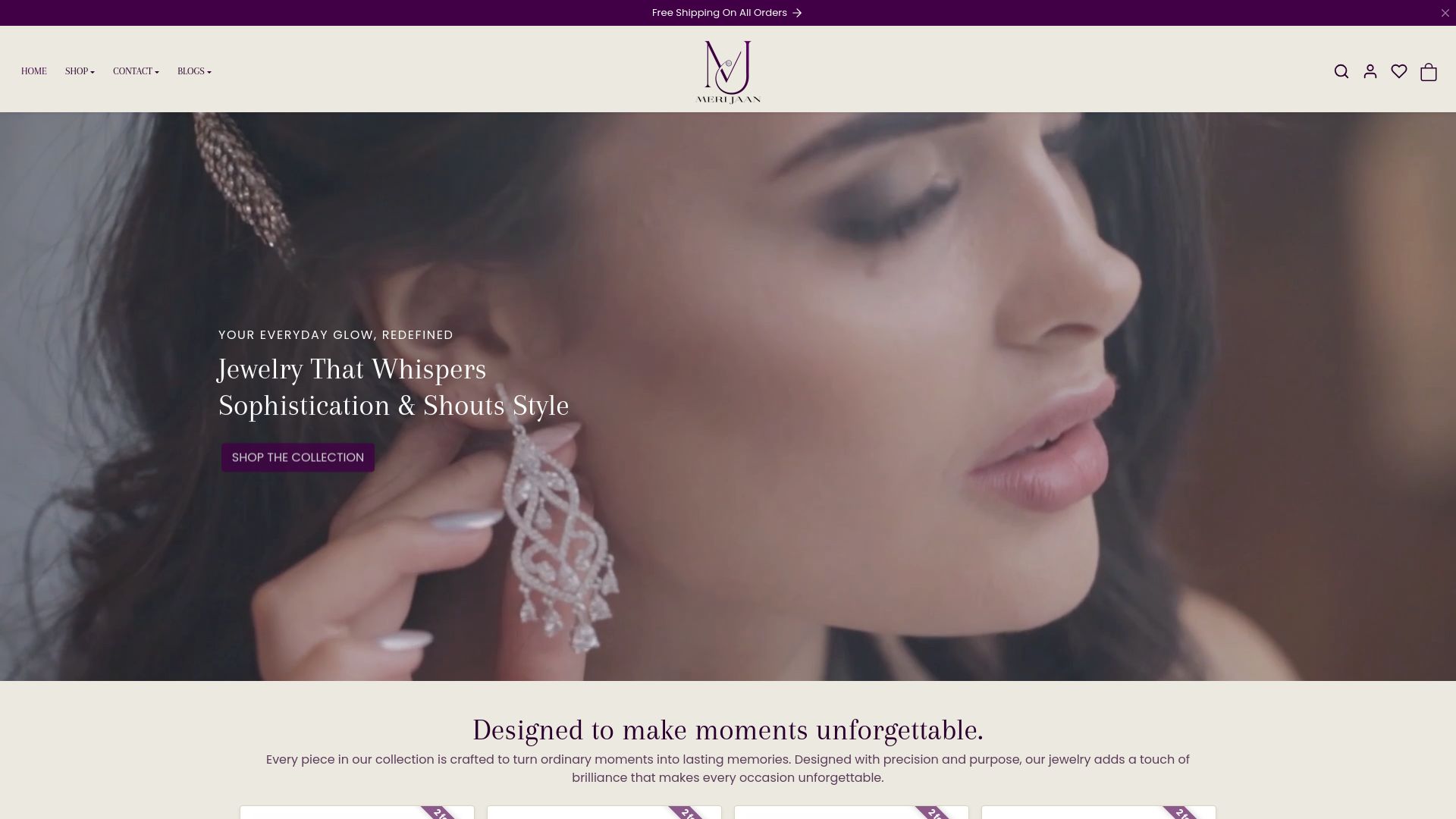
Merijaan’s full collection is available at merijaan.co, where every purchase directly supports the artisans behind the work.
How jewelry craftsmanship builds skills and education in communities
Jewelry making is a technical discipline. It requires knowledge of metallurgy, stone setting, design, and finishing, skills that take years to develop and that carry real economic value once mastered. In communities where formal education and professional training are limited, jewelry craftsmanship often serves as one of the most accessible pathways to skilled employment.
Training programs built around jewelry craftsmanship do more than teach a trade. They shift the economic position of participants from laborer to entrepreneur. The Maasai Ladies Project is a documented example: by providing capacity-building in jewelry production, the program helped women transition from subsistence work to running their own small businesses, with control over pricing, design, and sales. That kind of economic independence compounds over time in ways that a single wage job cannot.
Skill development through jewelry craftsmanship also creates a knowledge base that communities can protect and grow. When techniques are taught formally, they are less likely to disappear when older artisans retire. Apprenticeship models, vocational programs, and community workshops all serve this function, keeping craft knowledge alive while giving younger community members a viable career path.
The educational dimension extends beyond the artisans themselves. Jewelry with a documented cultural history, like the “Stregonia” pendant studied in Italian artisan communities, promotes local cultural heritage through educational activities tied to the history of the product and the territory it comes from. The piece teaches. The maker teaches. The community learns something about itself in the process.
Can local jewelry economies stay resilient over the long term?
The short answer is yes, but only under specific conditions. Local jewelry economies that depend entirely on a single material, a single market, or a single generation of artisans are fragile. Those that build in diversity, training pipelines, and reinvestment mechanisms tend to survive disruptions and grow stronger through them.
Sustained success in ethical jewelry markets depends on combining artisan empowerment, transparency, and reinvestment in local social infrastructure. That is not a theory. It is the pattern visible in communities where jewelry has remained a viable industry across generations, from Jaipur’s gem-cutting districts to the silversmithing towns of the American Southwest.
Several factors determine whether a local jewelry economy builds lasting resilience:
- Reinvestment of profits into local training, infrastructure, and community programs rather than extraction by outside investors
- Diversification of materials and techniques so that a drop in demand for one stone or metal does not collapse the entire sector
- Formal training pipelines that bring younger artisans into the craft before older ones retire
- Market access through cooperatives, fair trade networks, and direct-to-consumer channels that reduce dependence on middlemen
- Environmental stewardship that protects the land and water communities depend on, preventing the ecological collapse that has ended mining-dependent economies elsewhere
The jewelry industry can be a financial stabilizer for developing economies, but that stabilization requires policy support, not just market forces. Governments that invest in hallmarking standards, export infrastructure, and artisan training programs create conditions where local jewelry economies can compete globally without sacrificing the communities that make them possible.
Consumer choices matter too. Buying from brands that reinvest in their artisans, choosing ethically sourced pieces, and asking questions about where materials come from all send market signals that reward responsible producers and put pressure on those who are not.
Key Takeaways
Jewelry’s impact on local communities is shaped most decisively by whether profits, skills, and environmental responsibility stay within the communities that produce the work.
| Point | Details |
|---|---|
| Economic scale is significant | India’s jewelry sector supports over 10 million jobs and accounts for approximately 7% of GDP. |
| Environmental harm is specific | Small-scale gold mines emit an estimated 1,400 tons of mercury annually, threatening community health and ecosystems. |
| 40 million artisanal workers | This global workforce drives much of the world’s gold supply but often lacks labor protections or safe conditions. |
| Ethical models reinvest locally | Brands like Merijaan return all profits to artisans, demonstrating that community benefit can be built into the business model. |
| Resilience requires reinvestment | Local jewelry economies that combine training pipelines, fair trade access, and profit reinvestment outlast those built on extraction alone. |
Recommended
- How Ethical Jewelry Shapes South Asian Love Stories in 2026 – The Meri Jaan
- Rising Ethical Jewelry in South Asian Love Stories | 2026 Trends – The Meri Jaan
- Jewelry and Self-Expression: What Your Choices Say About You – The Meri Jaan
- Why Moissanite Is the Future of Ethical Jewelry in 2026 – The Meri Jaan

