
The 2026 engagement ring moment belongs to individuality: warmer gold and mixed metals, sculptural and chunky bands, elongated cuts like ovals and marquise, antique-inspired stones, and champagne or colored gems replacing the standard round white diamond. Lab-grown moissanite makes bigger, bolder versions of these looks affordable. The rest of this guide breaks down each trend and how to actually shop for one.
TL;DR:
- Larger, sculptural gold bands with unusual textures and asymmetry are replacing thinner, traditional solitaire rings.
- Elongated stone shapes like ovals and marquises continue to dominate because they make fingers appear longer and larger.
- Buyers prefer antique-style cuts and warm-colored stones, pairing them with yellow or rose gold to emphasize a vintage or personalized look.
- Lab-grown moissanite offers an affordable way to achieve bigger, bolder center stones without the high cost of natural diamonds.
- Settings like bezel and East-West styles are trending for their modern look and practicality, especially for those with active lifestyles or sensitive skin.
Table of Contents
- Was Sind Die Wichtigsten Verlobungsringe Trends 2026?
- Metalle Und Steine: Was Sich 2026 Wirklich Verändert
- How Do You Choose An Engagement Ring In 2026?
- Wie Passt Merijaan Zu Diesen Verlobungsringe Trends 2026?
- A Personal Note On Following Trends
- Ethisch Gefertigte Verlobungsringe Für 2026
- Quellen Und Weiterführende Informationen
- Sources
Was Sind Die Wichtigsten Verlobungsringe Trends 2026?
Engagement ring design in 2026 is reacting against a decade of lookalike solitaires. Jewelers and trend reporters describe it as a shift toward pieces that feel handmade and personal rather than pulled from a catalog, with buyers actively seeking out designers who have a recognizable signature rather than a formula they can copy. Here’s what that looks like on the finger.
1. Chunky, sculptural bands. Thick, architectural gold bands are replacing the thin pavé shanks that dominated the last several years. Think twisted, hammered, or asymmetrical metalwork that reads as a piece of jewelry on its own, even without the stone. This trend pairs naturally with warm-toned yellow or rose gold and looks strongest on hands that want one statement ring instead of a stack.
2. Elongated silhouettes. Ovals, elongated cushions, and marquise cuts continue to dominate because they make a stone look larger and lengthen the finger. This has been one of the most consistently reported shifts across fashion coverage, and it shows no sign of slowing into 2026.
3. Antique and old mine cuts. Old mine cuts, rose cuts, and other antique-style stones have a softer, less machine-perfect sparkle than a modern round brilliant. Jewelers and historians point to this imperfection as exactly why buyers want it: it feels rarer, older, and more personal than anything mass-produced.
4. Warmth and color. Champagne, cognac, and blush-toned diamonds are showing up next to sapphires and emeralds as buyers move away from stark white stones. These pair best with yellow or rose gold, which amplifies rather than fights the warm tone.
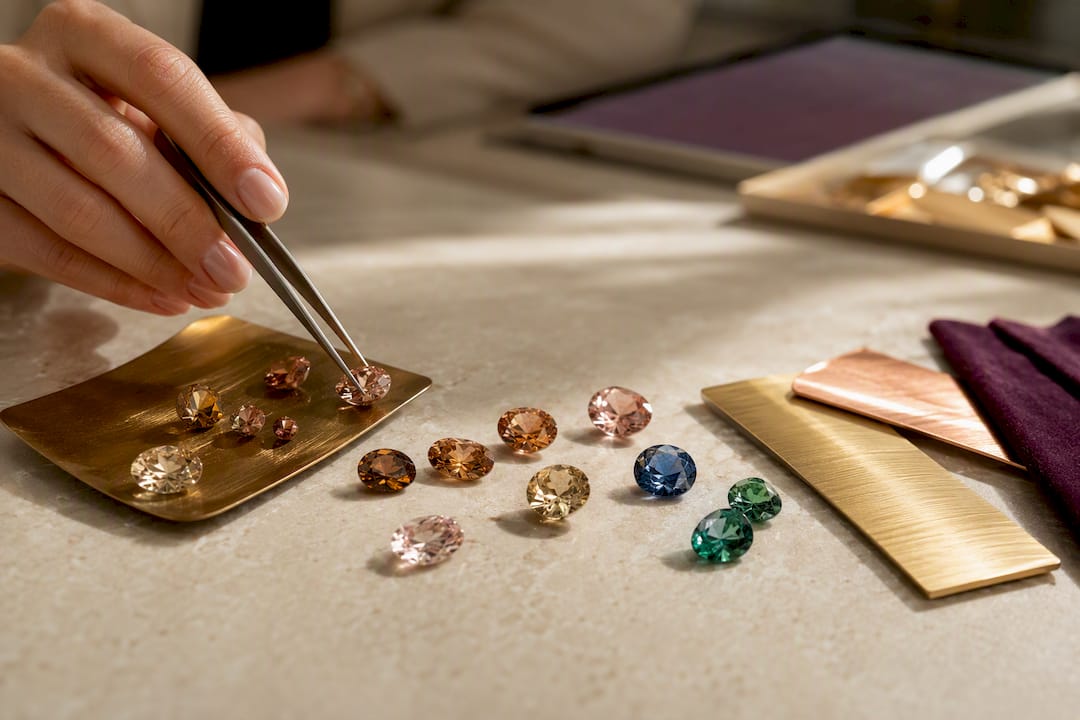
5. Halo and three-stone settings, reimagined. Halos haven’t disappeared, but 2026 versions use colored accent stones, mixed-metal frames, or East-West orientations instead of the traditional white-diamond ring of pavé.
6. Bezel and East-West settings. Setting a stone sideways or wrapping it in a smooth metal bezel gives a ring a lower profile and a more modern, wearable feel, which suits people who work with their hands or simply dislike a stone that catches on everything.
7. Quiet-luxury minimalism. At the opposite end from chunky bands, some buyers want a single clean line: a solitaire on a thin band with no distractions. It’s a trend precisely because it refuses to be one.
Several of these looks lean on size: an elongated cushion or a large oval reads dramatically different at two carats than at half a carat. That’s where lab-grown moissanite earns its place. It lets a buyer go bigger on the stone without matching the price tag a natural diamond of the same size would carry, which is a big part of why so many of these bolder, larger-stone looks are showing up on regular buyers and not just red carpets.
Metalle Und Steine: Was Sich 2026 Wirklich Verändert
The trend names above only matter once you translate them into materials. Metal color changes the entire mood of a ring, and stone origin changes what you can afford at the size you want.
- Yellow gold is back as the default rather than the alternative. It warms up antique cuts and colored stones and reads as less clinical than white metals.
- Rose gold softens elongated and vintage-style stones and tends to suit warmer skin tones and colored gems like morganite or blush sapphires.
- Platinum stays the choice for anyone who wants a cooler, more formal look or who has metal sensitivities, since it’s naturally hypoallergenic and holds prongs tightly around delicate antique cuts.
- Mixed metals, such as a platinum setting on a gold band, are showing up more often as a way to get warmth and durability in the same ring.
On stones, the industry-wide shift is toward lab-grown diamonds and moissanite, driven mostly by economics. Lab-grown diamond sales have grown sharply while natural diamond sales have softened, according to National Jeweler’s trend reporting, largely because lab-grown stones let buyers get a bigger, more dramatic center stone without the natural-diamond price. Moissanite goes a step further on affordability while still delivering serious brilliance, which is why it fits so naturally with 2026’s appetite for larger, bolder shapes. You can read more on how lab-grown diamonds are actually made if you want the technical side of that process.
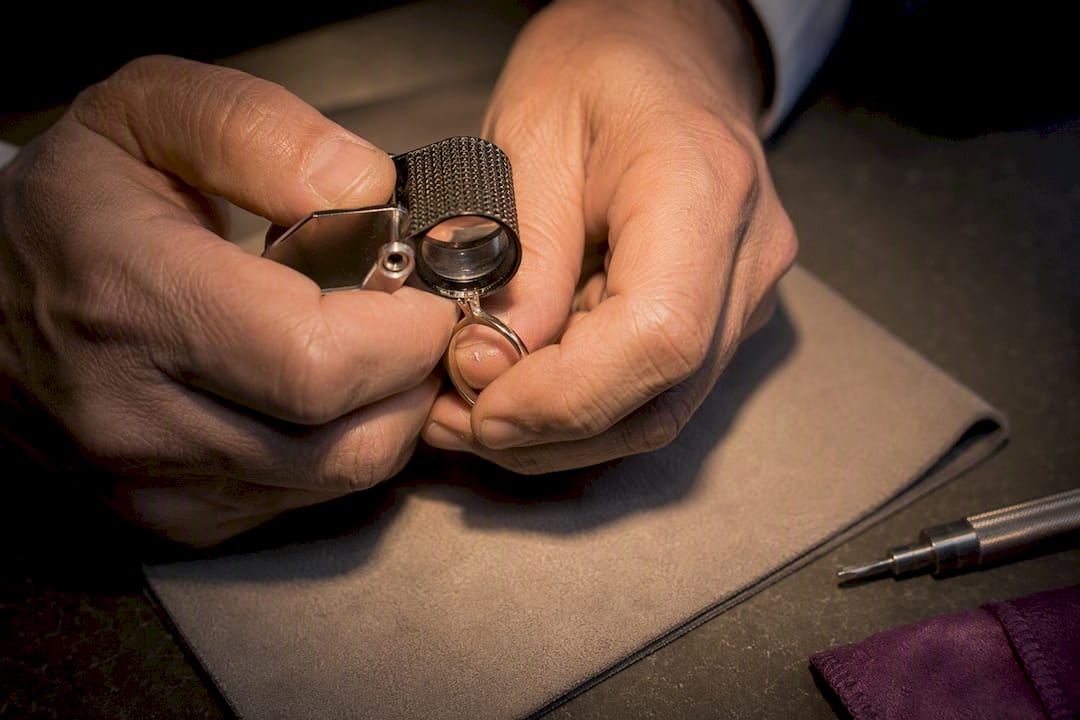
Colored stones deserve a durability note. Sapphires are hard enough for daily wear; emeralds are softer and need more careful handling. Champagne and cognac diamonds wear exactly like white diamonds, since the color comes from trace elements, not a structural difference. Whatever you choose, have a jeweler check prongs and settings once a year, since sculptural and bezel styles can wear unevenly compared to a classic six-prong solitaire.
How Do You Choose An Engagement Ring In 2026?
Trends are inspiration, not a shopping list. Use this order to turn them into an actual decision:
- Think about daily wear first. Someone who works with their hands should lean toward bezel or low-profile settings over tall prongs that catch on everything.
- Pick the metal before the stone. Metal color sets the entire personality of the ring and narrows your stone options fast.
- Choose the shape. Elongated cuts read bigger; round and cushion cuts read more classic and are easier to resize later.
- Set a real budget range. Lab-grown and moissanite options mean you can prioritize carat size and shape over stretching for a natural stone, according to industry data on shifting buyer spending.
- Ask the jeweler direct questions: What’s the return or exchange policy? Is there a warranty? Can this setting be resized later without damaging the stone?
Pro Tip: Bezel and East-West settings can be harder to resize than a classic prong setting, so get your ring size confirmed twice before ordering if you’re going that route.
Wie Passt Merijaan Zu Diesen Verlobungsringe Trends 2026?
Meri Jaan builds around lab-grown moissanite specifically because it lets the 2026 mood, bigger stones, warmer metals, sculptural details, happen without the natural-diamond price tag attached to it. The brand’s approach centers on craftsmanship and ethical sourcing rather than mass production, which lines up directly with what buyers are asking for this year: pieces that feel considered, not copied.
The 2026 shift toward tactile, individually-styled rings rewards makers who treat design as craft rather than formula, which is exactly the space lab-grown moissanite pieces like the Verbier Twist Ring are built for.
A Personal Note On Following Trends
Trends are a starting point, not a rulebook. The most interesting rings this year borrow a detail here, a shape there, and skip the rest. If you’re shopping, try the ring on and move your hand around like you would on an ordinary Tuesday, not just under the store lights. Comfort in motion tells you more than any trend list can.
— Ammar
Ethisch Gefertigte Verlobungsringe Für 2026
The trends above all point in one direction: buyers want a ring with a bigger presence and a smaller footprint, ethically and financially. Merijaan builds exactly that with lab-grown moissanite, ethically sourced pieces designed to carry the sculptural bands, warm gold tones, and elongated shapes defining 2026 without the price tag of a natural diamond of the same size.
Every piece comes with a lifetime warranty, and club members get unlimited exchanges if a trend, or your taste, shifts down the line. If a chunky gold band or an elongated moissanite oval caught your eye in this guide, browse the current collection at Meri Jaan and see which one fits your hand and your budget. For more on how lab-grown stones stack up against mined diamonds, the full comparison breakdown is worth a read before you decide.
Quellen Und Weiterführende Informationen
- National Jeweler: lab-grown diamond growth, cut popularity, and buyer spending shifts.
- Vogue: elongated silhouettes and sculptural band trends.
- Veranda: warm-toned diamonds, colored stones, and antique-cut demand.
- Harper’s Bazaar UK: chunky and sculptural band reporting.
- Forbes: the shift toward individuality and craft-led design.
- JewelCloud: technical primer on lab-grown diamond formation.
Sources
- Engagement Ring Trends 2026: What’s In, and Why | National Jeweler
- These engagement ring trends will be huge in 2026 | Vogue
- The Biggest Engagement Ring Trends of 2026, According to Luxury Jewelry Pros | Veranda

