
Wash gold jewelry in warm water with a drop of pH-neutral dish soap, let it soak for several minutes, then work a soft brush into the crevices before rinsing and patting dry. Skip anything with bleach, chlorine, or ammonia, and put down the toothpaste. Pearls, loose stones, and antique settings need a jeweler’s eye before you touch them with water at all.
TL;DR:
- Refrain from soaking plated gold or rhodium-coated jewelry to prevent wearing down the thin surface layers, and opt for quick wipes instead.
- Avoid using bleach, chlorine, abrasive pastes, or toothpaste, as they damage gold alloys and scratch surfaces over time.
- For jewelry with loose stones or antique settings, always seek professional inspection before any water-based cleaning to prevent losing stones.
- Store jewelry separately in soft pouches and wipe pieces regularly to minimize grime buildup and reduce cleaning frequency.
- Visit a jeweler annually for professional cleaning and maintenance, especially for pieces showing wear or loose stones, to preserve their appearance and value.
Table of Contents
- What You Need for Safe Gold Jewelry Care
- How to Clean Gold Jewelry at Home, Step by Step
- Caring for Plated Gold, Rhodium White Gold, and Delicate Stones
- Storage and Daily Habits That Cut Down on Cleaning
- When to See a Jeweler Instead of Cleaning at Home
- Why Gentle Care Matters More With Ethical Jewelry
- Jewelry Built for Everyday Wear, Not Just the Occasion
- Sources
- FAQ
What You Need for Safe Gold Jewelry Care
Good goldschmuck pflege and gold care don’t require a drawer full of specialty products. A few basics handle almost everything: mild dish soap (pH-neutral), warm water (not hot), a soft-bristled brush like a baby toothbrush, and a microfiber or lint-free cloth for drying and light polishing.
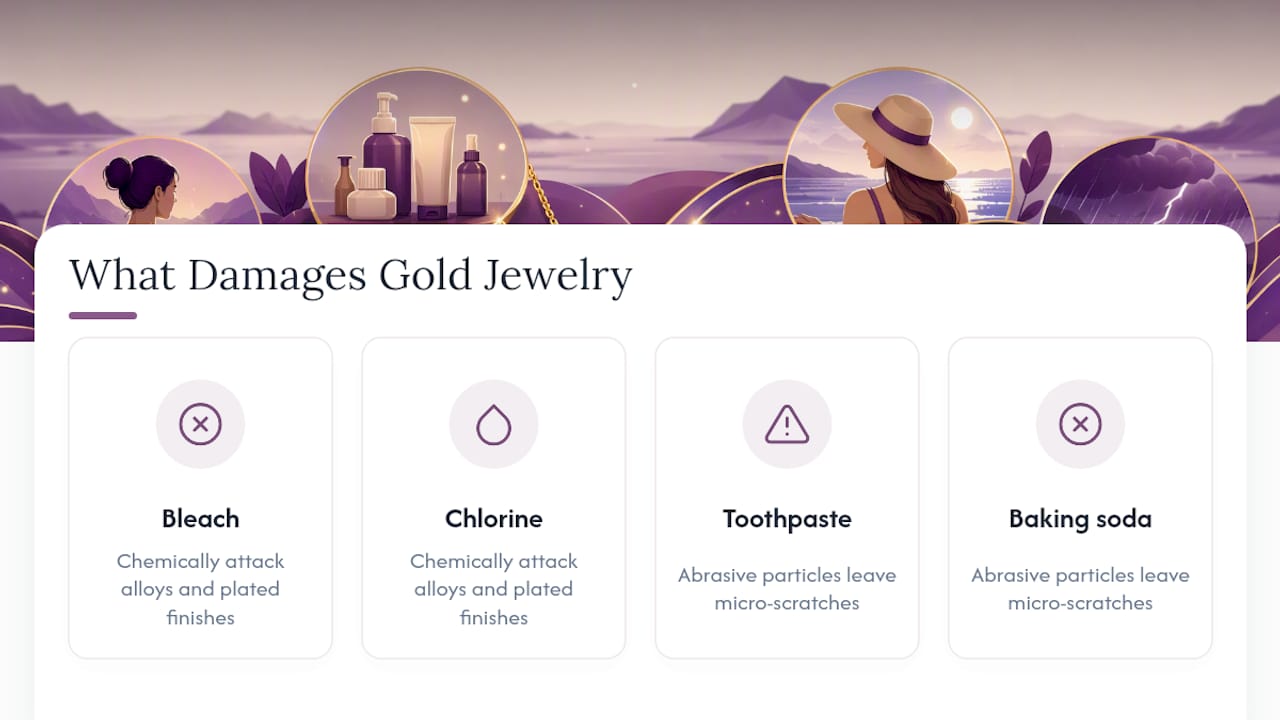
Skip bleach and chlorine entirely. Both attack gold alloys and plated finishes, leaving discoloration that no amount of home cleaning fixes. Toothpaste and baking soda are common “hacks” online, but their abrasive particles leave micro-scratches that dull the surface over time, and rough brushes do the same damage faster.
Before you soak anything, check it. A piece with loose stones, a hollow shank, antique glue, or pearls should go to a jeweler first. Soaking a wobbly setting can knock a stone loose in the sink, and that’s a worse problem than a little tarnish.
How to Clean Gold Jewelry at Home, Step by Step
The core routine is simple: soap, soak, brush, rinse, dry. The details matter more than people expect.
- Mix the solution. Add one or two drops of pH-neutral dish soap to a small bowl of warm water. You want faint suds, not a bubble bath.
- Soak for several minutes. This loosens body oil, lotion residue, and everyday grime without stressing the metal. This window comes straight from jeweler cleaning guidance and it’s long enough to work without becoming a chore.
- Brush the crevices. Use the soft brush in small circles around prongs, engraved patterns, and the underside of pendants, where grime hides longest.
- Rinse under running water. A mesh strainer in the sink is cheap insurance against a ring disappearing down the drain.
- Dry and polish. Pat dry with a microfiber cloth, then buff gently to bring back the shine. Lint-free cloths avoid the tiny scratches that paper towels and regular fabric leave behind.
For frequency, match the routine to how often you wear the piece. A ring you wear daily benefits from a quick cloth wipe regularly and a full soak occasionally. Occasional-wear pieces need a full clean far less often; when they come out of storage looking dull is usually the right cue.
Pro Tip: For adhesive residue from stickers or old repairs, rub a small dab of rubbing alcohol on a cotton swab before the soap soak. It breaks down the sticky film without touching the gold underneath.
Green discoloration on skin (not the jewelry itself) usually means a lower-karat gold alloy reacting with sweat or lotion, not a flaw in the piece. If grime persists after two full cleaning cycles, or if a stone feels loose when you gently press it with a fingernail, stop and take the piece to a jeweler instead of pushing harder with home tools.
Caring for Plated Gold, Rhodium White Gold, and Delicate Stones
Not every piece can handle the soap-and-soak routine, and treating them all the same way is how damage happens.
- Vergoldeten Schmuck (plated gold) has a gold layer measured in microns, thin enough that repeated soaking or scrubbing wears through it faster than most people expect. Stick to a soft, slightly damp cloth wipe rather than a full soak, and save any soap contact for a quick pass, not a 15 minute bath.
- Rhodium-plated white gold gets its bright white look from a thin rhodium coating over yellow or rose gold underneath. Cleaning keeps it looking fresh, but it can’t restore rhodium that’s already worn thin. Once you see a warmer, yellowish tone coming through, re-rhodination at a jeweler is the only fix.
- Pearls and porous or treated gems should never soak. Wipe with a barely damp cloth after wear and let a jeweler handle deeper cleaning.
- Hard stones like diamonds and sapphires generally tolerate ultrasonic cleaners well. Pearls, opals, and treated emeralds do not, and a home ultrasonic unit can crack or cloud them in seconds.
Storage and Daily Habits That Cut Down on Cleaning
The less grime a piece collects, the less cleaning it needs. A few habits do most of the work:
- Take jewelry off before showering, swimming, working out, or applying lotion and perfume. Sweat, chlorine, and cosmetic residue are the biggest daily stressors on gold surfaces.
- Store pieces in separate soft pouches or lined compartments so metals and stones don’t scratch each other.
- Keep mixed-metal collections away from humidity and direct sunlight. Anti-tarnish strips help if silver or plated pieces share a drawer with gold.
- Give each piece a quick cloth wipe after wear and a quick clasp check every few weeks. Loose clasps are the most common way jewelry gets lost.
Pro Tip: Drop a silica gel packet into your jewelry box. It’s the same trick that keeps shoe boxes dry, and it works just as well against tarnish.
For more on organizing a small daily rotation, Meri Jaan’s storage guide covers compartment setups that fit a jewelry box or a travel case.
When to See a Jeweler Instead of Cleaning at Home
Home care handles daily grime, but it doesn’t replace a professional check. Jewelers generally recommend an annual inspection and cleaning for pieces worn regularly, and more often for heirlooms or anything showing visible wear.
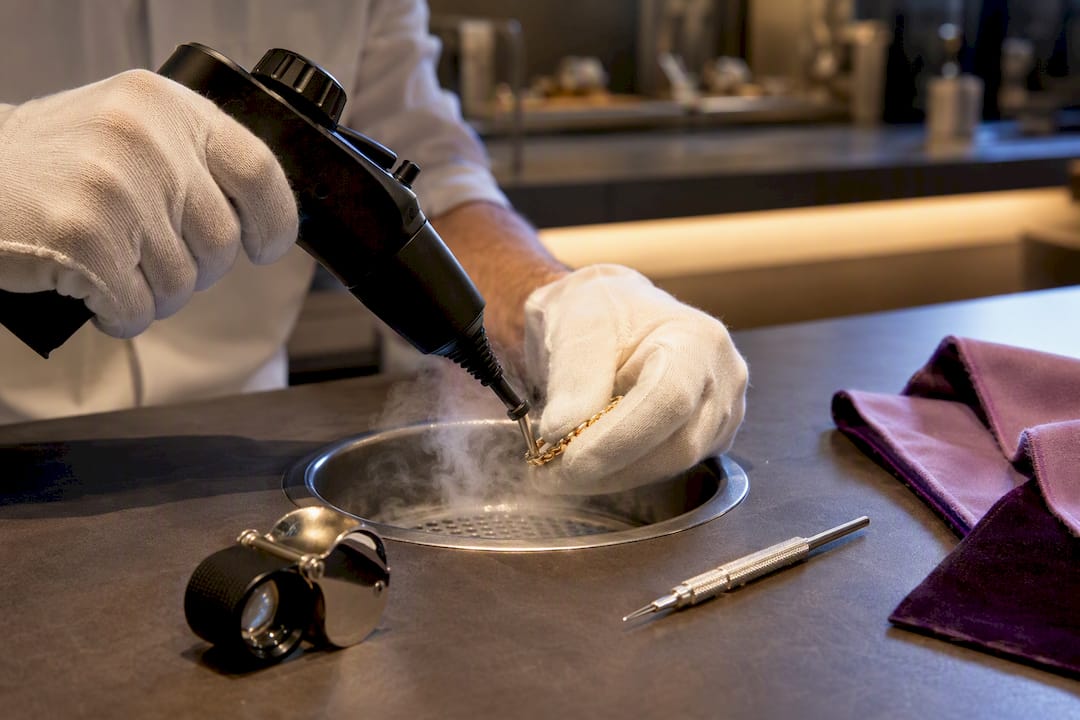
A jeweler’s visit typically covers ultrasonic or steam cleaning, prong and clasp tightening, and polishing. Polishing restores a mirror finish, but it does this by removing a microscopic layer of metal, so treat it as an occasional service rather than a routine step. Ask any jeweler you’re considering whether their work carries a warranty and whether they’re insured for loose stones or lost pieces during service. A shop that won’t answer clearly is worth skipping.
Why Gentle Care Matters More With Ethical Jewelry
Every piece we make at Merijaan starts with someone’s hands and hours of work, which is part of why gentle upkeep matters to us beyond just aesthetics. A soft brush and a little patience protect that effort far better than a harsh scrub ever could. Our ethical jewelry care guide goes deeper on daily habits. Home care paired with an occasional professional check is the strategy that keeps pieces looking right for years, not months.
— Ammar
Jewelry Built for Everyday Wear, Not Just the Occasion
Merijaan designs pieces meant to survive real life, not sit in a box between special occasions. Our moissanite jewelry uses durable settings and finishes that hold up to the gentle care routine above, without the price tag of traditional fine jewelry.

The Frauenfeld Necklace is a good example: a sterling silver setting with moissanite stones designed for daily wear, not just display. Pair it with tips from our guide on tarnish-resistant finishes to understand what your piece can handle, and follow the same soap-and-soft-brush rules from this guide no matter where you bought it. Browse the current collection to find a piece that fits your everyday rotation.
Sources
- Schmuckreinigung: Schmuck richtig reinigen | MyGold
- Wie pflege ich meinen Gold- und Platinschmuck? | Tiffany & Co.
- Vergoldeter Schmuck — Pflegehinweise & Tipps
- Schmuck Reinigen zu Hause: Gold, Silber und Vergoldung Richtig Pflegen | Zevira
FAQ
How Do I Properly Care for Gold Jewelry?
Soak it in warm water with a drop of pH-neutral dish soap for 10 to 15 minutes, brush gently with a soft brush, rinse, and dry with a microfiber cloth. Avoid bleach, chlorine, and abrasive pastes, and skip soaking for pearls or loose settings.
How Do I Get Gold Jewelry Shiny Again?
After the soap soak and rinse, dry the piece completely and buff it with a soft polishing cloth to bring back its shine. If dullness persists after a full cleaning, professional polishing at a jeweler removes fine scratches, though it does wear away a thin layer of metal each time.
How Do I Fix Tarnished Fashion Jewelry?
Wipe plated or fashion pieces with a barely damp cloth rather than soaking them, since their thin gold layer wears away with abrasive cleaning or extended water contact. For heavier tarnish, a jeweler can assess whether re-plating is worth it.
What Is the Best Way to Clean Gold?
Mild soap and warm water, applied with a soft brush and followed by a full rinse and dry, is the safest and most effective method for solid gold. Reserve ultrasonic cleaners for hard-stone pieces without pearls or treated gems, since consumer units can damage fragile materials.
