
Yes, most gold, silver, and platinum rings can be resized, usually within a range of about 1 to 3 sizes without weakening the piece. Titanium, tungsten, most stainless steel, and full-eternity or memory rings are the common exceptions. Before you decide on a fix, get your finger measured with a professional ring gauge or bring the ring to a jeweler for a quick assessment.
TL;DR:
- Most gold, silver, and platinum rings can be resized within one to three sizes, but harder metals like tungsten and titanium usually cannot.
- Resizing small increases, up to about half to one size, is best achieved by stretching, while larger adjustments require adding metal and re-soldering.
- Reducing a ring’s size is generally more straightforward through cut-and-solder methods, with shrinkage up to half a size possible by compression for certain designs.
- Factors such as metal type, presence of stones, engraving, and ring design significantly influence whether resizing is feasible and its cost.
- Always measure finger size accurately before resizing to avoid multiple adjustments, especially with complex or stone-set rings, and get a written estimate beforehand.
Table of Contents
- Who Can Resize Your Ring: Jeweler, Goldsmith, or Brand Repair Service
- How to Enlarge a Ring: Stretching, Adding Metal, and Adjustable Options
- How to Reduce a Ring: Cut-and-Solder, Compressing, Beads, and Inserts
- Material, Design, and Stone Considerations: What Changes Feasibility and Cost
- Costs and Timeline: What to Expect to Pay and How Long It Takes
- DIY and Temporary Fixes: When a Quick Solution Makes Sense
- How to Choose a Jeweler: A Short Checklist and Questions to Ask
- How Meri Jaan Supports Sizing Decisions
- Why Getting the Measurement Right Matters More Than the Method
- Sources
- FAQ
Who Can Resize Your Ring: Jeweler, Goldsmith, or Brand Repair Service
Three types of professionals handle ring resizing, and they don’t offer the same thing.
- In-store repair desks at chain retailers usually handle straightforward jobs, quote a flat fee, and send more complex work out to a workshop.
- Independent goldsmiths tend to do the work on-site, which means faster turnaround and more room to negotiate details like matching a worn finish.
- Brand or manufacturer repair services are the right call for pieces still under warranty, since resizing through a third party can void coverage.
A proper in-person assessment starts with measuring your current size against the target size, then inspecting the setting. A jeweler checks whether prongs are loose, whether stones sit near the area that needs cutting or stretching, and whether the metal has been resized before. That inspection is what determines the method, and the price.
How to Enlarge a Ring: Stretching, Adding Metal, and Adjustable Options
Enlarging a ring works differently depending on how many sizes you need to gain and what the band is made of.
- Stretching works for increases of about half a size up to one full size, and it’s best suited to plain bands in softer metals like gold or silver. A jeweler runs the ring over a mandrel and expands it under pressure, but stretch too far and the band thins out and loses strength.
- Adding metal is the reliable route for anything beyond one size. The jeweler cuts the shank, inserts a matching section of metal, solders it in place, then reshapes and polishes the seam until it’s invisible.
- Adjustable or open-cuff designs sidestep the whole problem. Some rings are built with a flexible gap or spring mechanism that shifts size on its own, which is worth considering if your finger size fluctuates seasonally.
Pro Tip: If a ring has a decorative pattern or engraving running around the entire band, ask the jeweler how they plan to match the added section before they start. A poorly blended seam is the most common complaint after enlargement work.
Rigid metals like titanium and tungsten resist both stretching and soldering because they don’t flex or melt the way gold does, which is why jewelers often can’t enlarge them at all.
How to Reduce a Ring: Cut-and-Solder, Compressing, Beads, and Inserts
Making a ring smaller has more reliable options than enlarging it, mainly because removing metal is easier to control than adding it.
- Cut-and-solder is the standard method for most metals: the jeweler removes a small section of the shank, joins the two ends, and solders the seam smooth. It’s permanent, precise, and works for reductions of several sizes.
- Compressing (sometimes called stauchen) suits small reductions, often a quarter to half a size, and skips cutting entirely by squeezing the band to a tighter diameter.
- Sizing beads or inner shanks are small metal bumps or an inserted strip added to the inside of the band. They’re reversible, cheaper, and popular for rings that might need to fit a different finger later, like an heirloom being passed down.
- Silicone inserts offer a non-permanent fix for anyone unsure whether the size change is temporary.
Resizing methods that cut into and rejoin metal do have a ceiling. Every solder joint changes the metal’s grain structure slightly, and repeated resizing weakens the band over time. Most jewelers suggest limiting a single ring to a handful of full resizes across its lifetime. If you’re on your third or fourth adjustment, it’s usually cheaper and safer to order a new ring in the correct size.
Material, Design, and Stone Considerations: What Changes Feasibility and Cost
The metal and the setting decide almost everything about whether ring size adjustment is even possible, let alone what it costs.
Soft precious metals bend, stretch, and solder cleanly, which is why gold, silver, and platinum rings are generally resizable. Hard metals resist the same tools. Rings with stones set all the way around the band, like eternity or pavé styles, usually can’t be resized without remaking the ring entirely, since there’s no bare metal section left to cut or stretch.
| Ring Feature | Resizing Outlook |
|---|---|
| Gold, silver, platinum band | Usually resizeable, 1 to 3 sizes |
| Titanium, tungsten, stainless steel | Often not resizeable |
| Single center stone, plain shank | Straightforward, low added cost |
| Eternity or pavé stone setting | Usually requires remaking the ring |
| Engraved or textured band | Resizeable, but engraving may need restoring |
When stones sit close to the cutting point, workshops typically remove them before resizing to avoid heat or pressure damage, then reset and inspect the prong settings afterward. That extra step adds cost and time. Engraved inscriptions or hand-textured surfaces near the resized section may also need to be re-cut or refinished to match.
Costs and Timeline: What to Expect to Pay and How Long It Takes
Simple resizing on a plain band without stones is the cheapest and fastest job a jeweler handles. Add gemstones, extra metal, or a manufacturer shipment, and both the price and the wait climb.
- Basic reductions or small stretches on plain bands sit at the low end of most jewelers’ pricing.
- Jobs requiring gem removal, resetting, or added metal cost more because of the extra labor and materials.
- Metal type matters too. Platinum resizing generally costs more than silver or gold because of the metal’s density and higher melting point.
- Shipping a ring to a brand’s manufacturing center for warranty repair adds days or weeks compared to a local shop.
Most professional resizing jobs safely adjust a ring within 1 to 3 sizes without compromising the band’s strength. Beyond that range, a jeweler will often recommend remaking the piece instead. Always ask for a written quote and an estimated completion date before you leave the ring. Local shops often finish simple jobs within a few days, while brand repair centers that require shipping can take several weeks.
DIY and Temporary Fixes: When a Quick Solution Makes Sense
A ring that’s loose by half a size doesn’t always need a trip to the jeweler right away.
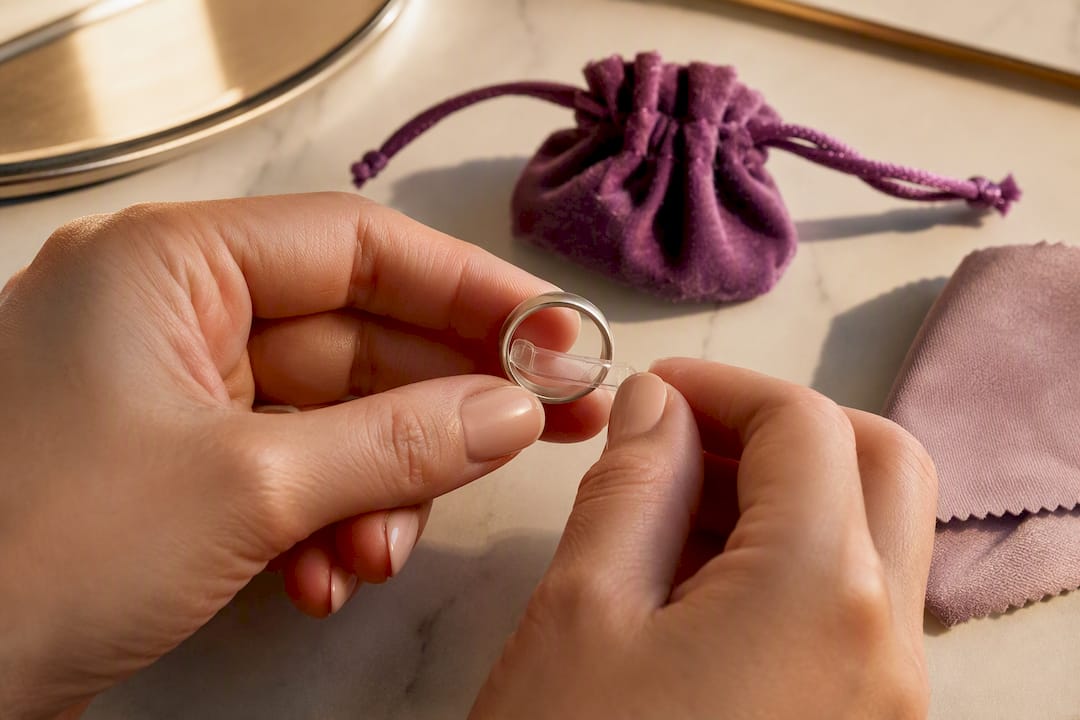
- Ring guards are small clips or coils that snap onto the inside of the band and take up the extra space.
- Silicone inserts sit inside the band and compress slightly for a snugger fit, and they’re easy to remove.
- Tape or nail polish wrapped around the base of the band can work in a pinch, though both wear off quickly and look less than elegant.
These fixes are temporary by nature, and none of them belong on a ring you plan to wear daily for years. Trapped moisture under tape or an insert can irritate skin, and constant rubbing against a guard or polish buildup can wear down plating or a polished finish over time.
Pro Tip: Save DIY fixes for inexpensive rings or short-term situations, like wearing a borrowed ring to an event. Anything with real stones or fine metal deserves a professional look before you improvise.
How to Choose a Jeweler: A Short Checklist and Questions to Ask
A little vetting up front saves you from a botched resize or a ring that goes missing in transit.
- Check for a visible workshop or a certified goldsmith on staff. A shop that sends everything out to an unnamed third party gives you less accountability if something goes wrong.
- Ask to see examples of past resizing work, especially on rings similar to yours in metal or stone setting.
- Get a written estimate that lists the method, the cost, and whether stones will be removed.
- Confirm insurance coverage for items left in their care, particularly for anything with meaningful stone value.
When you sit down for the estimate, ask directly: Can you resize this ring, and by how many sizes? Will any stones need to be removed and reset? Can you restore the engraving afterward? What warranty comes with the work? A jeweler who hesitates on any of these, or won’t put the estimate in writing, is worth a second opinion.
How Meri Jaan Supports Sizing Decisions
Meri Jaan builds its collection around lab-grown moissanite, so getting the fit right matters as much as the stone itself. Several styles, including the Chandolin adjustable ring, use a flexible design that sidesteps resizing altogether. For anyone who already owns a piece from us, our ring size guide walks through accurate at-home measurement, and our support team can walk you through warranty and repair steps if a resize is ever needed.
Why Getting the Measurement Right Matters More Than the Method
The advice around ring size adjustment tends to focus on which technique a jeweler will use, but that’s the easy part once you’re sitting across from someone qualified. The part people skip is measuring correctly before they ever book an appointment. Finger size shifts with temperature, salt intake, and time of day, and showing up with a guess instead of a real measurement is how people end up paying for a second resize within a year.
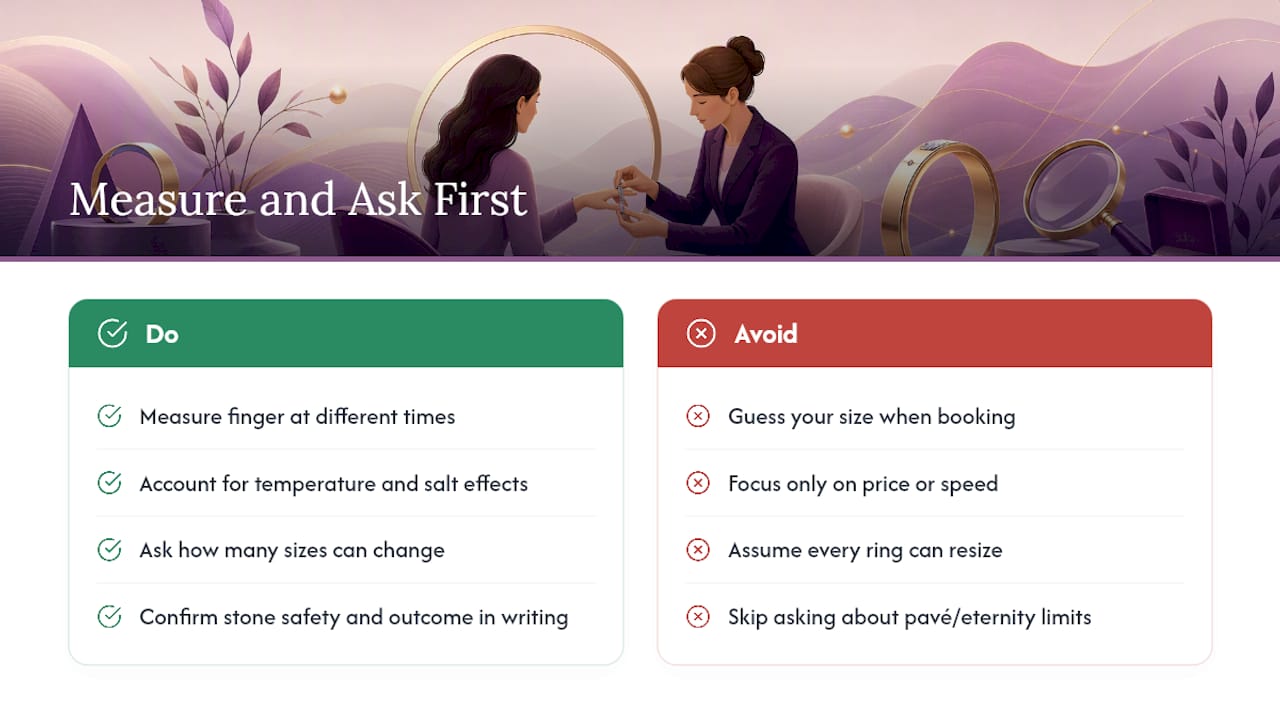
Conventional advice also underplays the stone question. Readers fixate on cost and turnaround, but the real decision point is whether the setting allows for resizing at all. An eternity band or a heavily pavé-set ring isn’t a pricing problem, it’s a design limitation, and no amount of budget changes that.
If there’s one thing worth prioritizing, it’s asking the blunt questions before any metal gets cut: how many sizes, what happens to the stones, and what the ring looks like when it’s done. A jeweler who answers plainly, in writing, is the one worth trusting with a piece that matters.
— Ammar
Sources
- Ring vergrößern: So passt der Lieblingsring wieder! (CHRIST)
- Ring verkleinern - welche Ringe kann man enger machen? | Dorotheum Juwelier
- How to resize your men’s ring at home — Trendhim
FAQ
How Much Does It Cost to Resize a Ring?
Cost depends heavily on the metal, whether stones need removing, and whether metal needs adding or cutting away. Simple reductions on plain bands cost the least, while jobs involving gem removal, resetting, or platinum run higher.
How Much Does It Cost to Enlarge a Ring?
Enlarging generally costs more than reducing because it often requires adding and soldering new metal rather than simply cutting the band down. Stretching a plain band by a fraction of a size is the cheapest enlargement option.
Can You Change a Ring Size After It’s Already Made?
Yes, most rings made from gold, silver, or platinum can be adjusted after the fact, typically within 1 to 3 sizes. Rings in titanium, tungsten, or with continuous stone settings usually cannot be resized this way.
How Long Does It Take to Get a Ring Made Bigger?
Local jewelers often complete straightforward enlargements within a few days, while jobs requiring gem removal or shipment to a manufacturer’s repair center can take several weeks. Always confirm a completion date in writing before leaving your ring.
What Rings Cannot Be Resized?
Rings made of titanium, tungsten, or many stainless steels resist resizing because they don’t stretch or solder like softer metals. Full-eternity or pavé-set rings also typically require remaking rather than resizing, since stones cover the entire band.

