

The most practical system is a hybrid: stackable anti-tarnish trays for most of your collection, plus a small open display for the 5 to 7 pieces you actually wear each week. If you’re starting from scratch, buy a starter set of modular trays before anything else. A single velvet-lined box works fine for a smaller collection, but trays scale as your jewelry grows, which a fixed box never does.
TL;DR:
- Modular stackable trays are ideal for expanding collections and can include anti-tarnish strips that should be replaced every 6 to 12 months.
- A dedicated travel case like Windrose Schmuckkoffer is suitable only for frequent travelers with large collections, not casual or occasional trips.
- Maintaining a dry, dark storage environment is crucial, with individual compartments and anti-tarnish lining particularly important for silver and plated jewelry.
- Sorting jewelry by type and how often it’s worn, plus regular maintenance like monthly inspections, helps prevent damage and loss.
- Secure valuable pieces with a lockable safe or jewelry box, as anti-tarnish storage alone does not provide theft protection.
Table of Contents
- What Is the Best Schmuck Aufbewahrung Setup for Your Collection?
- What Materials and Linings Actually Protect Jewelry?
- How Do You Choose Storage by Collection Size?
- How Should You Handle and Care for Jewelry Day to Day?
- What Does Jewelry Storage Cost, and Where Should You Buy It?
- Why Visibility Matters as Much as Protection
- How Should You Organize Compartments Once You Have Them?
- How Do You Clean Jewelry Before Putting It Away?
- How Do You Keep Valuable Jewelry Secure at Home?
- What This Guide Gets Right That Most Storage Advice Misses
- A Different Kind of Investment: Jewelry Worth the Extra Care
- Where to Read More on Jewelry Storage
- Sources
What Is the Best Schmuck Aufbewahrung Setup for Your Collection?
Every jewelry storage system on the market falls into five categories, and each one solves a different problem. A jewelry box (or Schmuckschatulle, the standard German term you’ll see on Swiss retail sites) suits someone with a modest, mixed collection who wants everything in one lidded container. Stackable trays suit anyone whose collection is growing, since you add a layer instead of buying a whole new box. Hanging organizers solve necklace tangling and work well on the back of a closet door. Jewelry rolls are built for suitcases, not dressers. Armoires or cabinets make sense only once a collection gets large enough to need a dedicated piece of furniture.
Testing from Wirecutter found that a single well-built stackable tray system is often the smartest first purchase, because it expands with lined compartments instead of forcing a replacement later.
| Storage type | Best for | Capacity | Anti-tarnish protection | Price range | Portability |
|---|---|---|---|---|---|
| Jewelry box (e.g. Songmics Schmuckschatulle) | Small to mixed collections | Fixed, moderate | Often lined, varies by model | Budget to mid-range | Low |
| Stackable trays (e.g. Stackers modular trays) | Growing collections | Expandable | Usually lined, add strips as needed | Mid-range to premium | Low to moderate |
| Hanging organizer | Necklace-heavy collections | Moderate, wall or door mounted | Rarely included | Budget | Low |
| Jewelry roll | Travelers | Small, curated selection | Rarely included | Budget to mid-range | High |
| Jewelry cabinet/armoire (e.g. Yamazaki, Bigso Box of Sweden) | Large, permanent collections | High | Depends on lining | Premium | None |
| Travel case (e.g. Windrose Schmuckkoffer) | Frequent travelers with larger collections | High, multi-layer | Often lined, lockable | Premium | High |
A few standouts worth knowing by name if you’re shopping in Switzerland: the Windrose Schmuckkoffer is a multi-drawer case with ring rolls and watch pillows built for people who travel with real collections, not just a few pieces. Songmics and Stackers both ship widely across Europe and show up regularly in Swiss online retail, which matters if you want a fast, predictable delivery window rather than a cross-continental gamble.
- Jewelry box: best when your collection fits in one container and doesn’t need to grow.
- Stackable trays: best when you expect to add pieces over the next few years.
- Hanging organizer: best for necklace tangles specifically, not general storage.
- Jewelry roll: best for trips, never for daily home storage.
- Armoire or cabinet: best once you have enough jewelry to justify furniture.
What Materials and Linings Actually Protect Jewelry?
Anti-tarnish lining is the single upgrade that does the most work for the least effort. It’s treated fabric that absorbs sulfur and moisture before they reach your metal, and it matters most for silver and gold-plated pieces, which tarnish faster than solid gold or moissanite settings. Elara Muse’s storage guide recommends swapping anti-tarnish strips or silica packets every 6 to 12 months, since the material loses its absorbing capacity over time.
If your box or drawer isn’t lined, you can retrofit it. Drop in anti-tarnish strips or a little silica gel packets, and you get most of the benefit of a lined container without buying a new one.
Material choice matters too. Uncoated plastics can trap humidity, and porous, untreated wood can off-gas compounds that dull plated finishes over months of contact. Velvet, treated wood, and acrylic with a fabric liner are safer bets for anything plated or delicate.
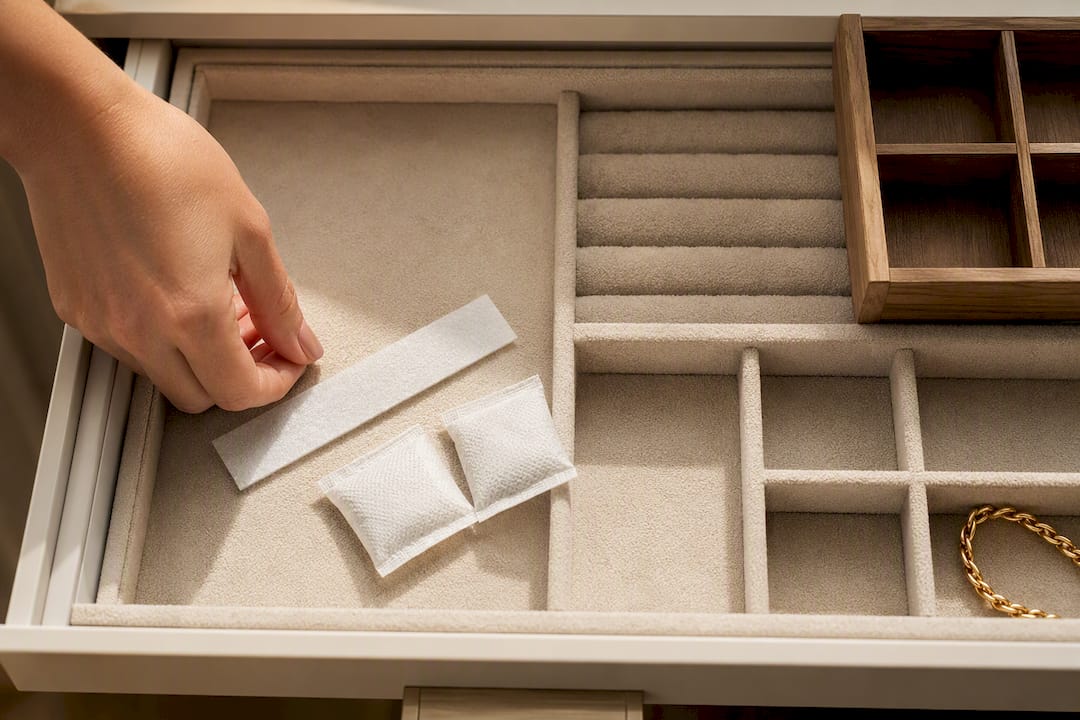
Pro Tip: Never store demi-fine or gold-plated pieces loose in a drawer with silver. Silver tarnish can transfer contact tarnish onto adjacent plated metal.
What to look for when you’re shopping:
- Individual compartments, not one open tray where everything slides together
- Dedicated ring rolls or slots instead of loose ring dishes
- Necklace hooks or a hanging bar to stop tangling before it starts
- Removable trays you can pull out and inspect without disturbing everything else
- A locking closure if the box will hold anything valuable
How Do You Choose Storage by Collection Size?
Start with three quick questions before you buy anything: How many necklaces do you actually own? How often do you wear plated or demi-fine pieces versus solid metal? Do you travel enough to need a dedicated case?
Your answers point to a size category, and the category points to a product type.
- Capsule (0 to 15 pieces): A small velvet-lined box or a single stacking tray covers this easily. Don’t overbuy capacity you won’t use for years.
- Small collection (15 to 40 pieces): A Songmics Schmuckschatulle or a two-tier tray set from Stackers hits the right size without wasted space.
- Growing collection (40 to 100 pieces): This is where modular trays earn their keep. Add a layer as the collection grows rather than replacing the whole system.
- Collector (100+ pieces): Consider a cabinet-style piece from Yamazaki or Bigso Box of Sweden, or a full Windrose Schmuckkoffer case if travel is part of your routine.
Before you check out, run through this red-flag list: no anti-tarnish lining anywhere in the description, no individual compartments (just one open bin), and a vague or absent return policy. A return window matters more than it seems, since lining quality and drawer smoothness are hard to judge from photos alone.
How Should You Handle and Care for Jewelry Day to Day?
Skip the bathroom entirely. Steam and humidity from showers accelerate tarnish faster than almost anything else in a normal home, so a dry, dark drawer or closet shelf beats a bathroom counter every time.
Metal type changes the right approach. Silver needs anti-tarnish strips nearby, gold does fine in closed soft compartments, and plated pieces last longer in their own separate pouch away from harder metals that can scratch the finish. Pearls and opals are the exception to “dry is always better.” Both contain moisture and can crack or craze under dry heat, so keep them somewhere stable rather than near a radiator or heating vent.
Necklace knots are almost inevitable eventually. Martha Stewart’s storage guide recommends a drop of baby oil on the knot and gently working it loose with a fine needle rather than pulling, since pulling just tightens the knot and risks snapping a fine chain.
Pro Tip: Set a phone reminder for the first of every month: a five-minute check for loose stones, tarnish spots, and tangled chains catches small problems before they become repairs.
- Never store jewelry on a bathroom counter or shelf.
- Match anti-tarnish measures to the metal, not a one-size-fits-all approach.
- Keep pearls and opals away from dry heat sources.
- Do a monthly five-minute inspection instead of an annual deep clean.
What Does Jewelry Storage Cost, and Where Should You Buy It?
Budget storage runs roughly €15 to €40 (CHF 20 to 50) and covers basic lined boxes and simple hanging organizers. Mid-range options, generally €40 to €120, get you better compartmentalization, sturdier hinges, and brands like Westwing Collection or Andrea House that focus on design as much as function. Premium territory starts around €120 and up, and that’s where modular systems like Stackers, travel cases like the Windrose Schmuckkoffer, and specialty design brands such as Kartell or Jonathan Adler live.
For Swiss buyers, most of these brands ship through standard European online retail, but check three things before you order: shipping cost and timeline to Switzerland, whether VAT is already included in the listed price, and the return window if the piece arrives smaller or less sturdy than expected.
- Skip the premium tier if you own fewer than 20 pieces. A basic lined box or a Songmics tray covers that easily.
- Invest in a proper travel case only if you actually travel with jewelry more than a few times a year.
- A jewelry roll is the right €15 to €25 purchase if travel is occasional rather than frequent.
Why Visibility Matters as Much as Protection
Jewelry you can’t see, you don’t wear. Organizers at Architectural Digest point out that visible storage, like open trays or a small display dish, gets used far more than a deep chest where pieces sink to the bottom and stay there. That’s the whole logic behind the hybrid system this guide leads with: lined trays protect the bulk of your collection, while a small tray or dish keeps your daily rotation within arm’s reach.
If your closet is already packed with pieces you never touch, it’s worth thinning the collection before buying more storage. Merijaan’s guide on building a capsule jewelry wardrobe walks through that process directly.
How Should You Organize Compartments Once You Have Them?
Sorting by category beats sorting by “whatever fits.” Group pieces by type first (rings, earrings, necklaces, bracelets), then by how often you actually wear them. Daily pieces go in the most accessible tray or the open display; occasion-only pieces go deeper in the drawer or a bottom tray.
Color and metal grouping helps too, especially if you mix gold-tone and silver-tone pieces. Keeping them in separate compartments avoids surface contact and makes it faster to grab a matching set without digging.
Custom-fit inserts paired with a monthly review catch a lot of common problems early, since a five-minute look at each compartment surfaces a loose clasp or a missing earring before it turns into a lost piece. Label drawers or trays if your system has more than three or four compartments. It sounds unnecessary until you’re rushing out the door and can’t remember which layer holds your hoops.
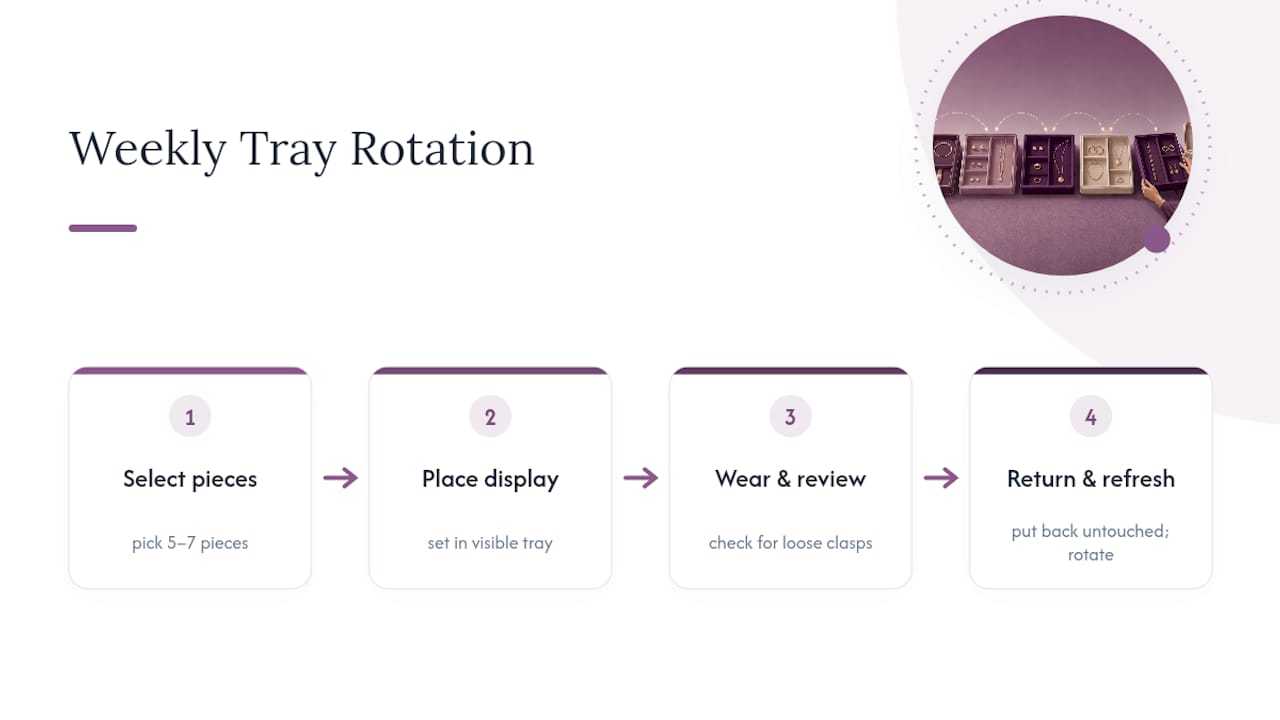
One habit worth adopting from professional organizers: rotate your “tray for the day” weekly. Pull five to seven pieces you plan to wear, set them in the visible display, and put back what you didn’t touch. It keeps the display fresh and forces slow-moving pieces back into circulation instead of gathering dust in the same corner.
How Do You Clean Jewelry Before Putting It Away?
Never put jewelry away dirty. Body oil, lotion residue, and perfume buildup accelerate tarnish and can dull stones over time, so a quick clean before storage protects the piece more than any lining can.
For most metal jewelry, a soft, lint-free cloth and a light polish is enough for weekly wear. For a deeper clean, warm water with a drop of mild dish soap and a soft toothbrush handles most rings and bracelets, followed by a thorough dry before storage. Never store anything damp. Moisture trapped inside a compartment is exactly what anti-tarnish lining is trying to fight off.
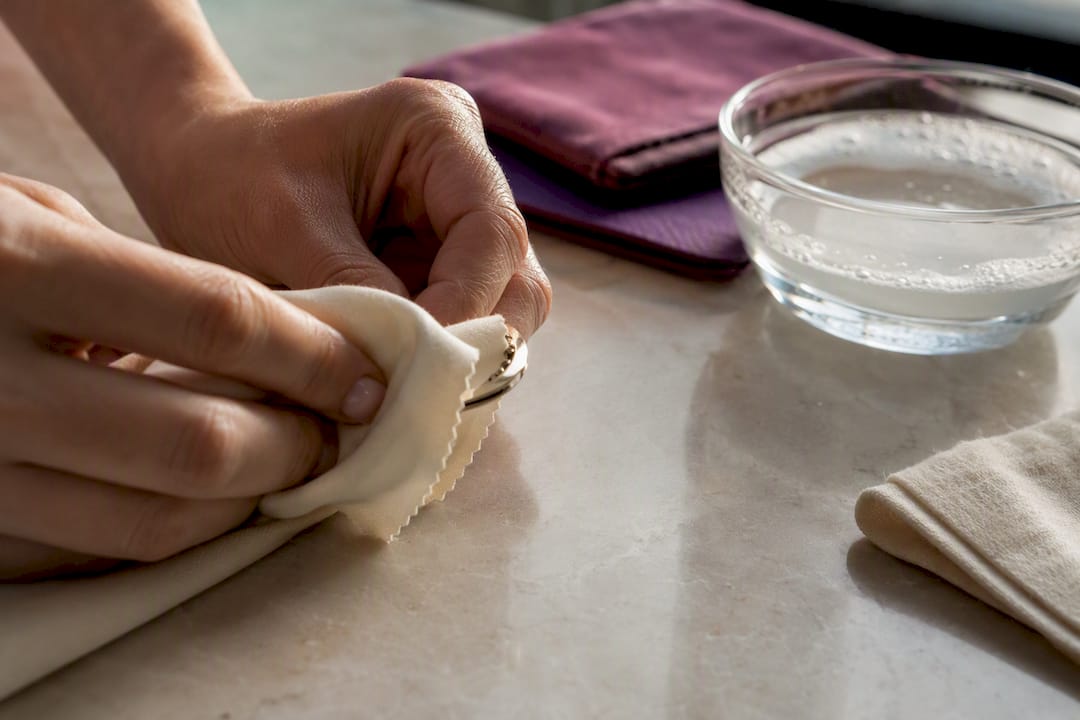
Plated pieces need gentler handling than solid metal. Skip abrasive polishes entirely, and stick to a soft cloth wipe rather than soaking, since repeated soaking can wear plating thin faster than normal contact would. Gemstones vary too. Porous stones like opals, pearls, and turquoise should never go near ultrasonic cleaners or harsh chemicals, while harder stones tolerate a gentle soap-and-water clean without issue.
Dry everything completely before it goes into any compartment, tray, or pouch. A slightly damp piece sealed into a lined tray creates the exact humid environment anti-tarnish lining exists to prevent.
How Do You Keep Valuable Jewelry Secure at Home?
Storage that protects against tarnish isn’t the same as storage that protects against theft, and it’s worth treating those as two separate problems. A lined tray in an open drawer does nothing for security. If a piece has real financial or sentimental value, it belongs behind a lock.
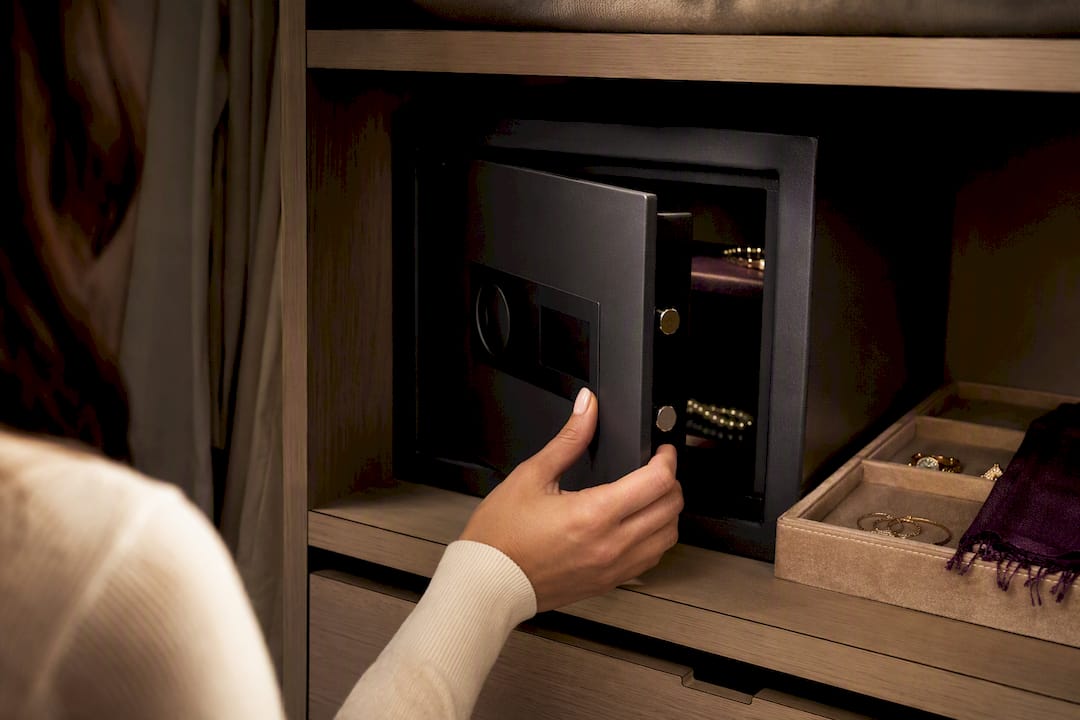
A small home safe is the most reliable option for genuinely valuable pieces, and it doesn’t need to be large. A compact fireproof safe bolted to a closet shelf handles rings, fine chains, and heirlooms without taking up real space. If a full safe isn’t practical, a lockable jewelry box, like the closures built into the Windrose Schmuckkoffer, adds a real barrier against casual access, even if it won’t stop a determined break-in.
Hidden compartments help against casual theft or curious guests, but don’t treat them as a substitute for an actual lock. A false-bottom drawer or a book safe is better than nothing, but it’s security through obscurity, not a real deterrent. For anything insured or irreplaceable, a proper safe or a bank safety deposit box is the more honest answer, even though it’s less convenient than a bedside tray.
What This Guide Gets Right That Most Storage Advice Misses
Most jewelry storage advice treats protection and visibility as competing goals, and that’s backwards. The research consistently points the other way: organizers who study wear frequency find that pieces tucked into deep chests get worn less, not more protected. A locked drawer full of untouched jewelry isn’t a storage win. It’s jewelry you paid for and stopped enjoying.
The conventional advice oversells single-product solutions. No single box, tray, or roll solves storage for a real collection, because real collections have daily pieces, occasion pieces, and pieces that need genuine security. That’s three different jobs, and treating them as one job is why so many people end up with a jewelry box that’s either half empty or hopelessly overstuffed within a year.
Prioritize this in order: get your daily pieces visible first, protect the rest with proper anti-tarnish lining second, and only then worry about premium cases or cabinets. Buy for the collection you have, not the one you imagine having in five years. Storage should make you wear your jewelry more, not just keep it safe in a drawer you rarely open.
— Ammar
A Different Kind of Investment: Jewelry Worth the Extra Care
Good storage matters more when the jewelry inside it is worth protecting. Merijaan makes that case directly: lab-grown moissanite pieces with the sparkle of fine jewelry, ethical sourcing built into every piece, and a lifetime warranty that assumes you’ll wear these pieces for years, not just seasons. Unlike a one-off purchase from a box store, Merijaan’s club members get unlimited exchanges, so your collection can evolve without starting from zero.

If you’re building a collection worth a proper storage system, start with a piece that earns the space. The Frauenfeld Necklace is a solid place to look, and Merijaan’s jewelry care guide walks through keeping moissanite and sterling silver pieces looking new for years. Browse the current collection and see which piece deserves the top slot in your display tray.
Where to Read More on Jewelry Storage
For deeper product testing, Wirecutter’s jewelry organizer reviews cover build quality and lining across dozens of boxes. For anti-tarnish specifics and layout ideas, Elara Muse’s storage guide and Martha Stewart’s storage tips are both worth bookmarking. Travelers should also check Jewels by Ares’ packing guide for tangle-free packing methods before a trip.
Sources
- The 9 Best Jewelry Boxes and Organizers of 2026 | Reviews by Wirecutter
- Jewelry storage ideas and organization tips — Architectural Digest
- Jewelry storage ideas — Martha Stewart
- How to Organize Jewelry: Protect Your Gems with Boutique-Style Storage - Getting It Done Organizing

