
Both metals are genuine gold alloys, so the real difference isn’t purity, it’s what gets mixed in. Rose gold gets its blush from copper, which also makes it slightly harder and more scratch-resistant at the same karat. Yellow gold keeps the classic look jewelers have used for centuries, and its price tracks karat and weight, not color. Choose based on your skin tone, how often you’ll wear the piece, your karat preference, and whether copper sensitivity is a concern.
TL;DR:
- Rose gold’s copper content makes it harder and more scratch-resistant than yellow gold at the same karat, especially thicker alloys like 14K and 18K.
- The color of rose gold varies with copper percentage, with more copper resulting in a deeper red hue, while silver additive softens the pink tone.
- Price differences between yellow and rose gold at the same karat level are negligible; costs are primarily driven by gold purity and weight.
- Copper in rose gold can cause skin reactions in sensitive individuals, particularly at lower karats where alloy metals are more concentrated.
- Durability and maintenance hinge more on karat level than alloy color, with lower karat gold generally more suited for daily wear due to higher metal strength.
Table of Contents
- What Is Yellow Gold: Karats, Alloy Mixes, and Common Uses
- What Is Rose Gold: Copper Ratios, Karats, and Tone Variants
- Rose Gold vs Yellow Gold: Side-by-Side Differences
- How to Choose Between Rose Gold and Yellow Gold
- Caring for Rose Gold and Yellow Gold Jewelry
- Mixing Metals: Styling Rose Gold and Yellow Gold Together
- Merijaan’s Take on Choosing the Right Gold Tone
- Find Your Match in Merijaan’s Ring and Necklace Collections
- Sources
What Is Yellow Gold: Karats, Alloy Mixes, and Common Uses
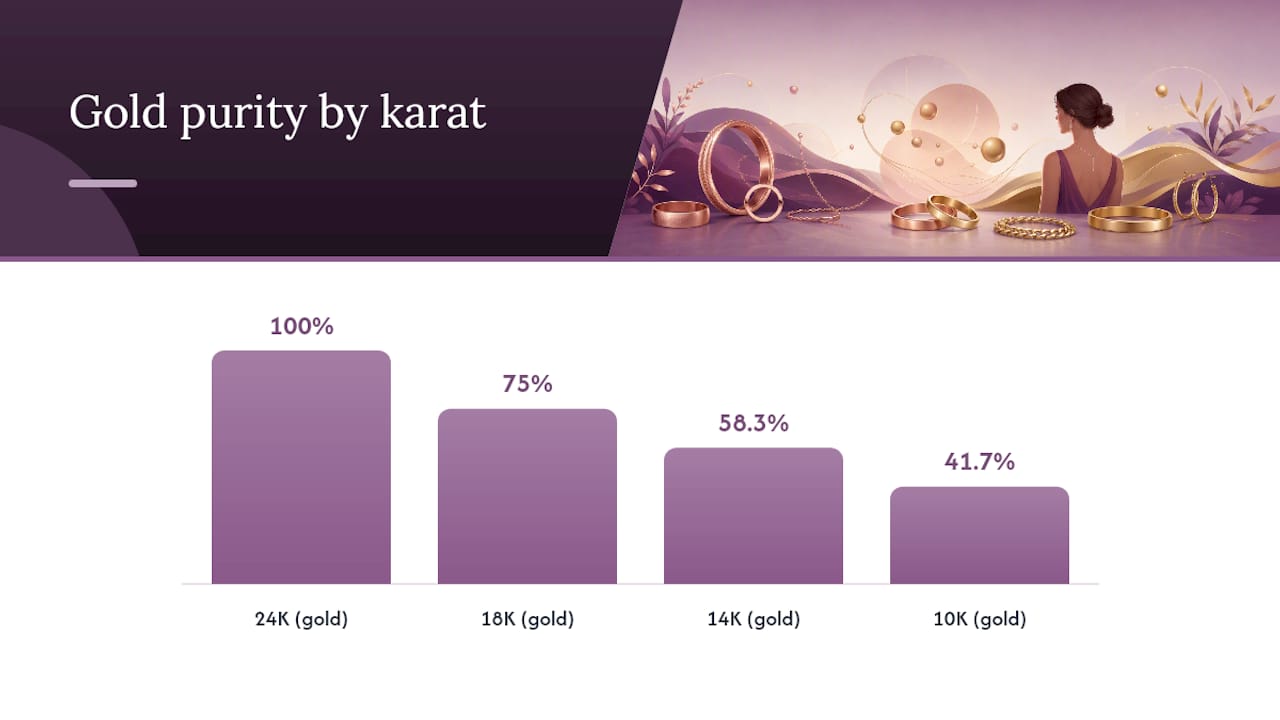
Pure gold is 24 karat, indicating the highest purity of gold without alloy. That’s too soft for jewelry you actually wear, so jewelers cut it with other metals to add strength and stretch the gold further. The karat number tells you exactly how much of that mix is real gold: 18K is 75% pure gold, 14K is about 58.3%, and 10K drops to 41.7%, with the remainder made up of alloy metals, according to the International Gem Society.
Yellow gold typically gets its warm tone from a blend of silver and copper, sometimes with a touch of zinc thrown in to keep the color from skewing too orange or too pale. The exact ratio shifts depending on the karat and the jeweler’s preferred alloy recipe, but the goal is always the same: preserve that warm, familiar yellow while making the metal tough enough for daily wear.
Here’s how the karats typically get used in real pieces:
- 24K: Rarely used in Western jewelry; too soft for rings or bracelets, though common in some Asian markets for bullion-style pieces.
- 18K: A common choice for engagement rings and heirloom pieces where rich color and higher gold content matter more than maximum durability.
- 14K: The workhorse karat for everyday rings, necklaces, and bracelets. It balances color, strength, and cost.
- 10K: The most durable and least expensive option, popular for pieces that take a beating, like men’s bands or kids’ jewelry.
If you’re shopping for something you’ll wear every day, like a stacking ring or a chain you never take off, 14K tends to hit the sweet spot between looking good and holding up. Save 18K for pieces that come out for special occasions or that you want to pass down.
What Is Rose Gold: Copper Ratios, Karats, and Tone Variants
Rose gold isn’t a different type of gold. It’s yellow gold’s alloy recipe swapped so copper does most of the heavy lifting instead of silver. An 18K rose gold blend usually contains about 75% pure gold and a notable copper percentage, with some silver as well. At 14K, the gold percentage is lower, and the copper content is higher, which affects the alloy color and properties.
That copper percentage is what controls the color. More copper pushes the tone toward a deeper red, which is why you’ll sometimes see the term “red gold” used for higher-copper blends, particularly in vintage Eastern European pieces where jewelers historically leaned harder on copper for a richer hue, according to JewellersReviews. Add more silver instead, and the color softens into a pale, almost champagne pink often marketed as “pink gold.”
Copper doesn’t just change color. It also tightens up the metal’s crystal structure, which is why rose gold tends to run slightly harder and more scratch-resistant than yellow gold at the same karat. That extra durability matters if you’re rough on your jewelry, but it’s not a blank check. Karat still outweighs alloy type when it comes to overall toughness.
A few things worth confirming with your jeweler before buying:
- Ask for the exact copper percentage if you want a specific tone (paler pink vs. deep rose).
- Confirm whether the piece is solid rose gold or gold plated over a base metal, since plating wears differently.
- Check if the alloy uses nickel, which some rose gold blends still include for hardness.
Rose Gold vs Yellow Gold: Side-by-Side Differences
Once you get past the color, the comparison boils down to five practical factors: how the tone reads in different light, how the metal holds up over years of wear, what actually drives the price tag, how your skin reacts to it, and what upkeep each one demands.
Color and how lighting changes it. Yellow gold tends to look richer and warmer under indoor incandescent or warm LED lighting. Rose gold’s pink cast often shows up more vividly in daylight or under cooler LED lighting, according to AJLuxe. If you’re buying online, try to view product photos taken in natural light, and if possible, see the piece in person under the lighting you’ll actually wear it in most.
Durability. This is where the karat-versus-alloy trade-off gets interesting. Copper content generally makes rose gold slightly harder than yellow gold at an equal karat, but karat still matters more than metal color.
Karat beats color when it comes to toughness. A 10K yellow gold ring can outlast an 18K rose gold ring in daily wear, simply because it contains far less soft pure gold and far more hardening alloy, according to GIA 4Cs.
That means if scratch resistance is your top priority, don’t just default to rose gold. Check the karat first.
Price. This trips up a lot of first-time buyers. Neither metal costs more simply because of its color. Price is driven almost entirely by gold content (karat) and total weight, so an 18K rose gold band and an 18K yellow gold band of the same weight should land in a similar price range, according to AJLuxe. If you see a big price gap between two pieces that look like the same karat, ask why. It’s usually the design, the gemstone, or the brand markup, not the alloy color.
Allergies and skin sensitivity. Both metals sit well below the reaction rates of cheaper base-metal jewelry, but copper is a known irritant for some people, and rose gold contains more of it than yellow gold. The International Gem Society notes copper in rose gold can trigger reactions in sensitive wearers, even when the alloy is nickel-free. If you’ve ever had a reaction to costume jewelry, ask your jeweler for the specific alloy breakdown before committing, and lean toward higher-karat pieces, since they contain less alloy overall.
Maintenance. Yellow gold mostly just needs occasional cleaning to stay bright. Rose gold develops a patina over time as the copper in the alloy reacts with air and skin oils, which some people love for the vintage warmth it adds and others prefer to buff out. Neither is “harder to maintain,” they just age differently.
A few other things worth knowing before you compare pieces side by side:
- Same karat, different color, same rough price point. Don’t let color alone justify a premium.
- Rose gold’s patina is cosmetic, not damage. A quick polish restores the original tone if you don’t want it.
- Copper sensitivity is individual. Some people wear rose gold daily with zero issues; others react within hours.
How to Choose Between Rose Gold and Yellow Gold
Picking a metal gets a lot easier once you stop thinking about which one is “better” and start thinking about which one fits your life. Run through this checklist before you buy:
- Consider your skin tone. Rose gold tends to flatter warm and olive undertones especially well, while yellow gold has long been the classic pick for warm undertones too, and both can work on cooler skin depending on the exact alloy shade. Try pieces on in natural light if you can.
- Think about how often you’ll wear it. A piece going on your finger every single day needs more durability than something saved for date nights. That points toward lower karats (14K, even 10K) regardless of color.
- Decide if richness of color matters more than scratch resistance. If you want the deepest hue possible, whether that’s a saturated yellow or a bold rose, 18K delivers more of that color at the cost of some hardness.
- Set a budget based on karat, not color. Since price tracks gold content, decide your karat range first, then choose the tone you like within it.
- Check for skin sensitivity history. If you’ve reacted to copper or cheaper metals before, ask specifically about nickel-free certification and consider higher-karat gold to minimize alloy exposure.
Before you check out, ask the jeweler these questions directly: What’s the exact alloy composition? Is the piece solid gold or plated? Is it labeled hypoallergenic or nickel-free, and what does that mean for this specific alloy? What’s the warranty or repair policy if the plating wears or the metal needs resizing?
Pro Tip: If you genuinely can’t decide between the two, buy the piece you’ll wear most in 14K. Lower karats hide daily wear better, and you’ll get more actual use out of jewelry that isn’t precious enough to worry about.
Caring for Rose Gold and Yellow Gold Jewelry
Both metals respond well to the same basic routine, with a couple of exceptions worth knowing.
- Wash gently. Mix warm water with a few drops of mild dish soap, soak the piece for a few minutes, then use a soft-bristled brush (an old toothbrush works fine) to clear dirt from settings and crevices, per guidance from GIA 4Cs.
- Dry with a soft cloth. Pat dry immediately rather than air drying, which can leave water spots or streaks.
- Decide on the patina. If your rose gold has developed a warmer, slightly aged tone and you like it, leave it alone. If you want the original brightness back, a jeweler can re-polish it in minutes.
- Check plating status. Plated pieces (either color) wear thinner over time and may need re-plating every year or two depending on how often you wear them.
- Store separately. Keep pieces in a soft pouch or lined box so they don’t scratch against each other, and avoid tossing rings and chains loose in a drawer.
- Avoid chemical exposure. Chlorine, strong cleaning products, and some beauty products (particularly those with sulfates) can dull the finish or, in plated pieces, accelerate wear.
- Get a professional check yearly. A jeweler can spot loose stones, thinning prongs, or plating wear before it becomes a real problem.
Mixing Metals: Styling Rose Gold and Yellow Gold Together
You don’t have to pick one metal forever. Mixed-metal looks have become a real trend, and rose gold in particular works as a bridge between warm yellow gold and cooler tones like white gold or silver, since its pink undertone touches both palettes without clashing.
A few rules keep mixed looks intentional instead of accidental:
- Pick one metal to dominate (60 to 70% of what’s visible) and use the other as an accent, rather than splitting evenly.
- Warm gemstones like citrine, garnet, and amber tend to pop against yellow gold; cooler stones like sapphire and aquamarine often look sharper against rose gold or white gold.
- For ring stacks, anchor with one metal and let a single rose gold band act as the transition piece if you’re also wearing white gold.
- Layered necklaces read best when chain thickness varies, not just metal color. Repeat one metal across at least two pieces so the mix looks planned.
Rose gold’s flexibility here is well documented. It flatters a wide range of skin tones and slots easily into mixed-metal styling without fighting other pieces for attention, according to SagStone.
Merijaan’s Take on Choosing the Right Gold Tone
At Merijaan, every piece is built around lab-grown moissanite, chosen specifically because it delivers real fire and brilliance without the ethical baggage or price tag of mined diamonds. The metal setting is where personal style comes in, and we treat that choice the same way we’d want a friend to walk you through it: honestly, with the actual alloy facts on the table.
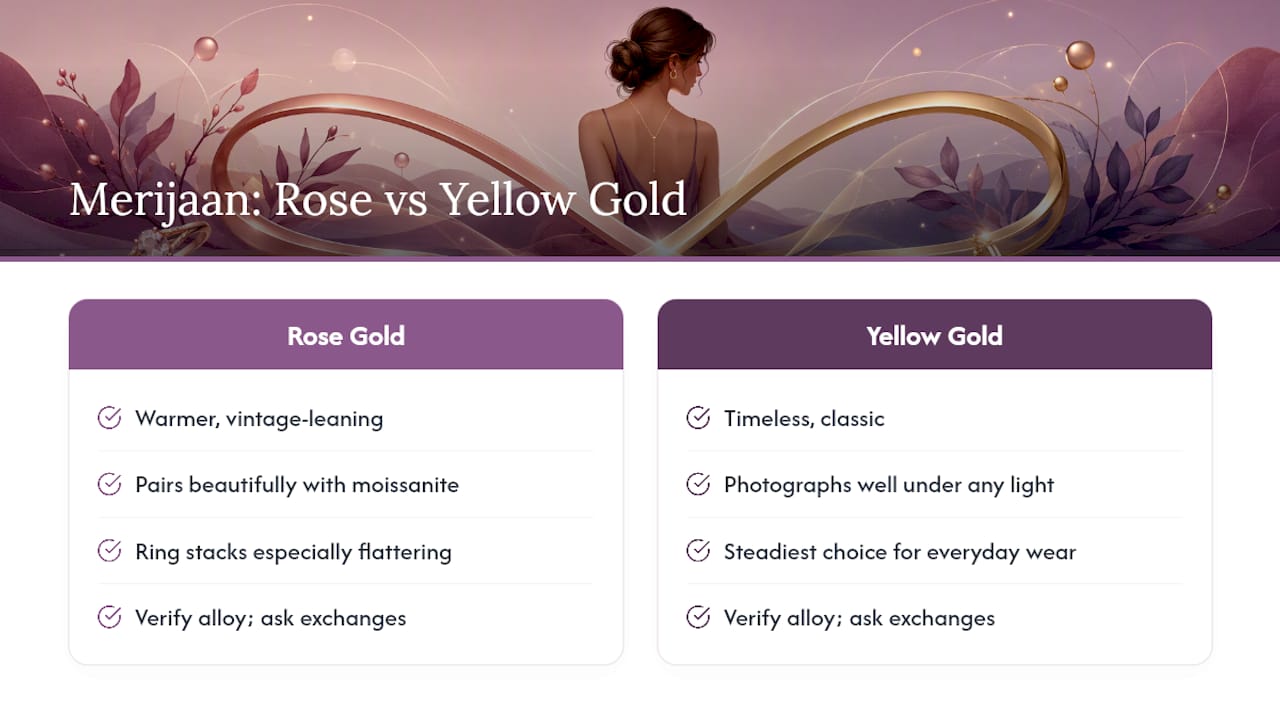
If you gravitate toward warmer, vintage-leaning designs, our rose gold settings tend to pair beautifully with moissanite’s brilliance, especially in ring stacks. If you want the timeless look that photographs well under any light, yellow gold settings remain the steadiest choice. Whichever you pick, verify the alloy details before buying and ask about exchange terms if the tone doesn’t suit you once it arrives.
— Ammar
Find Your Match in Merijaan’s Ring and Necklace Collections
Whether you lean toward rose gold’s warm blush or yellow gold’s classic shine, the right setting comes down to matching the metal to your skin tone, your daily habits, and the brilliance of the stone sitting on top of it.

Merijaan’s women’s rings collection lets you filter by metal tone and check karat and alloy details before you buy, so you’re never guessing what you’re actually getting. If you want something with a more vintage feel, the vintage rings collection leans into the deeper, richer tones rose gold does well. Pair either with a piece from the classic necklace collection for a set that reads intentional, not mismatched.
Every Merijaan piece comes with a lifetime warranty, and club members get unlimited exchanges if the metal tone doesn’t work out once you see it in person. Browse the women’s rings collection now and check the alloy listed on the product page before you check out.
Sources
- Yellow Gold vs. Rose Gold: Discovering the Differences — GIA 4Cs
- Rose Gold vs Yellow Gold: How to Choose — International Gem Society
- The Rise of Rose Gold — JewellersReviews

