

Hypoallergenic jewelry is real, but the safest options come down to a short list: implant-grade titanium, niob, and platinum sit at the top, with .925 sterling silver and 14 to 18K solid gold as reliable everyday choices. Skip anything without a metal stamp or a “nickelfrei” claim backed by testing. Brands like Merijaan that publish material composition make this decision far easier.
TL;DR:
- Only implant-grade metals like titanium, niobium, and platinum are truly safe for sensitive skin and less likely to cause allergic reactions.
- Look for jewelry labeled “nickelfrei” with standardized testing references such as EN 1811 or REACH to ensure low nickel leaching.
- Sterling silver and solid gold, especially yellow and rose, are generally safe for most people, but white gold may contain nickel.
- Avoid plated, gold-filled, or vermeil jewelry unless the coating is intact, as wear can expose base metals that cause irritation.
- Always check for metal stamps, transparent material composition, and perform patch tests before wearing new jewelry to prevent reactions.
Table of Contents
- What “Hypoallergener Schmuck” Actually Means
- Which Metals Are Actually Safe for Sensitive Skin?
- How to Choose Jewelry That Won’t Irritate Your Skin
- Caring for Your Jewelry to Prevent Skin Reactions
- Myths About Hypoallergenic Jewelry You Should Stop Believing
- Where Merijaan Fits for Sensitive Skin Shoppers
- Why Most Buying Advice Gets This Half Right
- A Simpler Way to Shop for Skin-Safe Jewelry
- Sources
What “Hypoallergener Schmuck” Actually Means
“Hypoallergen” is not a protected term. Any jewelry seller can print it on a tag without proving a thing, which is exactly why so many people buy a “hypoallergenic” pair of earrings and still end up with red, itchy earlobes two days later. The word describes intent, not a tested outcome.
What you should look for instead is “nickelfrei” (nickel-free) paired with a reference to EN 1811 testing, the standardized method labs use to measure how much nickel actually leaches out of a metal under conditions that mimic sweat and skin contact. It is the closest thing this industry has to a real guarantee.
Nickel is the reason most of this matters in the first place. It’s identified repeatedly as the leading contact allergen in jewelry, showing up in cheap alloys, plated pieces, and even some “surgical steel” items marketed as safe. The EU’s REACH regulation caps how much nickel can release from any item that touches skin, which is why European sellers who take compliance seriously will actually cite it.
Here’s the quick version of what to trust:
- A metal stamp (925, 14K, 18K, or a titanium/niob designation)
- An explicit “nickelfrei” claim, not just “hypoallergenic”
- A reference to EN 1811 or REACH compliance
- Transparent composition listed on the product page, not buried in a size chart
Which Metals Are Actually Safe for Sensitive Skin?
Not all metals behave the same way on skin, and the differences are bigger than most shoppers assume. Some are chemically stable enough to sit in surgical implants for decades. Others release trace nickel the moment sweat hits them.
Titanium, niob, and platinum sit at the top of the list. These metals are biologically inert, meaning your immune system essentially ignores them, which is why they’re used in medical implants in the first place. If you have a fresh piercing or skin that reacts to almost everything, this is the tier to shop from.
Sterling silver (.925) and 14 to 18K solid gold work for most people most of the time. Sterling silver is typically 92.5% pure silver alloyed with other metals, often copper, and reputable stamping generally reflects that ratio accurately. White gold is the exception to watch: it’s frequently alloyed with nickel for its pale color, so ask before buying if you have a confirmed allergy. Yellow and rose gold rarely carry that risk.
316L stainless steel (“surgical steel”) is where things get genuinely nuanced. It contains 10 to 14% nickel in its alloy, and while most people tolerate it fine, it is not a guarantee for someone with a confirmed nickel allergy. Sweat and friction increase how much nickel it releases, which matters more than most buyers realize.
Plated jewelry, gold-filled pieces, and vermeil occupy the risky middle ground. Vermeil (gold over sterling silver) is generally safer than gold plating over a base metal, because if the coating wears through, you’re touching the base metal directly instead of silver. Plating always wears eventually.
One figure worth knowing here: nickel allergy is one of the most commonly reported contact sensitivities tied to jewelry, and it’s the main driver behind reactions people blame vaguely on “cheap metal.”
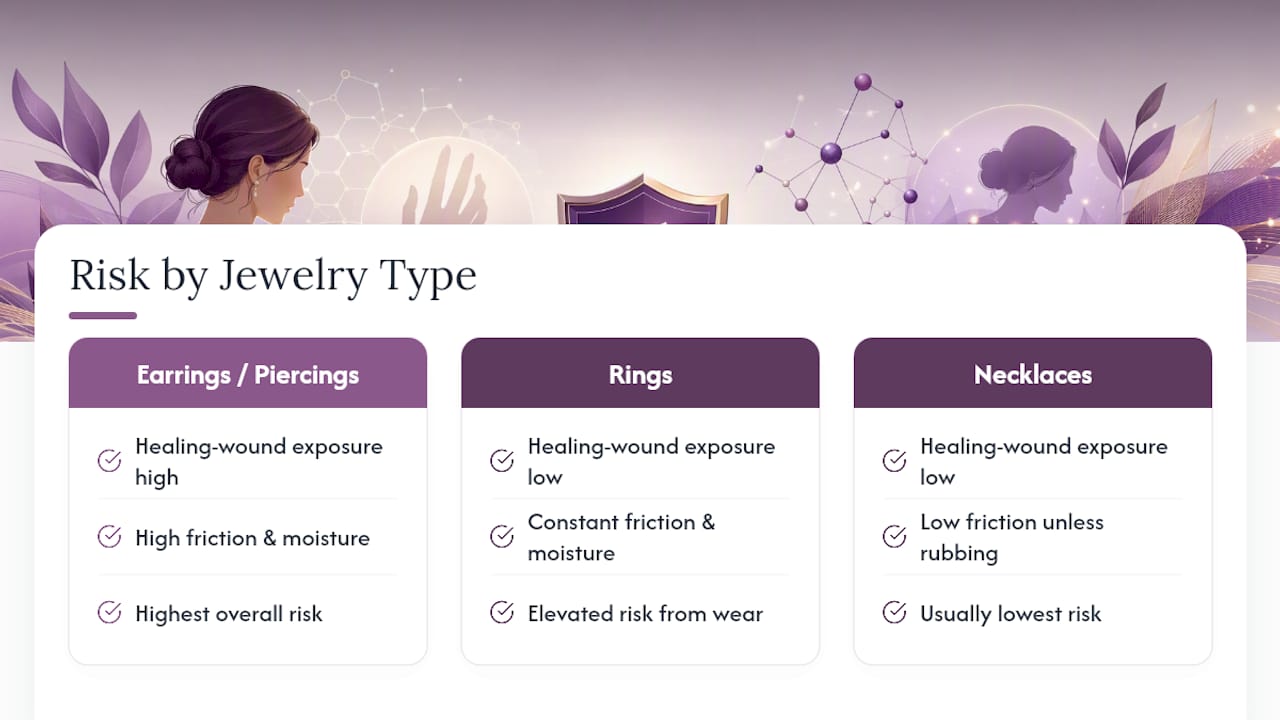
Per item, risk varies by how the piece touches you. Earrings and piercings carry the highest stakes since the metal sits inside a healing wound. Rings face constant friction and moisture from handwashing. Necklaces and pendants are usually lowest risk unless the chain rubs against your neck all day.
How to Choose Jewelry That Won’t Irritate Your Skin
Buying safely comes down to asking the right questions before you check out, not after your skin starts reacting. Run through this before any purchase:
- Check for a metal stamp. No stamp, no purchase, especially for earrings.
- Look for “nickelfrei” specifically, not just “hypoallergenic” on its own.
- Ask what the base metal is if the piece is plated or gold-filled.
- For piercings or new ear holes, confirm the piece is implant-grade titanium or niob, not just “surgical steel.”
- Check the return policy. Sellers confident in their materials usually offer easy exchanges.
If you’re still unsure whether a piece will work for your skin, do a 48-hour patch test. Wear the item against a small area, like the inside of your wrist, for two days. Redness, itching, or bumps mean stop wearing it immediately and wash the area with mild soap.
Pro Tip: Buy from sellers who list full composition on the product page itself. If a listing hides the metal content behind vague words like “premium alloy,” that’s usually a sign they don’t want you asking questions. Merijaan’s own nickel-free guide breaks down exactly what that label should and shouldn’t mean when you see it on a tag.
Caring for Your Jewelry to Prevent Skin Reactions
Even the safest metal can cause problems if you never clean it. Sweat, sunscreen, lotion, and perfume residue build up on jewelry surfaces and can trap irritants against your skin for hours.
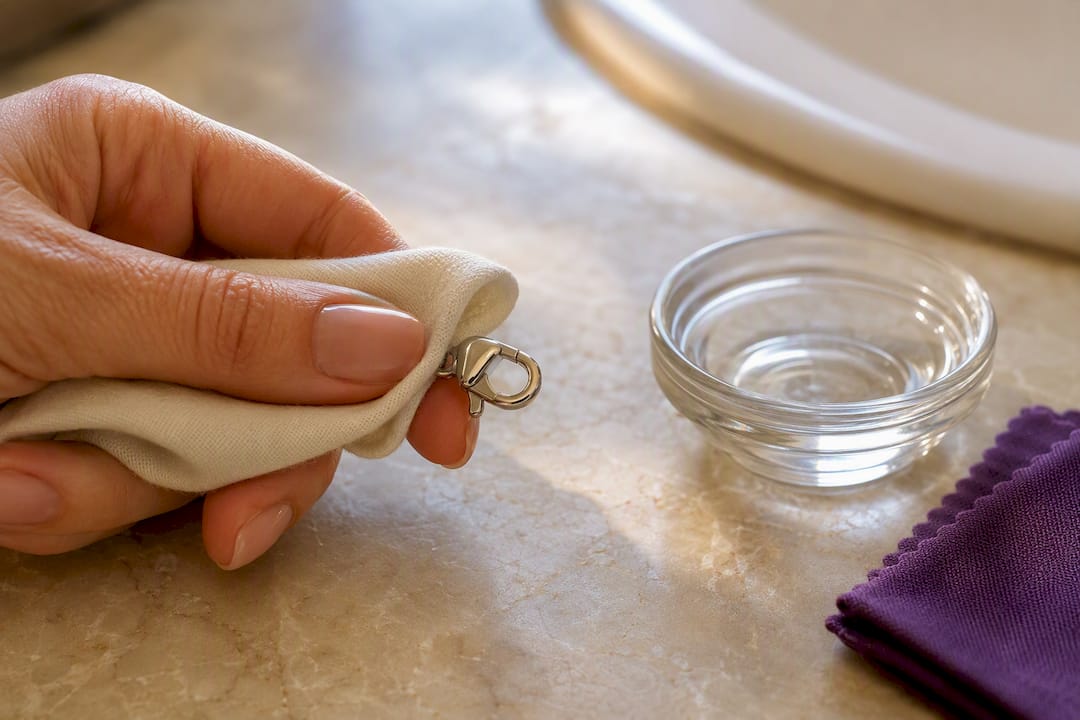
Wipe pieces down with a soft cloth after wearing them, and give silver or gold a gentle soak in mild soapy water every couple of weeks. Avoid harsh chemical cleaners on plated pieces since they accelerate coating loss.
Plating doesn’t fail all at once. It thins gradually with wear, and once you notice a slightly different color underneath, especially on inner ring bands or earring posts, treat that piece as compromised for sensitive skin. The base metal underneath is now what’s touching you.
A few habits protect both your jewelry and your skin:
- Remove rings before washing dishes or applying lotion
- Take earrings out before sleeping, especially new ones
- Skip jewelry entirely for swimming, since chlorine and salt water accelerate corrosion and metal release
- Store pieces separately to avoid scratching plated surfaces against harder metals
Merijaan’s own jewelry care guide covers cleaning routines by material if you want piece-specific instructions.
Myths About Hypoallergenic Jewelry You Should Stop Believing
A lot of bad information circulates around this topic, and most of it comes from marketing copy repeated so often it starts sounding like fact.
Myth: “Hypoallergenic” always means nickel-free. It doesn’t. The word carries no legal definition, so a piece can be labeled hypoallergenic and still contain nickel. Always look for the specific “nickelfrei” claim instead.
Myth: Surgical steel is always safe. It’s tolerated by most people, but 316L still contains nickel, and sweat increases how much it releases. If you have a confirmed allergy, this isn’t a safe bet.
Myth: All gold is automatically fine. Yellow and rose gold rarely cause issues at higher karats, but white gold frequently contains nickel for its color. Karat purity matters too; lower-karat gold means more alloy metal mixed in.
Memorize this instead: stamp, “nickelfrei,” and composition details beat any hypoallergenic label printed on a tag.
Where Merijaan Fits for Sensitive Skin Shoppers
Merijaan builds its pieces around lab-grown moissanite set in clearly specified metal bases, which matters more than the stone itself when you’re shopping with sensitive skin in mind.
The Leukerbad Earrings are worth a look if you’re earring-shopping with caution in mind, since earrings carry the highest irritation risk of any jewelry type. The Schwyz Necklace and Einsiedeln Bracelet round out pieces where the metal composition is stated plainly rather than hidden behind vague marketing language.
What actually matters for sensitive-skin buyers isn’t the sparkle. It’s the guarantees behind it: transparent material listings, a lifetime warranty, and unlimited exchanges for club members if a piece doesn’t agree with your skin. That return flexibility matters more than most buyers realize until they need it. If you want a broader comparison of metal options before deciding, Merijaan’s guide to metals for moissanite jewelry walks through gold, silver, and platinum side by side.
Why Most Buying Advice Gets This Half Right
Most guides to hypoallergenic jewelry stop at naming safe metals and call it done. That’s not wrong, but it skips the part that actually protects your skin: verification. Knowing titanium is inert doesn’t help if the earrings in your cart are stamped nothing at all.
The advice I’d push back on is the common line that stainless steel is “basically hypoallergenic.” It’s tolerated by most people, which is different from being safe for everyone. If you’ve had a reaction before, that distinction should change what you buy, not just how you feel about buying it.
What should come first is boring but effective: read the stamp, ask about plating substrate, and buy from sellers who don’t flinch when you ask what’s actually in the metal. Skin reactions rarely come from exotic causes. They come from unlabeled base metal hiding under a coating that wore through faster than anyone expected. For styling ideas once you’ve settled on safe materials, Trinity Carter’s guide to sensitive-skin jewelry is a solid next stop.
— Ammar
A Simpler Way to Shop for Skin-Safe Jewelry
Merijaan builds every piece around lab-grown moissanite set in clearly stated metal bases, so you’re never guessing what’s touching your skin. Unlike sellers who bury composition details in fine print, Merijaan lists materials plainly and backs pieces with a lifetime warranty plus unlimited exchanges for club members, which means a reaction doesn’t have to mean a wasted purchase.

That combination matters most for rings and earrings, where daily contact makes material choice non-negotiable. If you’re ready to shop with confidence, browse the vintage rings collection for pieces built on skin-conscious metal bases, or check the full women’s ring selection to compare settings before you commit. Every piece ships with the same transparency this guide just walked you through.
Sources
- Die besten Metalle für empfindliche Haut: Titan, Gold und Silber im Ranking (2026) – AJLuxe
- Schmuck & Allergien: Was tun bei empfindlicher Haut? – Pyramide Schmuck-Kreation
- Hypoallergener Schmuck: richtig auswählen | Nomination

