

Yes, buying moissanite online can be trustworthy, but only when three things are verifiable before you click “buy”: a real certificate with a serial number, a clear return and warranty policy, and independent reviews that show actual buyer experiences. Skip any of these and you’re gambling on a piece of silicon carbide that might not be what the listing claims.
Moissanite itself isn’t the problem. Nearly every stone sold today is lab-grown crystalline silicon carbide, which is a genuine, stable gemstone, not an inferior stand-in for anything. The real risk sits with the seller: vague listings, “in-house” certificates nobody can verify, and return policies that vanish the moment you ask about them.
Before you buy from any online moissanite retailer, scan the product page for:
- A certificate that names the issuing lab or brand and includes a serial number you can look up independently
- A return or exchange window, typically somewhere between 30 and 90 days
- Reviews on a third-party platform like Trustpilot, not just testimonials pasted on the seller’s own site
The rest of this guide walks through how to check each of those, what red flags to watch for, and what happens after checkout if something goes wrong.
Key Takeaways
Buying moissanite online is trustworthy when a verifiable certificate, a clear return policy, and independent reviews are all present before checkout.
| Point | Details |
|---|---|
| Verify the certificate | Confirm the issuing lab or brand and look up the serial number independently, not just on the seller’s site. |
| Check the return window | Look for a written policy with a clearly stated return window; vague or missing terms are a red flag. |
| Read third-party reviews | Prioritize verified-purchase reviews on platforms like Trustpilot over testimonials on the seller’s own page. |
| Insure with independent documentation | Get an appraisal from an outside gemologist, since insurers rarely accept in-house certificates alone. |
| Pay with traceable methods | Use a credit card for chargeback protection and avoid peer-to-peer payment apps for jewelry purchases. |
| Consider Merijaan’s approach | Merijaan pairs lab-grown moissanite with transparent sourcing details and directs 100% of profits to the artisans who make each piece. |
Table of Contents
- How Do You Know if Moissanite Is Seriös or Fake Online?
- What Should You Check on a Moissanite Vendor’s Website?
- What Should You Confirm Before You Check Out?
- What Happens After You Buy: Warranty and Insurance
- How Meri Jaan Applies These Same Standards
- Is It Safe to Pay for Moissanite Online?
- Where to Verify These Claims Yourself
- What Most Buying Guides Get Wrong About Moissanite
- A Simpler Way to Buy Moissanite With Confidence
- Frequently Asked Questions About Buying Moissanite Online
- Sources
How Do You Know if Moissanite Is Seriös or Fake Online?
Genuine moissanite is crystalline silicon carbide. Almost none of the moissanite sold in jewelry today occurs naturally in gem sizes, so what you’re buying is lab-grown, and that’s not a downgrade. Lab-grown moissanite is chemically and structurally identical to what a jeweler would call “real” moissanite; the distinction gemologists actually care about is whether the stone is moissanite at all, not whether it grew in the ground or a lab.
The confusion buyers run into is mislabeling. Cubic zirconia, glass, and even some low-grade synthetic spinels get passed off as moissanite by sellers who know most shoppers can’t tell the difference from a photo. Gemological resources are blunt about this: sellers should disclose treatments and material composition clearly, and any listing that dodges specifics deserves a second look.
Here’s how to verify what you’re actually getting, in order of practicality:
- Check for a named certificate. A legitimate document states the issuing lab or brand, not just “certified” in bold letters with no source attached.
- Look for a serial number. Reputable moissanite brands laser-engrave a serial onto the stone’s girdle and let you check it against an online database before or after purchase.
- Ask what test method backs the certificate. Raman spectroscopy is the gold standard for confirming silicon carbide, and reliable authenticity claims tie back to this kind of lab method rather than a seller’s word alone.
- Do a facet doubling check at home. Moissanite has strong double refraction, so looking through the table facet at an angle often shows doubled edges on the back facets. It’s not conclusive on its own, but it’s a useful first filter.
- Try a thermal or electrical conductivity tester if you have one. These handheld devices, sold for a modest price, distinguish moissanite from diamond and most simulants, though they won’t catch every counterfeit.
None of these home tests replace a lab report. They’re triage tools, useful for catching an obvious fake, not for insuring a $2,000 ring.
Pro Tip: Before buying, email the seller and ask them to confirm the certificate issuer and serial number format in writing. A seriös vendor answers in a sentence or two. A vague or defensive reply is itself a signal.
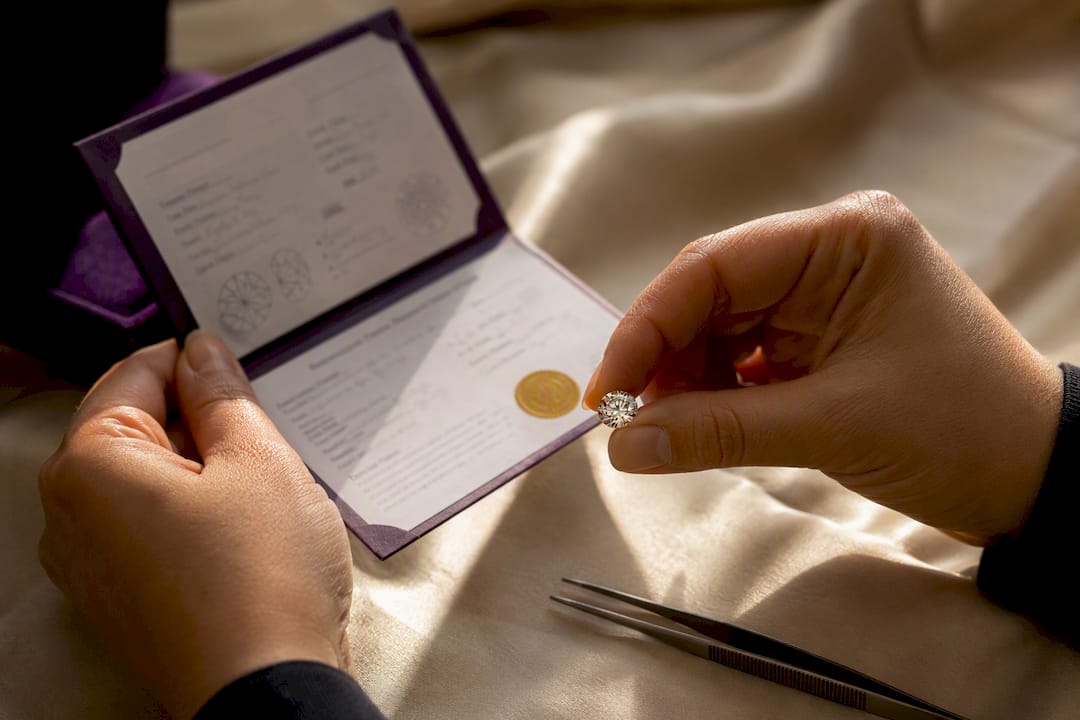
Dispersion, the “fire” that makes a stone throw rainbow flashes, is naturally higher in moissanite than in diamond. Some buyers mistake this for a defect or assume the stone is fake because it looks “too sparkly.” It isn’t a flaw. It’s a documented optical property of silicon carbide, and it tends to show up more in larger stones and certain cuts. If you want a more diamond-like flash, ask the retailer about cuts designed to soften that rainbow effect. Merijaan’s guide to moissanite versus diamond breaks down how carat size and cut shape change the way the fire reads to the eye.
The biggest gap between a legitimate certificate and a worthless one is independence. A certificate a brand writes for its own stone, with no outside lab involved and no way to verify the serial against a public database, tells you almost nothing. It’s not automatically dishonest, but it’s not proof either. Treat “certified” as a word that requires a follow-up question, not a stopping point.
What Should You Check on a Moissanite Vendor’s Website?
A vendor’s product page tells you almost everything you need to know if you read it correctly. The gap between a seriös retailer and a risky one usually shows up in five specific places, and most shoppers only check one or two.
Certificate provenance matters more than the certificate itself. A brand-issued certificate backed by a serial number you can verify online is acceptable, especially from an established retailer with a public track record. A certificate that names no lab, no brand, and no verification path is a red flag regardless of how official the PDF looks. Independent third-party lab reports carry more weight than either, particularly for higher-value pieces, since a legitimate certificate should list the issuing lab or brand along with a unique serial number and grading details that support later verification.
Return and exchange windows separate confident sellers from hit-and-run operations. A 30 to 90 day window is standard among reputable jewelry retailers. Anything shorter, or a policy buried three clicks deep in fine print, suggests the seller doesn’t expect you to look closely after the sale. Shipping matters too: insist on tracked, insured shipping for anything above a token price point, since an untracked package is unrecoverable if it goes missing.
Metal and manufacturing transparency is a quieter signal but a reliable one. Listings that say “lab-created” or “premium metal” without specifying karat, alloy, or plating thickness are usually hiding something, even if it’s just laziness rather than fraud. A seriös vendor states whether a band is 14k gold, gold vermeil, or plated brass, because that detail changes both the price and how the piece ages.
Reviews are the fastest gut check, but not all reviews are equal. Third-party platforms like Trustpilot show verified-purchase badges and, often, seller responses to complaints, which give more context to a rating than the star average alone. A page with hundreds of five-star reviews and zero replies to the handful of negative ones is worth more scrutiny than a smaller page with a mix of ratings and visible seller engagement.
- Look for verified-purchase tags, not just star counts
- Read a few one and two star reviews specifically; they reveal how the company handles problems
- Check the review date spread; a cluster of five-star reviews posted the same week often signals a review campaign, not organic feedback
Customer service responsiveness is the cheapest test you can run before spending a cent. Send a question about sizing, materials, or the certificate before you buy. A same-day or next-day reply from a real person is a strong sign. Silence, canned responses, or a chatbot loop that never resolves the question tells you what after-sale service will probably look like too.
Pro Tip: Search the vendor’s name plus “reviews” on a search engine, not just on their own site. If the only reviews you find live on the seller’s homepage, that’s a gap worth noticing.
What Should You Confirm Before You Check Out?
Print this or keep it open in a tab while you shop. Confirming these seven items takes about five minutes and catches most of the risk.
- Certificate link and issuer. Click it. Does it load, and does it name a real lab or brand?
- Serial number. Is it laser-engraved, and can you look it up independently before or after purchase?
- Metal stamp and specification. Does the listing state karat, alloy, or plating type, not just “premium metal”?
- Measurements and carat weight. Are dimensions and weight listed precisely, or rounded vaguely?
- Return window. Is it stated in writing, and does it fall within a normal 30 to 90 day range?
- Warranty terms. Is there a written warranty, and does it cover defects, not just theft or loss?
- Shipping estimate and tracking. Does the seller commit to a delivery window with tracked shipment?
Before you commit to checkout, take three more steps. Verify the certificate’s serial number through whatever database the issuer provides. Read the ten most recent reviews on an independent platform, not the testimonials on the product page. Send one verification question to customer service and time the reply.
Treat these as hard stops, not yellow flags: no independent certificate of any kind, a seller who dismisses the question with “trust us, it’s certified in-house,” a missing or unfindable return policy, or a price so far below comparable certified stones that it doesn’t add up. Any one of those alone should make you pause. Two or more together mean walk away.
What Happens After You Buy: Warranty and Insurance
A warranty is only as good as what it actually documents in writing. Look for three separate things: coverage against manufacturing defects, a stated exchange window if the piece doesn’t fit or match expectations, and, ideally, ongoing service like free cleaning or prong tightening. A “lifetime warranty” that only means “we’ll look at it if you ask nicely” isn’t a warranty. Ask for the specific terms in writing before you rely on the label.
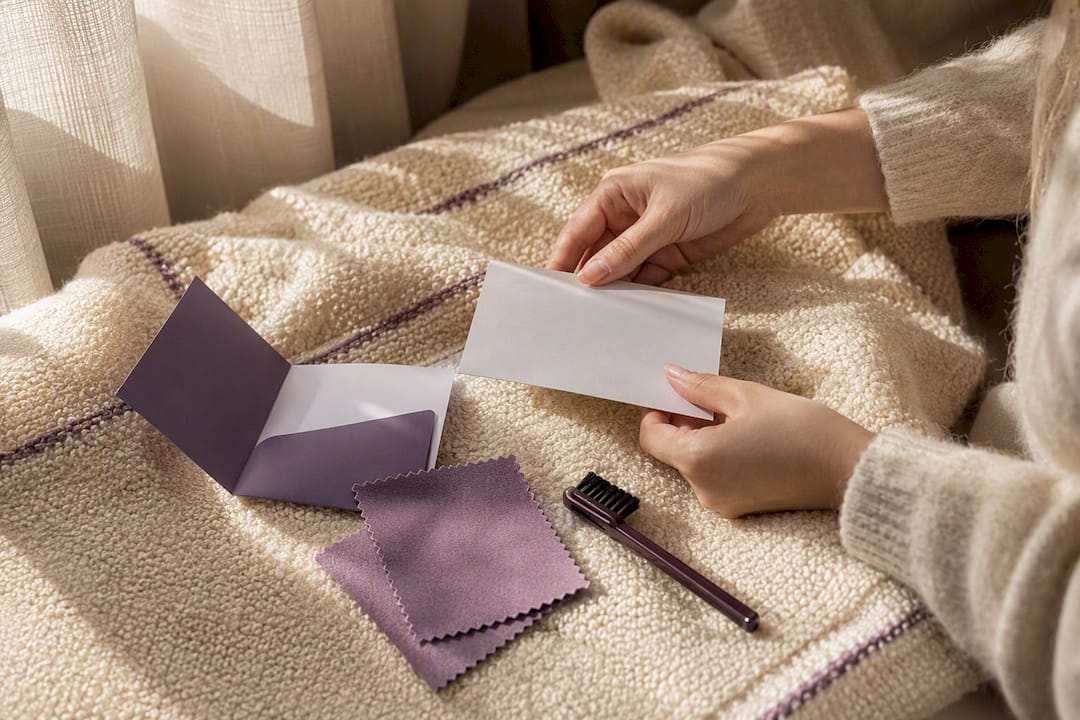
Insuring a moissanite piece follows the same logic as insuring any gemstone: insurers want independent documentation, not a seller’s in-house paperwork. An appraisal from a recognized, independent gemologist that ties back to the stone’s certificate and serial number gives an insurer something concrete to underwrite. Skipping this step is the single most common reason claims get denied or underpaid later.
Set your resale expectations honestly. Moissanite is not an investment vehicle, and its resale value runs well below what a natural diamond of comparable size and quality would fetch. That’s not a knock against the stone. It’s simply a different category of purchase, closer to buying well-made jewelry you’ll wear for years than buying an asset you expect to sell later at a premium. Merijaan’s breakdown of moissanite’s real long-term value covers this trade-off in more depth if you’re weighing moissanite against diamond specifically for cost-per-wear.
- Ask for a written defect warranty, not a verbal promise
- Request an independent appraisal, separate from the seller’s own certificate
- Buy for how the piece looks and wears, not as a financial hedge
How Meri Jaan Applies These Same Standards
Meri Jaan builds its jewelry entirely around lab-grown moissanite, and every claim in this guide about what a seriös vendor should disclose is a standard we hold ourselves to, not just advice we hand out. We publish detailed guides on moissanite quality and sourcing rather than leaving buyers to guess at what “lab-created” means on a product tag.
Sustainability and transparency aren’t marketing angles for us. They’re structural: 100% of our profits go directly back to the artisans who make each piece, and our sourcing decisions start with that commitment, not with squeezing margin out of cheaper, unverified materials.
A few specifics worth knowing if you’re comparing us against other retailers:
- Every piece centers on lab-grown moissanite, chosen specifically for its ethical and environmental profile over mined alternatives
- Our ethical sourcing promise documents exactly why moissanite, not just that it’s “sustainable”
- Profits flow back to the people making the jewelry, a structural choice, not a seasonal campaign
Is It Safe to Pay for Moissanite Online?
Payment method matters almost as much as the certificate. Credit cards give you a chargeback option if the stone never arrives or turns out to be misrepresented, which makes them the safest default for any purchase over a modest amount. Debit cards and bank transfers offer far weaker recourse, and wire transfers to an individual seller, rather than a registered business, should be treated as a hard no regardless of how good the listing looks.
Watch for a few specific fraud patterns common in jewelry scams. Sellers who push you toward payment apps like Zelle or Venmo, which lack buyer protection, are avoiding a paper trail on purpose. Listings that pressure “pay now, only two left” urgency on a supposedly rare stone are using a tactic that has nothing to do with actual scarcity. A checkout page without a visible padlock icon or HTTPS in the address bar is a basic but real signal that your card data isn’t encrypted properly.
Before entering card details, confirm the site has a working contact page with a phone number or physical address, not just a contact form. Search the domain name alongside the word “scam” before you buy from an unfamiliar retailer. And keep a paper trail: save the product listing, the certificate, and your order confirmation email in case you need to dispute a charge later.
Where to Verify These Claims Yourself
- GemsLore’s breakdown of real versus fake moissanite explains lab-grown authenticity and the Raman spectroscopy testing standard.
- Elegant Moissanite’s certification guide details what a legitimate certificate must include.
- Gemsociety covers material properties and common mislabeling issues.
- Trustpilot’s review page for My Moissanite shows what verified-purchase review signals look like in practice.
What Most Buying Guides Get Wrong About Moissanite
Most advice on this topic treats moissanite like a diamond understudy, something to be defended or apologized for. That framing misses the point and misleads buyers into judging the stone by the wrong standard. Moissanite’s higher dispersion isn’t a compromise; it’s a different, legitimate kind of sparkle, and treating it as a flaw sets buyers up to distrust a perfectly genuine stone.
The bigger blind spot in most guides is how little attention they give to the seller relative to the stone. A gorgeous, well-cut, genuinely lab-grown moissanite from a vendor with no verifiable certificate and a nonexistent return policy is a worse purchase than a slightly less impressive stone from a transparent retailer. Readers fixate on facet doubling tests and forget to check whether the company answers emails.
If you take one thing from this guide, prioritize the seller’s paperwork over your own home testing. A conductivity tester can’t verify a return policy, and a facet doubling check won’t get your money back if the company disappears.
A Simpler Way to Buy Moissanite With Confidence
Reading through certificates, serial number databases, and return policy fine print is exactly the kind of friction that makes online jewelry shopping feel riskier than it should. Merijaan removes that guesswork at the source: every piece pairs lab-grown moissanite with clear sourcing details and a straightforward return policy, so you’re not left decoding vague listing language to figure out what you’re actually buying.

If you’re a club member, exchanges are unlimited, which matters more than it sounds like it should once you’ve lived with a ring for a few weeks and decided the cut isn’t quite right. Every piece ties back to the ethical sourcing commitments covered throughout this guide, and profits go directly to the artisans who make each item, not into a marketing budget. Browse the current ring and necklace collections and check the certificate and return details on any piece you’re considering. That’s the whole process: no guessing at what “lab-created” means, no chasing down a serial number through a maze of customer service tickets.
Frequently Asked Questions About Buying Moissanite Online
Is moissanite online seriös, or should I only buy in person? Buying moissanite online is seriös when the retailer provides a verifiable certificate, a clear return policy, and visible independent reviews. In-person purchases don’t automatically offer better protection; they just make it easier to inspect the stone before paying.
How can I tell if an online moissanite retailer is legitimate? Check for a named certificate issuer with a checkable serial number, a return window of 30 to 90 days, transparent metal specifications, and reviews on an independent platform like Trustpilot rather than only testimonials on the seller’s own site.
Is moissanite genuine, or is it a fake diamond? Moissanite is a genuine gemstone in its own right, made of crystalline silicon carbide. It isn’t a diamond and isn’t trying to be one chemically, though it’s often marketed as a diamond alternative because of its similar brilliance and hardness.
What’s the difference between moissanite and diamond in terms of value online? Moissanite costs significantly less than a comparable diamond and carries lower resale value, since it isn’t treated as an investment-grade asset. Most buyers choose it for appearance and durability at a lower price point, not for future resale.
What are common red flags when comparing moissanite stores online? Watch for certificates with no named issuing lab, missing or vague return policies, reviews that only appear on the seller’s own website, and prices dramatically below comparable certified stones elsewhere.
Sources
- Real vs Fake Moissanite: Tests, Simulants and Certificates — GemsLore
- Moissanite certification: What it means and why it matters — Elegant Moissanite
- Gemsociety
- Bewertungen zu My Moissanite | Trustpilot
Recommended
- Moissanite Beginner’s Guide: Dazzling, Ethical Diamond Alternative 2026 – The Meri Jaan
- Is Moissanite Sustainable? Eco-Friendly Gemstone Deep Dive 2026 – The Meri Jaan
- Eco-Friendly Elegance: Why Moissanite Is the Sustainable Jewelry Choice – The Meri Jaan
- Why Ethical Gems Matter for Fashion: A Moissanite Guide – The Meri Jaan

