

For most professional women, a low-profile bezel or signet ring set with a durable stone gives the best mix of polish, comfort, and everyday practicality, complemented well by choosing the best workplace perfumes for everyday office wear to complete your professional appearance. A slim solitaire works too, especially if the setting sits close to the finger instead of rising up where it can catch on keyboards, phone cases, and gloves. Lab-grown moissanite is worth serious consideration here: it’s harder than nearly every gem outside diamond, costs a fraction of mined stones, and skips the ethical questions that come with traditional mining.
The rationale is simple. Rings that snag get bent prongs, loose stones, and scratched desks. Rings that sit too high draw attention in the wrong way during client meetings. And rings that need constant babying become a source of quiet stress instead of quiet confidence.
If you’re ready to shop, jump to the buying checklist below. If you want the reasoning first, here’s what actually matters:
- Setting height and type drive comfort more than stone size does
- Metal hardness and karat affect how a ring ages over a decade of wear
- Budget rules built around “percent of salary” are outdated advice
- A small, versatile ring rotation beats one flashy piece for most work environments
Key Takeaways
Choosing a ring for professional life comes down to matching setting height and metal durability to your actual daily hand use, not chasing carat size or outdated spending rules.
| Point | Details |
|---|---|
| Prioritize setting over size | Bezel and low-profile settings resist snagging far better than tall prongs, regardless of stone size. |
| Cut matters most in the 4Cs | A well-cut smaller stone often outsparkles a larger, poorly cut one at conversational distance. |
| Skip the salary-percentage rule | Budget based on real affordability and spend more on craftsmanship and warranty than carat weight. |
| Size for the end of your workday | Measure hands in the evening and ask about comfort-fit profiles before buying. |
| Meri Jaan matches daily-wear priorities | Lab-grown moissanite, lifetime warranty, and unlimited member exchanges align directly with durability and low-profile styling needs. |
Table of Contents
- The Basics: 4Cs, Stones, Metals, and Settings Explained Simply
- How Should You Choose Ring Features for Your Daily Work?
- Styling Rings the Right Way for a Professional Wardrobe
- What Should You Spend on Rings, and Where Does It Matter Most?
- How Do You Measure and Size a Ring for All-Day Comfort?
- How Do You Keep a Ring Durable and Secure for Years?
- A Step-by-Step Checklist for Buying Your Next Ring
- Where Meri Jaan Fits Into This Checklist
- Do Workplace Dress Codes Affect Which Ring You Choose?
- Can You Balance Personal Style With Professional Expectations?
- Editorial Take: What This Guide Gets Right That Most Advice Misses
- Find a Ring Built for Your Actual Workday
- Sources
The Basics: 4Cs, Stones, Metals, and Settings Explained Simply
The GIA’s 4Cs framework, cut, color, clarity, and carat, remains the industry standard for evaluating diamonds, but not all four matter equally for someone wearing a ring at a desk 40 hours a week. Cut affects sparkle and perceived size more than any other factor, which means a well-cut smaller stone often reads as brighter and more expensive than a poorly cut larger one. If you’re choosing between a slightly bigger stone with a mediocre cut and a smaller one cut for maximum light return, take the smaller one. Nobody at your office is measuring millimeters, but everyone notices sparkle.
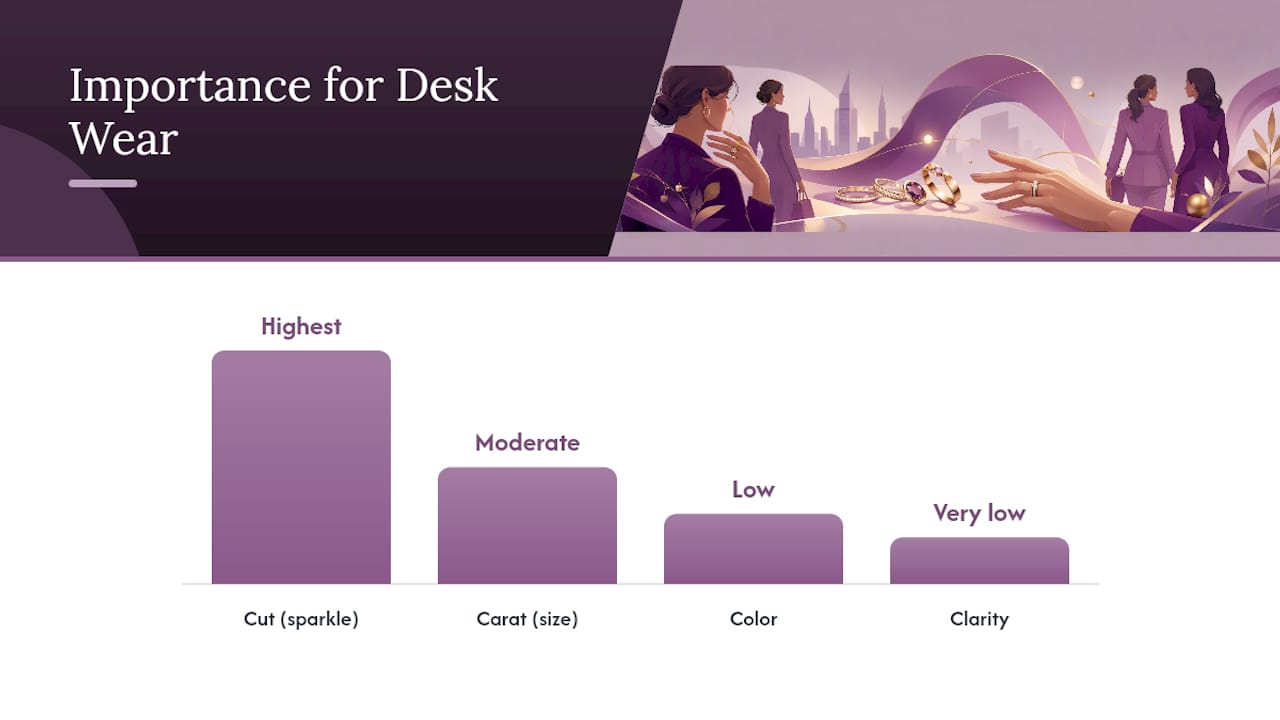
Color and clarity matter far less at conversational distance. A stone graded a few steps below “flawless” is invisible to the naked eye once it’s mounted and worn. Save your budget for cut quality and setting craftsmanship instead of chasing a clarity grade only a jeweler’s loupe can detect.
Pro Tip: Ask to see the same stone under office fluorescent lighting, not just a jewelry store’s spotlights. Sparkle changes dramatically depending on the light source, and fluorescent tubes are unforgiving.
Lab-grown diamonds and moissanite deserve a real look here, not just a passing mention. Moissanite ranks 9.25 on the Mohs hardness scale, just below diamond’s 10, which makes it more resistant to scratching than sapphire, emerald, or most colored gemstones you’d wear daily. It also throws more fire (colorful flashes of light) than a diamond does, which some buyers love and others find a bit much depending on the cut. Lab-grown diamonds share a diamond’s exact chemical structure, just without the mining footprint or the markup. Both options sidestep the ethical gray areas of traditional diamond sourcing while costing a fraction of a comparable mined stone.
Metal choice shapes both durability and how the ring reads day to day:
- Platinum: densest and most scratch-resistant, but it develops a soft patina over time that some wearers love and others prefer to polish away
- 18-karat gold: a solid middle ground between durability and value, with enough gold content to hold color without being too soft
- 14-karat gold: harder and more scratch-resistant than 18k because of the added alloy metals, a smart pick for hands-on days
- White gold: requires occasional rhodium replating to keep its bright white finish, something jewelers often skip mentioning at the point of sale
- Sterling silver: budget-friendly and lovely for stacking pieces, but softer and more prone to daily wear than gold or platinum
If you’re weighing options in more depth, a full comparison of metals for moissanite settings breaks down how each pairs with different stone colors and cuts.
How Should You Choose Ring Features for Your Daily Work?
Your job description should shape your ring choice more than any trend cycle. A ring that looks stunning on Pinterest can become a daily annoyance if it doesn’t match how you actually use your hands.
- Desk-based, client-facing roles: Choose low-profile settings, slim bands, or a signet-style ring. These sit close to the skin, don’t catch on keyboards or paperwork, and read as polished without shouting for attention. Signet rings in particular have become a favorite recommendation for desk work because their flat top and solid construction mean there’s nothing raised to snag or bend.
- Hands-on professions (healthcare, education, hospitality, retail): Bezel settings are your best friend here. The metal fully surrounds the stone, so there’s no exposed edge to catch on gloves, fabric, or equipment. Skip pavé and delicate prong work entirely. A durable stone in a simple, low band will outlast almost anything fussier.
- Active or frequently traveling professionals: Consider a removable ring for travel days, paired with a slim, durable companion band you can wear through airport security and gym sessions without worry. Some women keep a sentimental piece at home and travel with a hardier stand-in.
- When custom design makes sense: If your role genuinely demands both a distinctive personal style and heavy hand use, a custom design lets you dictate setting height, band width, and metal weight simultaneously instead of compromising on an off-the-rack option.
Setting height and type are the single most practical factor for comfort and snag risk. A stone that sits flush or nearly flush with the band will survive a decade of typing, handshakes, and glove changes in a way a tall six-prong solitaire simply won’t. If you type for a living, this matters more than almost any other spec on this list.
For readers who want a deeper look at office-specific styling, Meri Jaan’s guide to professional jewelry for office settings walks through more examples by role.
Styling Rings the Right Way for a Professional Wardrobe
Finger placement carries subtle signals in professional settings, whether you intend it or not. A ring on the traditional ring finger reads as expected and unremarkable. A statement ring on the index finger draws more attention and can feel bolder in a conservative office. Middle-finger rings often land in between, versatile enough for both daily wear and slightly dressier occasions.
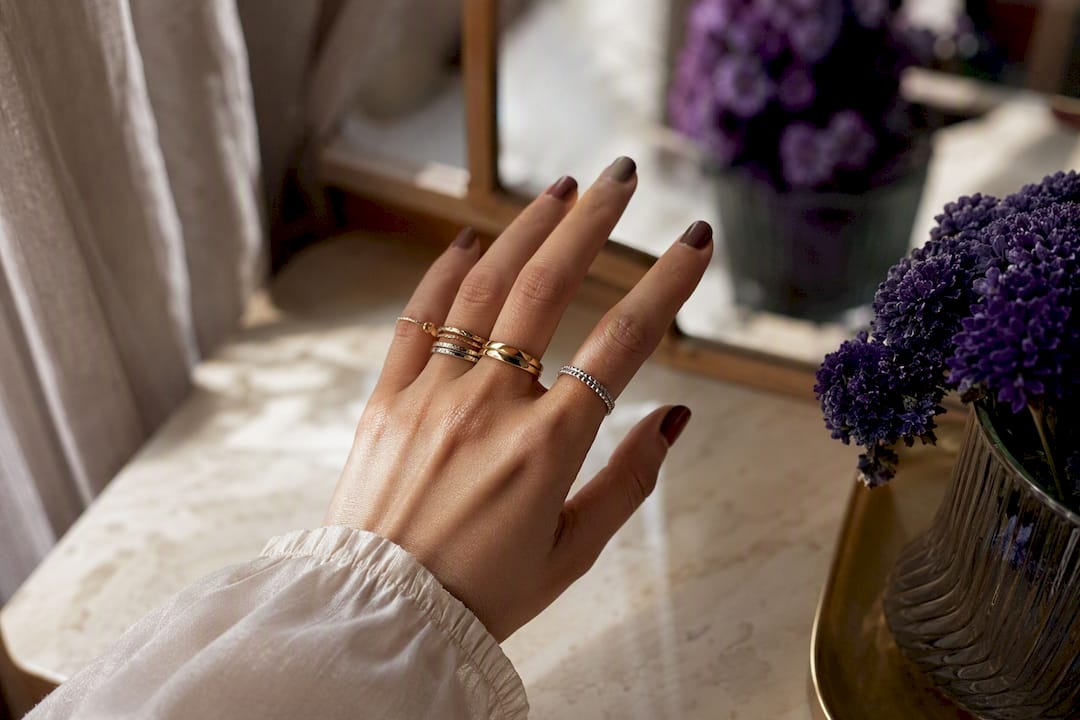
Stacking works best with a formula rather than instinct alone. Pick one anchor piece (your most substantial or meaningful ring) and add one or two supporting bands that are visually quieter, thinner, or in a complementary finish. Odd numbers tend to look more intentional than even ones. Two matching thin bands beside a solitaire, for instance, often reads as more “considered” than a single extra band that looks like an afterthought.
- Anchor ring + one slim band = clean and minimal
- Anchor ring + two thin bands (odd-number rule) = layered without looking cluttered
- Signet + solitaire, same metal tone = cohesive and quietly polished
Pro Tip: If you wear a watch daily, keep your ring metal tones matched to your watch case and any other visible jewelry. Mixed metals can look intentional in casual settings, but in a boardroom, consistency reads as more deliberate.
Matching metal tones across your watch, rings, and any necklace you’re wearing pulls an outfit together without extra effort. If your nails run long or you wear gel extensions, favor slightly narrower bands. Wide bands can visually shorten fingers when paired with long nails, while a slimmer profile balances the proportion. Styling advice for work, events, and casual outfits consistently points to restraint and proportion as the two rules that separate “professional and polished” from “trying too hard.”
What Should You Spend on Rings, and Where Does It Matter Most?
Forget the old advice about spending a fixed percentage of income on a ring. That “rule” originated from diamond industry marketing decades ago, not from any financial logic that holds up for a working professional managing rent, retirement contributions, and everything else on a real budget. A more useful approach: decide what you can spend without financial strain, then allocate that budget toward the features that actually affect longevity.
Spend more on:
- Setting craftsmanship: A well-made setting holds a stone securely for decades; a cheap one loosens within a few years of daily wear
- Metal quality: 14k or 18k gold, or platinum, outlasts plated or lower-karat alternatives significantly
- Warranty and aftercare: A strong warranty policy that includes free inspections or repairs saves real money over the life of the ring
Spend less on:
- Stone type: Lab-grown moissanite and lab-grown diamonds deliver comparable sparkle and far greater durability than many mid-tier mined stones, at a much lower price point
- Carat size for its own sake: A well-cut, smaller stone in a great setting often outperforms a larger, poorly cut one in daily-wear appeal
Before finalizing a purchase, factor in insurance costs, the seller’s return policy, and whether resale value matters to you (it rarely does for lab-grown stones, since resale isn’t the point of choosing them). Ask directly about warranty length and what specific repairs or inspections it covers. Vogue’s shopping guide recommends working with a jeweler you trust and giving yourself time, especially for custom pieces, rather than rushing into a purchase under pressure.
How Do You Measure and Size a Ring for All-Day Comfort?
A ring that fits perfectly in a store can feel tight by 3 p.m. after a full day of typing, temperature changes, and normal hand swelling. Getting sizing right the first time saves you a resizing trip and the wait that comes with it.
- Measure at the right time of day. Hands swell slightly in heat and shrink in cold, so measure in the evening when your hands are at their largest for the most reliable fit.
- Use a real sizing tool, not a printable chart. A jeweler’s sizing ring set (called a mandrel or sizer) gives a far more accurate result than a paper strip you print at home.
- Consider band width. Wider bands feel tighter than thin ones at the same numeric size, because more metal surface contacts the finger. If you’re moving from a slim band to a chunkier one, size up slightly.
- Ask about comfort-fit profiles. A comfort-fit band has a slightly rounded interior edge that slides on and off more easily and feels less snug than a flat-interior band of the same size.
- Anticipate workplace and seasonal factors. Office air conditioning, frequent handwashing, and long hours at a keyboard all affect how a ring feels by the end of the day, not just how it fits at 9 a.m.
- Know your metal’s resizing limits before buying. Platinum and gold resize well within a size or two. Eternity bands, pieces with stones set all the way around, and certain sterling silver designs often can’t be resized without replacing the whole band. Always ask the seller directly what their resizing policy allows.
How Do You Keep a Ring Durable and Secure for Years?
Not all gemstones handle daily wear the same way, and understanding hardness saves you from picking a stone that looks great in the store and dulls within a year. On the Mohs scale, diamond sits at 10, moissanite at 9.25, sapphire at 9, and softer stones like opal or emerald sit considerably lower, in the 5 to 8 range, making them far more prone to scratching and chipping with regular hand use.
Routine maintenance keeps any ring looking sharp and, more importantly, keeps stones secure. Jewelry care guides consistently recommend an annual professional inspection to check prong tightness and setting security, especially for pavé or multi-stone designs where a single loose prong can lead to a lost stone.
- At home: warm water with a drop of mild dish soap and a soft toothbrush handles most everyday buildup
- Avoid: chlorine, harsh cleaning chemicals, and ultrasonic jewelry cleaners for softer or treated stones
- Professionally: a jeweler’s steam clean and prong check once a year catches small issues before they become lost-stone emergencies
Before buying, ask pointed questions about warranty coverage: How long does it last? Does it cover resizing? Does it include free inspections, or do you pay per visit? A seller’s warranty terms and certificate documentation tell you more about long-term value than the price tag alone. Also confirm whether the piece comes with a grading or authenticity certificate you can reference later for insurance purposes.
A Step-by-Step Checklist for Buying Your Next Ring
Use this in order, whether you’re shopping in person or online. Skipping steps is how people end up with a ring they love in theory and regret in practice.
- Define your lifestyle first. Desk job, hands-on work, frequent travel, or a mix, this decides everything downstream.
- Set a realistic budget based on what you can spend comfortably, not a borrowed percentage rule.
- Pick your stone category: mined diamond, lab-grown diamond, or moissanite, based on durability needs and ethical priorities.
- Choose metal and setting together, prioritizing wearability over how a ring photographs in isolation.
- Verify sizing accuracy and ask about the seller’s resizing policy before you commit.
- Confirm warranty terms in writing: length, what’s covered, and inspection frequency.
- Check certification and seller reputation. Look for grading documentation and read independent reviews on a platform like Trustpilot rather than relying only on testimonials on the seller’s own site.
- Photograph the ring and test-wear it for a few hours before finalizing, if the seller allows a trial period, to catch comfort issues early.
A few final things worth double-checking before you finalize:
- Does the return window give you enough time to test-wear it in real conditions?
- Is insurance available or recommended for the piece’s value?
- Does the seller offer free resizing within a set window after purchase?
For a broader look at what “durable” actually means across materials, Meri Jaan’s guide to durable jewelry for professional daily wear expands on several of these points with material-specific detail.
Where Meri Jaan Fits Into This Checklist
Meri Jaan builds its ring collection around lab-grown moissanite, which lines up directly with nearly every priority covered above: hardness that withstands daily hand use, an ethical sourcing story free of mining concerns, and pricing that doesn’t demand the tradeoffs mined stones require.
- Moissanite pieces built for daily wear, not just special occasions
- Craftsmanship focused on secure settings rather than just visual impact
- A lifetime warranty backing every piece
- Unlimited exchanges for club members, which directly answers the “what if it doesn’t fit my life” question this guide keeps returning to
Mapped against the checklist above, Meri Jaan covers the durability question with moissanite’s 9.25 hardness rating, the warranty question with lifetime coverage, and the resizing/return concern with its exchange policy for members. That leaves stone category, metal choice, and setting style—low-profile bezel, signet, or slim solitaire—as the decisions that are genuinely yours to make.
Ask any jeweler what actually separates a ring that lasts from one that doesn’t, and the answer is rarely the price tag. It’s setting security, metal choice, and how honestly the warranty backs up the sales pitch.
When comparing Meri Jaan pieces against other options, ask the same questions you’d ask any jeweler: What’s the exact warranty length? Is resizing included? What does the return policy actually cover once the ring has been worn? A brand willing to answer clearly is one worth trusting with a piece you’ll wear daily.
Do Workplace Dress Codes Affect Which Ring You Choose?
Formal corporate environments, particularly in law, finance, and executive leadership, tend to favor understated jewelry: slim bands, low-profile settings, and a limited color palette in metal tones. Creative industries, tech, and hospitality generally allow more personal expression, meaning bolder stones, mixed metals, and stacked rings read as normal rather than out of place.
Cultural context matters too. Some workplaces observe informal norms around wedding or engagement rings that differ by region or industry tradition, and client-facing roles in particular often call for more restraint than internal-only positions. If you’re unsure where your office lands, watch what senior women in similar roles wear. Dress codes are rarely written down when it comes to jewelry, but they’re almost always visible if you pay attention for a week.
The safest default across most professional settings is a ring that reads as considered rather than loud: one that doesn’t compete with your voice in a meeting or your handshake with a new client. That doesn’t mean bland. A well-chosen signet or a bezel-set moissanite ring can carry real personality while still respecting a room’s unspoken formality.
When your office culture is genuinely more relaxed or creative, treat that as permission, not obligation, to introduce color, stacking, or a bolder stone. The goal is fitting your environment intentionally, not defaulting to the most conservative option out of caution alone.
Can You Balance Personal Style With Professional Expectations?
Yes, and the two aren’t actually in conflict as often as they seem. The tension usually comes from treating “professional” and “personal style” as opposites, when the better approach is finding where they overlap.
Start with the non-negotiables: your finger’s daily activity level, your industry’s general formality, and any specific dress code guidance you’ve actually observed at work. Within those boundaries, there’s usually more room for personal expression than people assume. A signet ring can carry a family crest or a personal symbol while still reading as entirely appropriate for a boardroom. A moissanite solitaire in a bezel setting can throw serious sparkle while sitting low enough to never catch on anything.
Neither serves you well over years of wear. The better move: pick one or two design elements that feel genuinely like you, an unusual metal tone, a distinctive band texture, a meaningful engraving, and keep everything else in the design restrained. That’s usually enough personality without tipping into distraction.
Editorial Take: What This Guide Gets Right That Most Advice Misses
Most ring buying advice treats stone size as the headline decision and setting height as an afterthought. That’s backward for anyone working a desk job or a hands-on role. Setting height and type determine whether a ring survives daily life; carat weight mostly determines what it costs.
The conventional wisdom around “spend two months’ salary” deserves to die entirely. It was never financial advice, it was marketing dressed up as tradition, and it’s pushed plenty of buyers toward stones they couldn’t comfortably afford while ignoring the setting quality that actually determines longevity.
If there’s one priority I’d put above all others in this guide, it’s this: pick the setting before you pick the stone size. A gorgeous stone in a setting that snags on everything gets worn less, not more. Moissanite and lab-grown diamonds solve the durability-versus-cost tension neatly, which is exactly why they’ve become the practical choice for women who wear their rings every single day rather than saving them for special occasions.
— Ammar
Find a Ring Built for Your Actual Workday
Meri Jaan designs specifically for the reader this guide was written for: professional women who want a ring that looks refined in a client meeting and survives everything a real workday throws at it. Every piece uses lab-grown moissanite set in craftsmanship-first designs, backed by a lifetime warranty and unlimited exchanges for club members, so a sizing miss or a change in lifestyle doesn’t mean starting over.
If a low-profile, polished design appeals after reading through the styling and durability sections above, the Dazzling Bridal Ring shows how a low-profile setting and a water-drop silhouette can carry real elegance without sitting high enough to catch on anything. For a broader look at what fits your daily hand use, browse the full women’s rings collection and filter by setting style before you commit to a size.
Sources
- GIA: About the 4Cs
- How To Buy An Engagement Ring: 19 Ring Shopping Tips — Vogue
- Styling women’s rings for work, events, and casual outfits — Fashion Sizzle

