
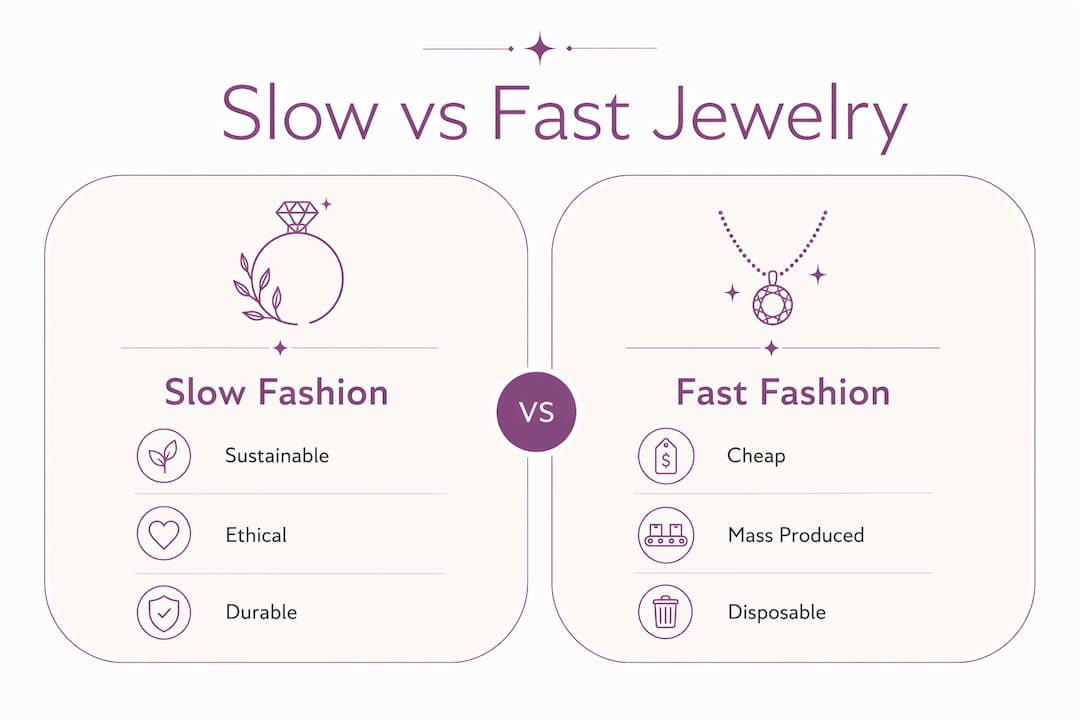
Slow fashion jewelry is an intentional approach to design and production that puts sustainability, durability, and ethical sourcing ahead of fleeting trends and mass manufacturing. Unlike fast fashion jewelry, which relies on cheap, non-recyclable materials and exploitative labor to keep prices artificially low, slow jewelry is built to last generations. Think recycled gold and silver, conflict-free gemstones, and small-batch production runs that minimize waste from the start.
At its core, slow fashion jewelry shares the same DNA as the broader slow fashion movement: buy less, buy better, and know exactly where your piece came from. Here is what that looks like in practice:
- Materials: Recycled precious metals, lab-grown stones, and ethically sourced gems rather than cheap alloys
- Production: Small-batch or made-to-order manufacturing instead of high-volume factory runs
- Design: Timeless, considered aesthetics meant to outlast any seasonal trend
- Labor: Fair wages, safe working conditions, and transparent supply chains
- Longevity: Pieces built to be repaired, resold, or passed down, not discarded
Table of Contents
- What principles define slow fashion jewelry?
- How does slow fashion jewelry compare to fast fashion jewelry?
- Why choosing sustainable jewelry benefits you and the planet
- Merijaan: slow fashion jewelry with ethical luxury
- Merijaan brings ethical luxury within reach
- Key Takeaways
What principles define slow fashion jewelry?
The slow jewelry movement rests on a set of values that shape every decision from raw material to finished piece. These principles are what separate a genuinely ethical brand from one that simply uses green marketing language.
Longevity over volume. Slow jewelry prioritizes quality and durability above all else. A piece designed to last decades costs more upfront, but its cost per wear over time often undercuts a cheap ring replaced every few months.
Sustainable materials. Recycled metals, lab-grown diamonds, and ethically sourced gems are the standard. Lab-grown stones carry the same physical and optical properties as mined equivalents without the land disruption and carbon cost of extraction.
Ethical labor. Slow jewelry is often handmade or produced by small artisan businesses that pay living wages and maintain safe working conditions. Child labor and wage theft, both documented problems in conventional jewelry supply chains, are explicitly banned.
Transparency and traceability. Ethical brands trace stones and metals to their source, avoiding conflict materials and letting buyers know exactly where their piece originated. The Responsible Jewellery Council’s Code of Practices sets the international benchmark for this kind of supply chain accountability.
Small-batch or made-to-order production. This approach avoids massive unsold inventory and the waste that comes with it. A brand producing 50 rings to order generates a fraction of the material waste of one producing 5,000 speculatively.
Recyclability. Gold can be melted and recast; gemstones can be reset. Slow jewelry pieces are designed with their next life in mind, whether that means resale, redesign, or passing them to the next generation.
A quick summary of these principles:
- Quality and durability as the primary design goal
- Recycled or responsibly sourced materials throughout
- Fair wages and safe conditions for every worker in the chain
- Full supply chain transparency and conflict-free sourcing
- Limited production runs to cut overproduction waste
- Designs built to be recycled, resold, or inherited
How does slow fashion jewelry compare to fast fashion jewelry?
The gap between slow and fast jewelry is wider than most buyers realize. Fast fashion jewelry uses cheap base metals and synthetic coatings that tarnish quickly, often within weeks of regular wear. The low price point is only possible because someone else in the supply chain absorbs the real cost, usually the worker.
| Feature | Slow jewelry | Fast jewelry |
|---|---|---|
| Materials | Recycled metals, lab-grown or conflict-free stones | Cheap alloys, non-recyclable plastics |
| Labor | Fair wages, artisan or small-scale production | Mass production, often exploitative conditions |
| Design | Timeless, considered, built to last | Trend-driven, disposable |
| Production | Small-batch or made-to-order | High-volume, rapid turnaround |
| Longevity | Generations | Months, sometimes weeks |
| Transparency | Full supply chain traceability | Little to no disclosure |
| Price | Higher upfront, lower cost per wear | Low upfront, high replacement cost |
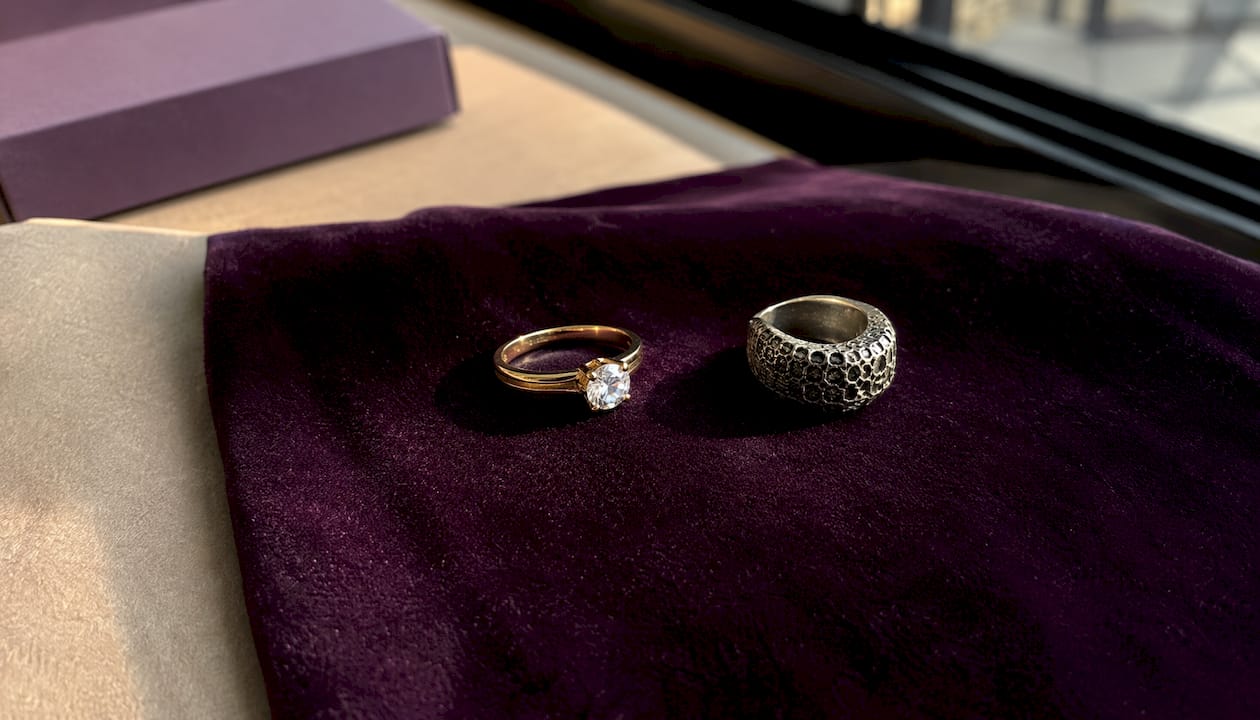
The design philosophy difference is worth dwelling on. Fast jewelry chases whatever silhouette or stone color is trending on social media this quarter. Slow jewelry aims for pieces that look as relevant in 20 years as they do today. Adam Glassman, creative director at Oprah Daily, puts it plainly: "Try investing in pieces with a design that will be around for generations. By doing so, you’re also helping to reduce overconsumption."
That is not just an aesthetic preference. It is a direct response to the waste cycle that fast jewelry feeds. A piece worn twice and discarded ends up in a landfill where metal coatings and plastic “gemstones” release toxins into soil and water.
Why choosing sustainable jewelry benefits you and the planet
The benefits of slow fashion jewelry split cleanly across three categories: environmental, personal, and social.
Environmental benefits:
- Reduced waste from small-batch production and durable materials
- Lower mining impact through recycled metals and lab-grown stones
- Fewer landfill contributions from pieces built to last rather than be discarded
- Recycled gold and silver divert scrap from electronics and old jewelry, cutting the need for new extraction
Personal benefits:
- Higher quality pieces that hold their appearance and structural integrity over years
- Heirloom potential: a well-made ring or necklace becomes a family object, not a throwaway accessory
- Genuine meaning behind the purchase, knowing the piece was made fairly and responsibly
- Better long-term value, since a durable piece bought once replaces a cycle of cheap replacements
Social benefits:
- Fair wages and safe conditions for artisans and miners
- Support for small, often community-based jewelry businesses
- Pressure on the broader industry to raise its labor and sourcing standards
“Embracing sustainable jewelry is a way to consider the impact on the planet while supporting ethical sourcing practices and making sure that the creators of the pieces are treated fairly.” — Adam Glassman, Creative Director, Oprah Daily
The slow jewelry meaning goes beyond aesthetics. Every purchase is a signal to the market. When buyers consistently choose pieces with traceable materials and fair labor, brands that cut corners face real commercial pressure to change.
Pro Tip: When evaluating a brand’s sustainability claims, look for specific disclosures: named certifications like Fairtrade or the Responsible Jewellery Council, the country of origin for metals and stones, and a clear statement on worker wages. Vague language like “ethically inspired” without supporting detail is a red flag.
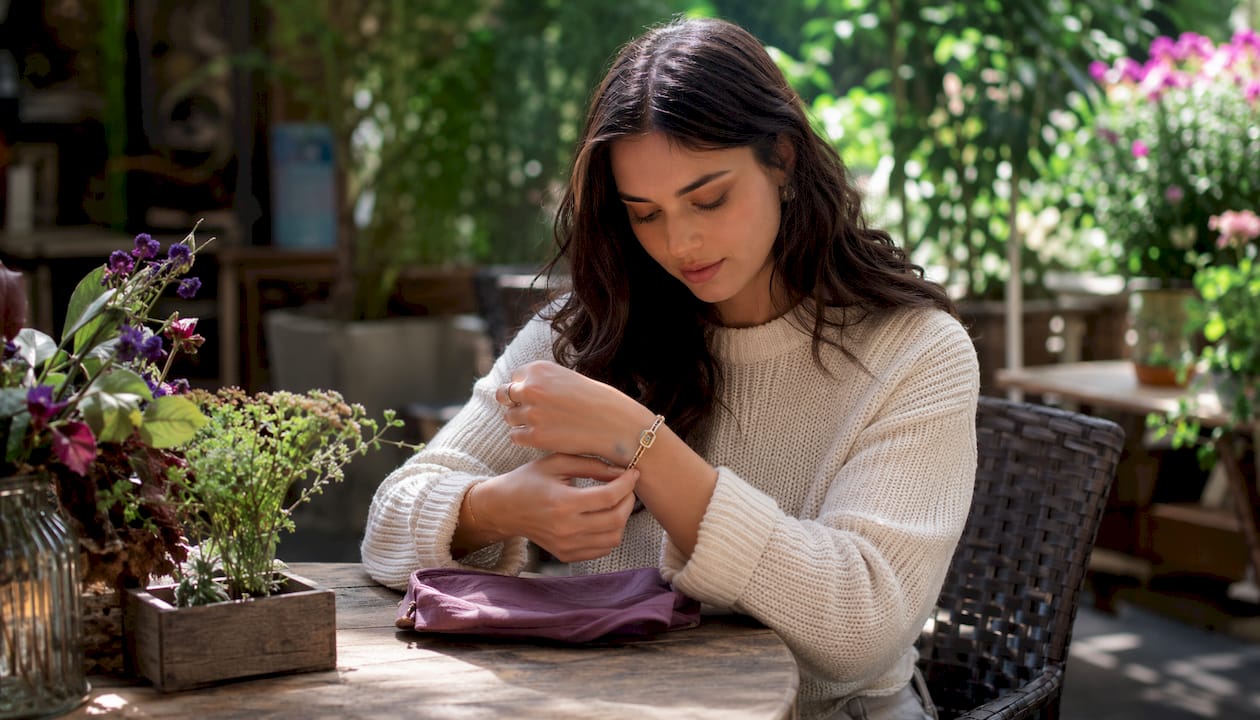
Pairing your jewelry choices with a holistic beauty approach that considers the full lifecycle of what you put on your body, from skincare ingredients to the metals touching your skin, creates a genuinely consistent set of values across your personal care routine.
Merijaan: slow fashion jewelry with ethical luxury
Merijaan is one of the clearest examples of slow fashion jewelry principles applied at the product level. The brand builds its entire line around lab-grown moissanite, a stone that delivers exceptional brilliance without the environmental and ethical complications of mined diamonds. Moissanite is harder than most gemstones, which means Merijaan pieces resist scratching and maintain their sparkle over decades of wear.
The brand’s commitment to ethical production goes further than materials. 100% of Merijaan’s profits go directly back to the workers who make the jewelry, a structure that puts fair compensation at the center of the business model rather than treating it as a marketing footnote.
“Stunning sparkle and timeless designs” is how customers consistently describe Merijaan pieces, with reviews highlighting lasting quality that holds up well beyond the initial purchase.
Merijaan’s design language reflects the slow jewelry philosophy directly. Pieces are built around classic forms, the kind of timeless jewelry design that does not age with a trend cycle. A moissanite ring from Merijaan looks as current in 2036 as it does today, which is exactly the point. The brand also maintains full transparency about its sourcing, giving buyers the traceability that fast jewelry brands rarely offer.
For anyone building a collection with longevity in mind, Merijaan’s approach to everyday jewelry demonstrates how ethical sourcing and genuine craftsmanship can coexist with accessible pricing, largely because lab-grown moissanite costs significantly less than mined diamonds while matching them in durability and optical quality.
Merijaan brings ethical luxury within reach
Slow fashion jewelry often gets dismissed as a niche for buyers with unlimited budgets. Merijaan challenges that directly. By centering lab-grown moissanite and recycled materials, the brand delivers the sparkle and craftsmanship of luxury jewelry without the price premium that mined stones carry.
Every piece in the Merijaan collection is designed to be worn for life, not a season. The women’s rings collection spans everything from everyday bands to bridal pieces, all built on the same ethical foundation: conflict-free stones, responsible metals, and fair wages for every maker involved. The women’s necklaces collection follows the same standard, with moissanite pendants and classic chains that hold their quality through years of daily wear. If you want jewelry that means something beyond its appearance, browse Merijaan’s collections and find a piece built to last.
Key Takeaways
Slow fashion jewelry is the most direct way to align your purchasing decisions with your values around sustainability, fair labor, and lasting quality.
| Point | Details |
|---|---|
| Core definition | Slow fashion jewelry prioritizes sustainability, ethical sourcing, and longevity over trends and mass production. |
| Materials standard | Recycled metals and lab-grown or conflict-free stones replace cheap alloys and untraced mined gems. |
| Production model | Small-batch or made-to-order manufacturing cuts overproduction waste and unsold inventory. |
| Environmental and social impact | Durable pieces reduce landfill waste; fair labor practices protect workers throughout the supply chain. |
| Merijaan | Merijaan uses lab-grown moissanite and returns 100% of profits to its makers, making ethical luxury accessible. |
