

Price per carat is the diamond’s total price divided by its weight in carats. That single number is the fastest way to check whether a listing is fairly priced, and you can do the math yourself in about two seconds: a diamond selling for $7,500 at 1.25 carats works out to $6,000 per carat ($7,500 ÷ 1.25 = $6,000).
Jewelers, appraisers, and grading labs all lean on this metric because carat weight alone tells you almost nothing about value. A 2.00 carat stone and a 1.25 carat stone can’t be compared on sticker price alone, but price per carat puts them on the same scale. When you’re reading a listing or getting quotes, the certification bodies behind the numbers matter too. The Gemological Institute of America (GIA), the International Gemological Institute (IGI), and HRD Antwerp are the three labs whose reports you’ll see most often, and each one anchors the grading claims that justify a given per-carat figure. Learn to read those reports and you stop taking a seller’s word for it.
Key Takeaways
Price per carat is the total price divided by carat weight, and it rises non-linearly with size because larger clean diamonds are exponentially rarer than small ones.
| Point | Details |
|---|---|
| Calculate it yourself | Divide total price by carat weight; a $7,500 diamond at 1.25 ct equals $6,000 per carat. |
| Watch magic-number thresholds | Prices jump sharply at 0.50, 1.00, 1.50, and 2.00 ct due to demand clustering, not physical scarcity alone. |
| Buy cut first | An Excellent cut can outweigh small color or clarity upgrades in visual impact per dollar. |
| Verify the certificate | Confirm GIA, IGI, or HRD Antwerp report details, exact weight, and natural versus lab-grown status before buying. |
| Consider lab-grown moissanite | Merijaan’s moissanite pieces deliver comparable sparkle to diamonds at a lower per-carat cost, backed by ethical sourcing and a lifetime warranty. |
Table of Contents
- What Is a Carat, and Why Isn’t It the Same as Size?
- Why Does Price Per Carat Jump So Much at Certain Weights?
- How Do Cut, Color, and Clarity Change the Per-Carat Price?
- How Do Natural and Lab-Grown Diamonds Compare on Price Per Carat?
- How Do You Read Diamond Price Charts and Certificates Correctly?
- How Do You Calculate and Compare Two Real Listings?
- How Do You Negotiate a Fair Per-Carat Price?
- What This Guide Means for How You Shop
- A More Affordable Way to Get the Same Sparkle
- Where to Verify Prices and Certificates Yourself
- Frequently Asked Questions
- Sources
What Is a Carat, and Why Isn’t It the Same as Size?
A carat is a unit of weight, not size. One carat equals exactly 0.2 grams, or 200 milligrams, and that distinction trips up more first-time buyers than almost anything else in the diamond business.
Two diamonds can weigh the identical 1.00 carat and look noticeably different face-up. A diamond cut too deep hides weight down in its base, where you can’t see it, while a shallow or well-proportioned cut spreads that same carat weight across a wider table, making the stone appear larger from above. This is why a well-cut 0.90 carat diamond can look as big as, or bigger than, a poorly cut 1.00 carat stone. Cut proportions, not carat weight, control how big a diamond looks on a finger.
Before you trust a listing’s numbers, check these details:
- The exact carat weight to two decimal places, not a rounded figure like “1 ct+.”
- The depth and table percentages, which tell you whether the cut is hiding weight or displaying it.
- Millimeter dimensions (length, width, depth), which let you compare face-up size across different shapes.
- Whether the certificate matches the stone in hand, confirmed by a report number you can look up.
Pro Tip: *Shop just under round-number weights. A 0.95 carat diamond and a 1.00 carat diamond look virtually identical face-up, but the price gap can be steep because of how the market prices whole-carat thresholds. That gap alone can fund an upgrade in cut or clarity instead.
Why Does Price Per Carat Jump So Much at Certain Weights?
Price per carat rises far faster than weight because larger clean rough is dramatically rarer than small rough. Doubling a diamond’s carat weight often multiplies its total price four to five times, not two, because mining yields shrink sharply as rough size increases.
That rarity is compressed into what the trade calls “magic numbers”: 0.50, 1.00, 1.50, and 2.00 carats. Buyers searching online filter by whole and half-carat marks, so demand (and price) clusters right at those thresholds. A stone weighing 1.01 carats can cost noticeably more per carat than one at 0.99 carats, even though the two are indistinguishable to the naked eye. The rarity premium on larger carats reflects genuine scarcity in the rough supply, but the sharp jump right at 1.00 or 2.00 carats is largely a market behavior effect, not a physical one.
Here’s roughly how that plays out across common weights for a well-cut, colorless-range stone:
| Carat weight | Typical price per carat | What’s driving the range |
|---|---|---|
| 0.50 ct | Lower band | Common size, high supply |
| 0.90–0.99 ct | Moderate, just below the 1 ct jump | Same visual size as 1 ct, smaller price tag |
| 1.00 ct | Typical range for a G color, VS2 clarity, Excellent cut stone | Magic-number demand spike (source) |
| 1.50 ct | Noticeably higher per carat than 1.00 ct | Rarer rough, still under 2 ct threshold |
| 2.00 ct | noticeably higher per carat for comparable quality | Sharp rarity premium above the 2 ct line |
Pro Tip: If you love the look of a 1.00 carat stone but not the price, ask your jeweler to show you 0.90 to 0.97 carat options in the same shape. You’ll often get 15 to 25 percent in savings for a difference nobody but an appraiser could measure, based on GIA’s data on threshold pricing.
How Do Cut, Color, and Clarity Change the Per-Carat Price?
Cut quality moves price per carat more than almost any other factor, because cut controls how light enters and exits the stone. An Excellent cut grade can command a premium over a Good or Fair cut at the exact same carat weight, color, and clarity, since cut governs the light return that makes a diamond sparkle.
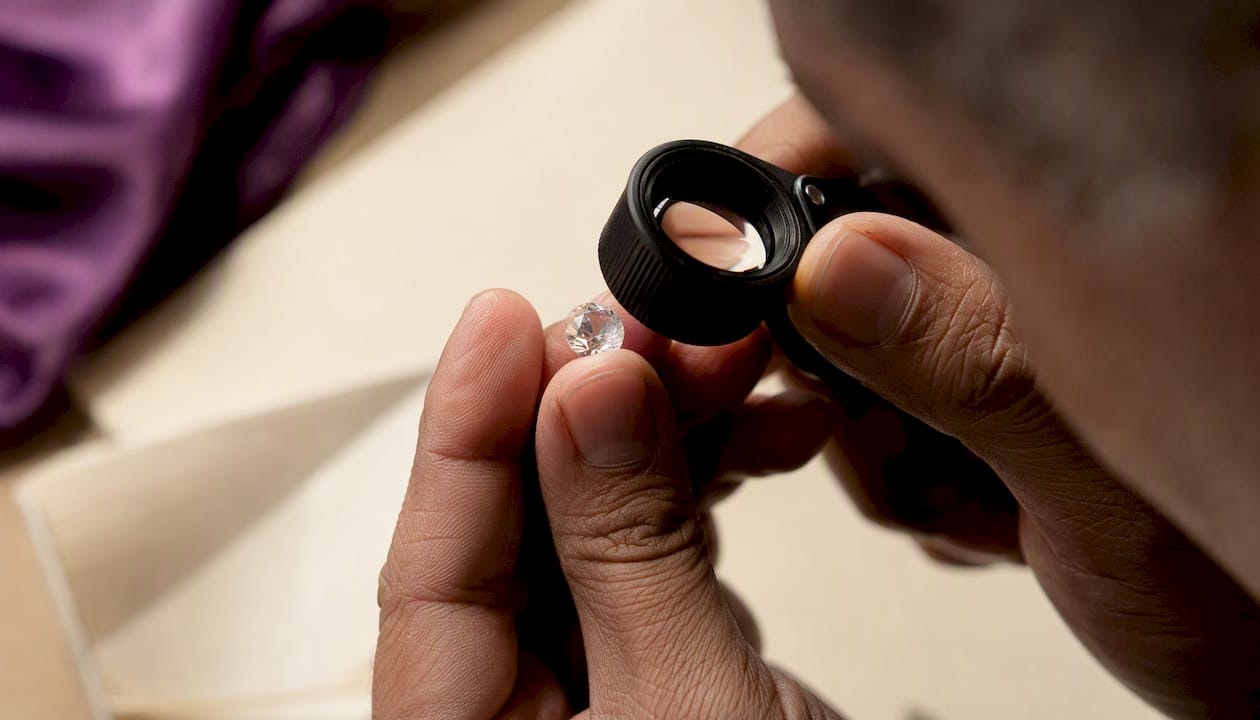
Color and clarity move price too, but not evenly. Jumping from J color to G color typically raises price per carat more than jumping from SI1 clarity to VS2, because color shifts are more visible to an untrained eye at a glance, while many clarity differences below VS2 are invisible without magnification. This is where informed buyers find real savings: dropping one clarity grade you can’t see with the naked eye, while holding cut and color steady, often preserves the stone’s visual impact and lowers the per-carat price meaningfully.
Picture two 1.00 carat round diamonds side by side. Stone A is an Excellent cut, G color, VS2 clarity, priced at $6,000 per carat, or $6,000 total. Stone B is a Good cut, G color, VS2 clarity, priced at $4,600 per carat, or $4,600 total. Same weight, same color, same clarity grade on paper, but Stone A returns more light and looks brighter in daylight. That $1,400 difference is the cut premium, and it’s usually money well spent because cut is the one factor you can’t fix later.
Now compare Stone A against Stone C: same Excellent cut, same G color, but I1 clarity instead of VS2, at $4,200 per carat. The clarity drop saves $1,800 per carat, but I1 inclusions are sometimes visible without a loupe, which is a real trade-off rather than a free discount.
If you’re weighing where to spend, buyers who prioritize visual impact per dollar tend to land on:
- Cut: Very Good or Excellent, never lower.
- Color: G through I, where warmth is not detectable face-up in most settings.
- Clarity: VS2 or SI1, where inclusions are eye-clean under normal viewing.
How Do Natural and Lab-Grown Diamonds Compare on Price Per Carat?
Lab-grown diamonds run substantially cheaper per carat than natural diamonds of comparable size and grade, and that gap has widened as lab-grown production has scaled. The chemistry is identical, since both are crystallized carbon, but the supply economics are not, and that’s the entire reason for the price split.
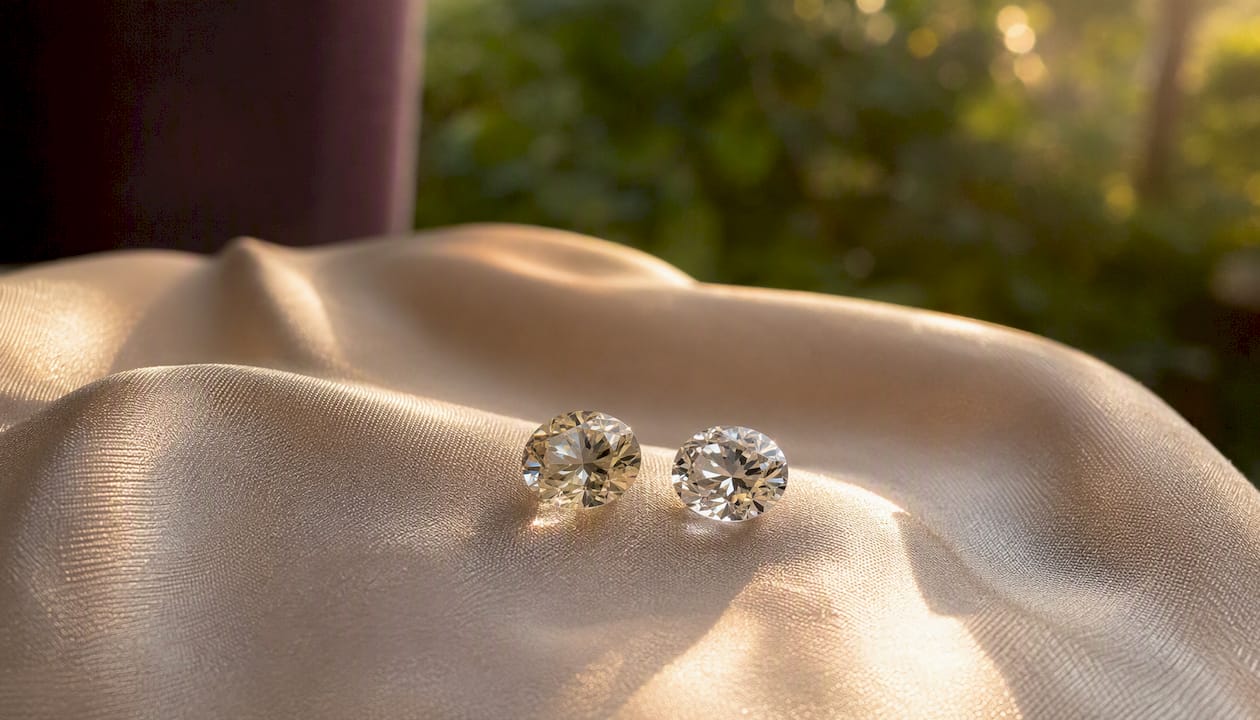
Certification differs slightly by category, too. GIA reports are the standard most buyers look for on natural diamonds, while IGI reports show up more often on lab-grown stones, though GIA also certifies lab-grown diamonds under its own separate report type. Whichever lab issued the certificate, check that it explicitly states “natural” or “laboratory-grown” on the report. This single line is the one detail sellers occasionally bury in fine print, and it changes everything about resale expectations.
Before you decide between the two, weigh these points:
- Lab-grown stones typically deliver more visible carat weight for the same budget, since the per-carat price is lower.
- Resale value for both natural and lab-grown diamonds tends to fall well below the original purchase price. Diamonds in general are not a strong resale investment, and lab-grown stones have depreciated faster as more enter the market.
- Warranty and exchange policies matter more with lab-grown purchases, since resale isn’t the safety net it might be with a rare natural stone.
- Ethical sourcing is a genuine differentiator for lab-grown buyers who want to skip the mined-diamond supply chain entirely.
- Always open the certificate PDF rather than trusting a seller’s summary. Grading language and diagrams vary by lab, and a “natural” label can be typed wrong or omitted.
How Do You Read Diamond Price Charts and Certificates Correctly?
Diamond price charts and trade lists work off a benchmark called Rapaport, and understanding it explains why two sellers can quote wildly different prices for a similar stone. Rapaport publishes weekly price bands by shape, weight, and quality grade, and it functions as the trade’s universal reference point for wholesale negotiations.
Here’s what that means in practice: when a dealer says a diamond is priced “at list,” they mean at the full Rapaport band price for that grade, with no discount applied. Most trade transactions actually happen at a percentage below list, sometimes 10 to 30 percent off, depending on the stone and the relationship between buyer and seller. If a retail listing shows a price sitting right at or above the Rapaport list price, that’s often a signal there’s room to negotiate, or that you’re paying for brand markup rather than the stone itself. Chart tools like Pricescope let you check whether a quoted per-carat figure lines up with what similar stones are actually trading for.
To compare listings accurately, work through this checklist:
- Confirm the exact carat weight to two decimals, not a rounded number.
- Check the cut grade and, ideally, the depth and table percentages.
- Verify color and clarity grades against the certificate, not just the listing description.
- Note the fluorescence rating, since strong fluorescence can affect appearance and price on certain stones.
- Look for any treatment disclosures, since treated stones should carry noticeably lower per-carat prices to reflect the added risk.
Watch for these red flags before you commit: a listing with no downloadable certificate PDF, weight given only as a rounded range, clarity described in vague marketing terms instead of a GIA or IGI grade, or any language suggesting the stone is “enhanced” or “treated” without a clear price adjustment to match.
Pro Tip: Always ask for the actual proportions diagram from the certificate, real photos or video under consistent lighting, and the exact report number so you can look it up directly on the lab’s own website. A seller who hesitates on any of these three is a seller worth walking away from.
How Do You Calculate and Compare Two Real Listings?
The best way to internalize price per carat is to run the numbers on two realistic listings side by side. Here’s a comparison built from typical market figures for round brilliant diamonds:
| Listing | Weight | Cut | Color | Clarity | Total price | Price per carat |
|---|---|---|---|---|---|---|
| Listing A | 1.20 ct | Excellent | G | VS1 | $7,200 | $6,000/ct |
| Listing B | 1.35 ct | Very Good | H | SI1 | $7,830 | $5,800/ct |
Work through the math yourself: Listing A’s $7,200 divided by 1.20 carats gives $6,000 per carat. Listing B’s $7,830 divided by 1.35 carats gives $5,800 per carat. On price per carat alone, Listing B looks like the better deal.
But per-carat price is a starting point, not the whole answer. Listing B is a slightly lower cut grade and color, which means it may return less light and show a faint warmth compared to Listing A. Listing A’s higher per-carat cost buys better light performance in a smaller stone. If your priority is a bigger-looking diamond on a budget, Listing B’s extra 0.15 carats plus lower per-carat price makes it the stronger pick. If your priority is maximum sparkle and you can live with slightly less size, Listing A is worth the premium. Tools like TheDiamondPrice’s calculator let you plug in these exact specs to sanity-check whether either total price falls inside a fair market range before you commit.
How Do You Negotiate a Fair Per-Carat Price?
Dealers routinely sell below their initial quote, and knowing this changes how you shop. Because most trade pricing references Rapaport list bands, a quoted retail price sitting at or near full list often has built-in room to come down, particularly on natural diamonds moving through independent jewelers rather than fixed-price retail chains.
Retail markup itself varies enormously depending on the business model. Luxury storefronts can carry markups in the 300 to 500 percent range over wholesale cost, largely to cover overhead, brand positioning, and in-store service, while direct-to-consumer online sellers often operate on markups closer to 15 to 25 percent. Neither model is dishonest, but understanding which one you’re shopping in tells you how much movement to expect.
Some ground rules for negotiating:
- Do bring your own per-carat benchmark from a source like Pricescope before you start talking price.
- Do ask directly whether the quoted price is “at list” or already discounted off Rapaport.
- Don’t get emotionally anchored to one specific stone in the room. Sellers can sense urgency, and it costs you leverage.
- Don’t assume a bigger discount percentage always means a better deal. Compare the final per-carat number, not the size of the markdown.
Rarity premiums show up legitimately at carat thresholds and for exceptional cut grades, and those are worth paying for. Unjustified markups tend to hide behind vague language: “designer setting,” “exclusive collection,” or a certificate the seller won’t let you inspect closely.
Pro Tip: A simple, polite script works better than haggling: “I’ve seen comparable stones benchmarked around $X per carat on Pricescope. Is there flexibility to get closer to that on this piece?” It signals you’ve done your homework without sounding confrontational, which is usually enough to unlock a better number.
What This Guide Means for How You Shop
Transparent pricing shouldn’t be a negotiating tactic you have to fight for. It should be the default. Working through how price per carat actually gets calculated, and how much of that number is rarity, cut quality, and market psychology rather than pure cost, reinforces something worth saying plainly: a lot of what buyers pay for in traditional diamond retail has nothing to do with the stone in front of them.
That’s a large part of why Merijaan builds its collection around lab-grown moissanite rather than mined diamonds. Ethical sourcing and clear pricing aren’t marketing lines here, they’re the actual product decision. If you want to see how that plays out on real pieces, Merijaan’s guide to jewelry weight and value walks through the same calculation principles applied to a very different, more transparent business model.
A More Affordable Way to Get the Same Sparkle
Everything in this guide about cut quality, rarity premiums, and per-carat math still applies once you shift from diamonds to moissanite, except the numbers work far more in your favor. Moissanite delivers comparable, and by some measures superior, brilliance to a diamond, but its per-carat price sits a fraction of what natural or even lab-grown diamonds command, because the material itself is far less constrained by rarity.

Merijaan builds its rings, necklaces, and stacking sets around lab-grown moissanite for exactly this reason. You get the sparkle, the durability, and a lifetime warranty, without paying a per-carat premium tied to mined rarity or magic-number thresholds. Resale value on moissanite, like most fine jewelry, stays modest, so buy it for the piece itself and the way it looks on you, not as an investment. If you’re weighing moissanite against a mined or lab-grown diamond purchase, Merijaan’s comparison of moissanite and diamond performance breaks down hardness, brilliance, and cost side by side. Ready to see actual per-carat pricing on a finished piece? Browse Merijaan’s collection and check a listing’s price against everything you just learned.
Where to Verify Prices and Certificates Yourself
Cross-checking a seller’s numbers against independent sources takes a few minutes and can save you thousands. These are the references worth bookmarking:
- GIA — the leading authority on diamond grading standards and the source most certificates reference for cut, color, and clarity definitions.
- IGI — widely used for lab-grown diamond certification, with report formats worth comparing against GIA’s language.
- HRD Antwerp — a major European grading lab, common on stones sourced through Antwerp’s diamond trade.
- diamonds.net (Rapaport) — the trade’s benchmark price list, useful for understanding list versus off-list pricing.
- Pricescope — community-driven price charts and forums where buyers compare real per-carat figures across grades.
- TheDiamondPrice — offers a calculator and current benchmark ranges for quick per-carat sanity checks.
- GemSelect — useful background on how per-carat pricing conventions work across gemstones generally, not just diamonds.
Frequently Asked Questions
What is price per carat explained in the simplest terms? Price per carat is a diamond’s total price divided by its weight in carats. It’s the standard way to compare stones of different sizes on equal footing, since total price alone doesn’t account for how much the diamond actually weighs.
Why do diamonds cost more per carat as they get bigger? Larger clean diamond rough is far rarer than small rough, so prices rise exponentially rather than in a straight line. A 2 carat diamond typically costs four to five times as much as a 1 carat diamond of similar quality, not just double.
Is lab-grown moissanite priced the same way as diamonds? Moissanite follows the same per-carat comparison logic, but its per-carat price sits well below both natural and lab-grown diamonds because the material isn’t constrained by the same rarity economics.
Should I trust a listing’s price per carat without checking the certificate? No. Always confirm the exact carat weight, cut grade, and natural versus lab-grown status on the actual certificate PDF from GIA, IGI, or HRD Antwerp before trusting any per-carat figure in a listing.
Does a higher price per carat always mean a better diamond? Not necessarily. It often reflects cut quality and rarity thresholds rather than superior beauty. A well-cut stone just under a magic-number weight can look nearly identical to a pricier one while costing meaningfully less per carat.

