

Conscious luxury jewelry is defined as jewelry crafted with a deep commitment to ethical sourcing, sustainable materials, and transparent labor practices throughout every stage of production. The term sits within the broader industry concept of “responsible luxury,” a standard that by 2026 has moved from niche preference to baseline expectation for serious buyers. Three pillars form its foundation: recycled precious metals, conflict-free gemstones, and fair labor conditions. What makes jewelry conscious is not just what it looks like, but what it costs the world to create. For shoppers who care about both beauty and accountability, understanding this distinction changes everything about how they buy.
What is conscious luxury jewelry and what defines it?
Conscious luxury jewelry is built on three non-negotiable pillars: recycled precious metals, conflict-free or lab-grown gemstones, and verified fair labor conditions. By 2026, these are the baseline standards for responsible brands, not optional extras. A piece that meets all three qualifies as genuinely conscious luxury. A piece that meets only one does not.
Recycled precious metals
Recycled gold retains the same chemical and physical properties as newly mined gold. The only difference is its origin. Using recycled gold avoids the environmental damage and human rights concerns tied to new mining operations, without sacrificing quality or value.

Lab-grown and conflict-free gemstones
Lab-grown diamonds are chemically, physically, and optically identical to mined diamonds. They carry a significantly lower carbon footprint and have no association with conflict funding. Brands offering lab-grown moissanite, like Merijaan, deliver the same visual brilliance at a fraction of the environmental cost.
Fair labor and ethical production
Ethical production means workers receive fair wages, safe conditions, and legal protections. Conscious luxury brands document these standards and make them available to buyers. Opacity on labor practices is a red flag, not a minor detail.
Pro Tip: Ask any brand you are considering: “Can you show me your supply chain documentation?” A genuinely conscious brand will answer without hesitation.
How does conscious luxury jewelry differ from traditional luxury jewelry?
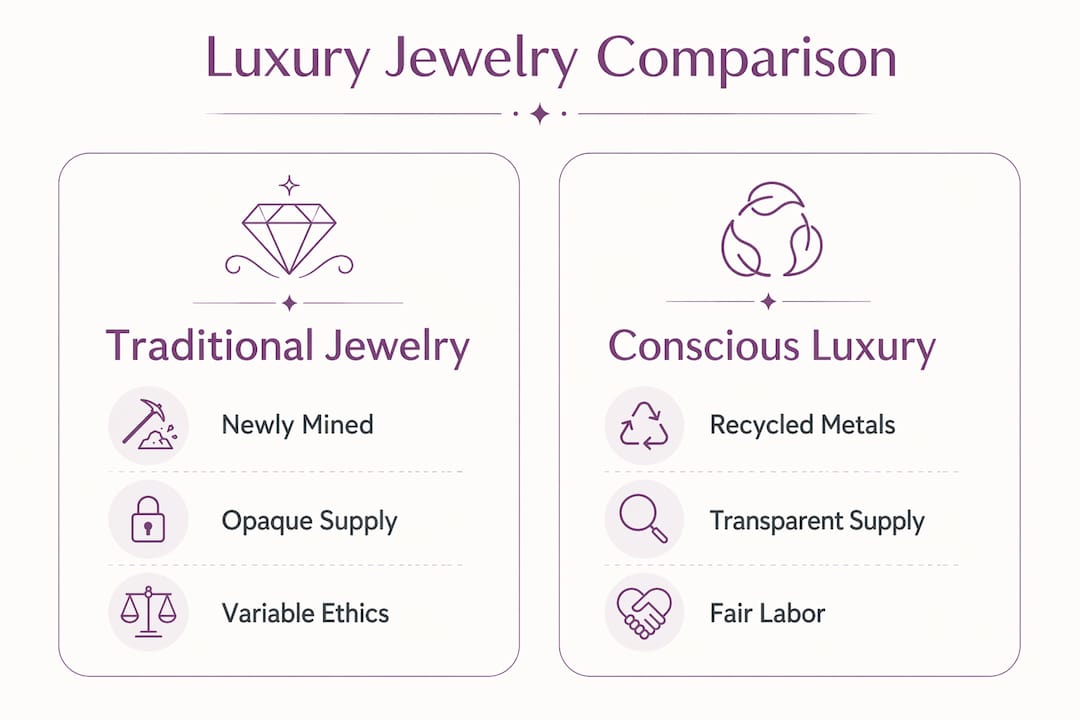
Traditional luxury jewelry has long prioritized visual prestige and brand heritage. Conscious luxury jewelry adds a second layer of value: accountability for how each piece was made. The differences are concrete, not philosophical.
Traditional mining extracts gold and gemstones from the earth at significant environmental cost, including habitat destruction, water contamination, and high carbon emissions. Conscious luxury jewelry relies on recycled metals and lab-grown or traceable natural gemstones to sidestep these harms entirely.
Supply chain transparency is another key dividing line. Traditional luxury brands rarely disclose where their materials originate. Conscious luxury brands publish certifications, name their suppliers, and invite scrutiny. Certifications like Fairmined, Fairtrade, and the Kimberley Process verify ethical sourcing and labor standards, giving buyers a concrete way to assess a brand’s claims.
Craftsmanship and durability also separate the two categories. Timeless, durable jewelry designed to last physically and emotionally reduces waste and promotes sustainable consumption. Traditional luxury can prioritize trend cycles over longevity. Conscious luxury inverts that priority.
| Feature | Traditional luxury jewelry | Conscious luxury jewelry |
|---|---|---|
| Material sourcing | Newly mined metals and gemstones | Recycled metals, lab-grown or certified stones |
| Supply chain transparency | Rarely disclosed | Documented and certifiable |
| Labor standards | Variable, often unverified | Fair wages and safe conditions, verified |
| Environmental impact | High carbon and land footprint | Reduced footprint through responsible sourcing |
| Design philosophy | Trend-driven or status-focused | Timeless, durable, and intentional |
Why is sustainability and ethics important in luxury jewelry today?
Consumer demand for ethical and sustainable luxury goods has increased sharply, reflecting a shift from abundance to intention in how people define luxury. Buyers no longer accept prestige as a substitute for responsibility. They want both.
The environmental case is direct. Traditional gold and diamond mining causes deforestation, soil erosion, and toxic runoff in mining communities. Lab-grown alternatives and recycled metals eliminate these harms at the source. Sustainable production also includes eco-friendly manufacturing practices: non-toxic materials, renewable energy, reduced water use, and low-waste packaging. Each of these choices compounds into a meaningfully smaller environmental footprint.
The social case is equally strong. Mining communities in parts of Africa, South America, and Asia have historically faced dangerous working conditions, poverty wages, and displacement. Conscious luxury brands that source responsibly direct economic benefit back to workers rather than extracting it. Merijaan takes this further: 100% of its profits go back to the people who make its jewelry.
Key reasons why ethical practices matter in luxury jewelry today:
- Traditional diamond mining has funded armed conflict in multiple regions, a harm that lab-grown stones eliminate entirely.
- Recycled precious metals reduce demand for new extraction, protecting ecosystems and reducing carbon output.
- Fair labor certification protects workers from exploitation and creates stable livelihoods in producing communities.
- Consumer awareness of greenwashing has grown, making genuine certification more valuable than marketing claims alone.
- Conscious luxury values quality, responsibility, and meaning as much as appearance, shifting the definition of what luxury actually means.
The shift is not temporary. Younger buyers entering the luxury market treat ethical sourcing as a purchase requirement, not a bonus feature.
How can consumers identify and choose conscious luxury jewelry?
Identifying genuine conscious luxury jewelry requires looking past marketing language and into verifiable evidence. Three areas matter most: certifications, material transparency, and design intent.
Certifications to look for
Certifications are the strongest signal of genuine ethical practice. Brands with multiple certifications and clear supply chain details provide the strongest assurance of conscious luxury values. Look for Fairmined or Fairtrade gold certification, Kimberley Process compliance for natural diamonds, and Responsible Jewellery Council membership. Each certification requires third-party auditing, which removes the brand’s ability to self-certify.
Material transparency
Ask specifically what metals and stones are used and where they originate. Recycled sterling silver, recycled gold, and lab-grown stones like moissanite or lab diamonds are clear markers of responsible sourcing. Vague answers like “ethically sourced” without documentation are not sufficient. Merijaan’s use of lab-grown moissanite, for example, is a concrete and verifiable material choice, not a marketing phrase.
Design and durability
Slow fashion principles encourage buyers to invest in quality pieces over disposable trends. A conscious luxury piece is designed to last decades, not seasons. Timeless silhouettes, quality metalwork, and stones that hold their brilliance over time are all markers of intentional design.
Pro Tip: Before purchasing, ask three questions: What is this made from? Where did the materials come from? How are the makers compensated? If a brand cannot answer all three clearly, keep looking.
| Marker | What to look for |
|---|---|
| Certifications | Fairmined, Fairtrade, Kimberley Process, Responsible Jewellery Council |
| Materials | Recycled metals, lab-grown diamonds or moissanite |
| Labor practices | Published fair wage and safety policies |
| Design intent | Timeless style, durable construction, multi-decade lifespan |
| Brand transparency | Named suppliers, audit reports, open supply chain documentation |
Checklist for conscious luxury shoppers:
- Verify at least one third-party certification before purchasing.
- Confirm the specific metals and stones used, not just a general claim.
- Check whether the brand publishes labor and sourcing policies publicly.
- Prioritize pieces with classic design that will not feel dated in five years.
- Research whether the brand’s profits support the communities that produce its jewelry.
Key Takeaways
Conscious luxury jewelry is defined by recycled materials, lab-grown or certified gemstones, fair labor practices, and full supply chain transparency, making it the most accountable form of fine jewelry available in 2026.
| Point | Details |
|---|---|
| Three core pillars | Recycled metals, conflict-free gemstones, and fair labor form the foundation of every conscious luxury piece. |
| Certifications matter | Fairmined, Fairtrade, and Kimberley Process certifications are the strongest proof of genuine ethical sourcing. |
| Lab-grown stones are equal | Lab-grown diamonds and moissanite are chemically identical to mined stones with a far lower environmental cost. |
| Transparency separates brands | Brands that publish supply chain details and labor policies are genuinely accountable; those that do not are not. |
| Design longevity reduces waste | Timeless, durable pieces align with slow fashion values and reduce the environmental impact of jewelry consumption. |
The shift I have watched happen in real time
The conversation around conscious luxury jewelry has changed more in the last three years than in the previous thirty. When I first started paying close attention to this space, “ethical jewelry” was a niche label worn mostly by small craft brands. Now it is a purchase criterion for buyers shopping at every price point.
What strikes me most is how the definition of luxury itself has shifted. Buyers used to equate luxury with exclusivity and price. Now a growing number equate it with accountability. A piece that costs less because it uses lab-grown moissanite instead of a mined diamond is not a compromise. It is a smarter choice, and buyers know it.
The brands that will lead this market over the next decade are not the ones with the longest heritage. They are the ones willing to open their supply chains to scrutiny and put their profits where their values are. Merijaan’s model, returning 100% of profits to the people who make its jewelry, is the kind of structural commitment that separates genuine conscious luxury from polished marketing. That is the standard worth holding every brand to.
— Ammar
Merijaan’s approach to ethical luxury jewelry
Merijaan was built around the belief that beautiful jewelry should not cost the world anything it cannot afford to lose. Every piece in the collection uses lab-grown moissanite, a stone that is chemically and optically equivalent to a mined diamond, with none of the ethical or environmental baggage.
The Saint-Moritz Necklace is a strong starting point for anyone new to the collection. It combines timeless design with responsible materials and reflects exactly what conscious luxury jewelry looks like in practice. For those drawn to understated elegance, the Lax Necklace offers the same commitment to ethical craftsmanship in a refined, everyday silhouette. Every purchase directly supports the artisans who make each piece, because 100% of Merijaan’s profits return to its makers.
FAQ
What is conscious luxury jewelry in simple terms?
Conscious luxury jewelry is fine jewelry made with ethical sourcing, sustainable materials like recycled metals or lab-grown stones, and fair labor practices. It delivers beauty and quality without the environmental or social harm tied to traditional jewelry production.
Are lab-grown diamonds and moissanite real gemstones?
Yes. Lab-grown diamonds are chemically, physically, and optically identical to mined diamonds. Moissanite is a distinct gemstone with comparable brilliance, and both are produced without the environmental damage or conflict risk of traditional mining.
How do I know if a jewelry brand is genuinely ethical?
Look for third-party certifications such as Fairmined, Fairtrade, or Responsible Jewellery Council membership. Brands that publish supply chain documentation and labor policies openly are the most credible. Vague claims without verifiable evidence are a sign of greenwashing.
Does conscious luxury jewelry cost more than traditional jewelry?
Not necessarily. Lab-grown stones like moissanite often carry a more accessible price than mined equivalents, and recycled metals cost no more than newly mined ones. Conscious luxury jewelry can deliver equal or greater quality at a comparable or lower price point.
What certifications should I look for when buying ethical luxury jewelry?
The most recognized certifications are Fairmined and Fairtrade for gold, the Kimberley Process for natural diamonds, and Responsible Jewellery Council membership for overall brand accountability. A brand holding multiple certifications provides the strongest assurance of genuine ethical practice.

