

Durable jewelry for daily professional wear is defined by materials that resist tarnish, scratches, and the physical demands of a full workday. The best choices are solid 14K gold, platinum, and lab-grown diamonds, each proven to hold up against typing, commuting, and constant contact without losing their finish. The industry term for this approach is a “professional jewelry capsule,” a curated set of five foundational pieces that creates a polished, consistent look without requiring daily decisions. This guide shows you exactly how to find durable jewelry for daily professional wear, which materials to prioritize, and how to keep every piece looking new for years.
What materials make the best durable jewelry for daily professional wear?
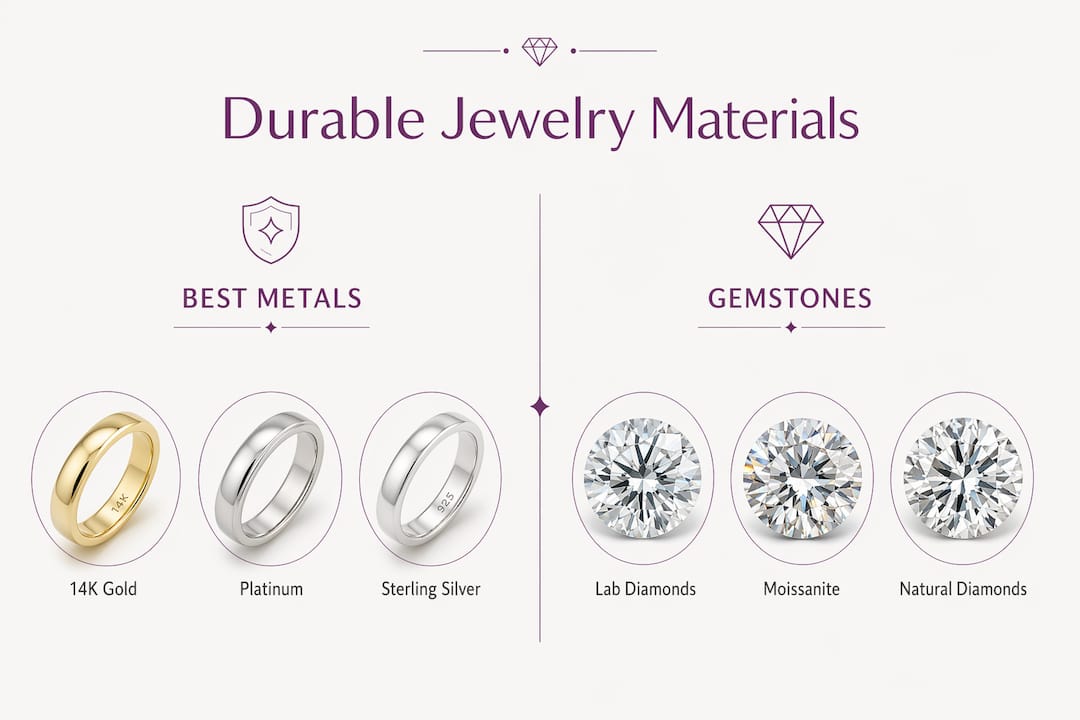
The metal you choose determines how long your jewelry lasts under real office conditions. Three materials stand above the rest: 14K gold, platinum, and lab-grown diamonds.
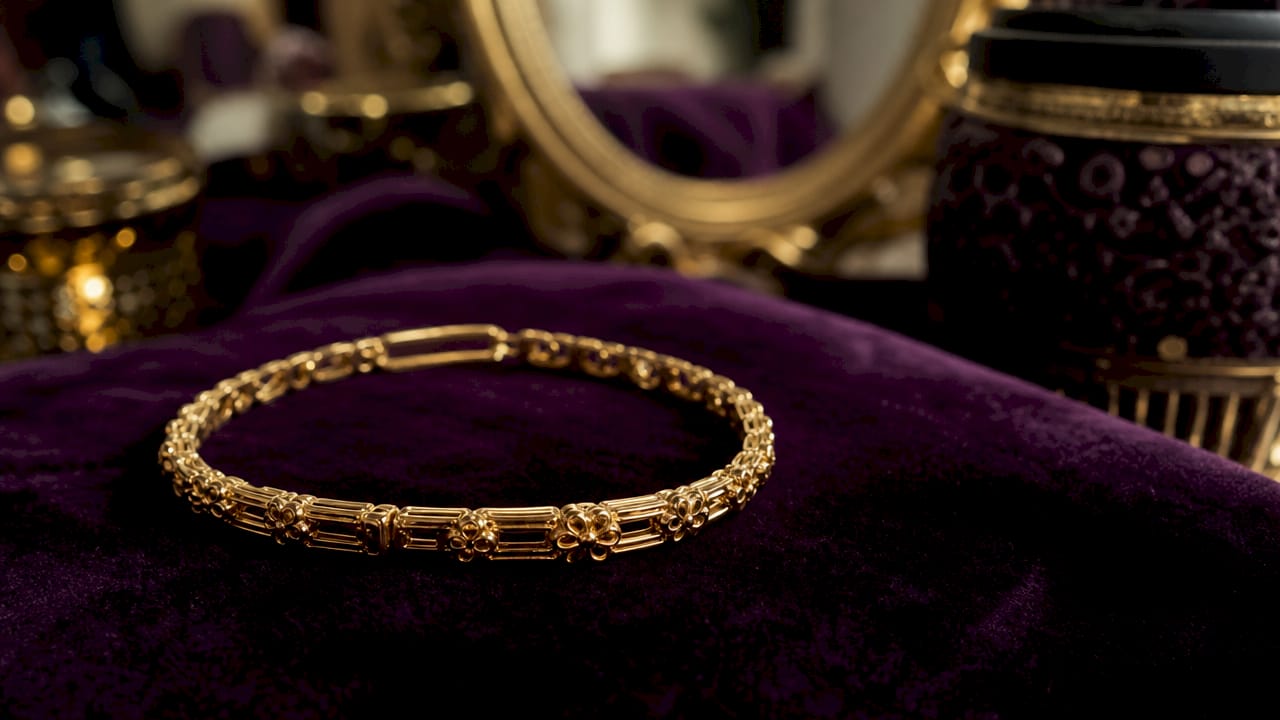
14K gold: the daily wear standard
14K gold is 58.3% pure gold, with the remaining alloy metals adding hardness. That balance matters. Pure 24K gold is too soft for daily wear and bends or scratches easily. 14K gold holds its shape through years of typing, handshakes, and coffee cups. It also resists exposure to lotions and hand sanitizers far better than lower-karat alternatives, keeping prong tension and polish intact for decades.
Platinum: the hypoallergenic choice
Platinum is denser and more durable than gold. When it scratches, platinum displaces metal rather than losing it, which means the metal is never actually gone. A jeweler can polish it back to bright white quickly. Platinum is also naturally hypoallergenic, making it the right choice if you have sensitive skin or wear rings all day without removing them.
Lab-grown diamonds and moissanite: hardness without the price
Lab-grown diamonds carry the same physical properties as mined diamonds and cost roughly 25–33% of the price. They score a 10 on the Mohs hardness scale, the highest possible rating, which means nothing in a typical office environment will scratch them. Moissanite, the signature stone in Merijaan’s collection, scores a 9.25 on the same scale and produces a fire and brilliance that rivals diamonds at a fraction of the cost. For professional women who want long-lasting sparkle without overspending, moissanite set in 14K gold is the most practical combination available.
Sterling silver: use with caution
Sterling silver is affordable and widely available, but it tarnishes with regular exposure to air, sweat, and chemicals. A sterling silver necklace worn occasionally can look beautiful, but as a daily driver it requires more maintenance than gold or platinum. If you choose silver, look for rhodium-plated pieces, which add a protective layer and slow tarnishing significantly.
| Metal | Hardness | Tarnish resistance | Hypoallergenic | Best for |
|---|---|---|---|---|
| 14K gold | High | Excellent | Usually yes | Rings, pendants, earrings |
| Platinum | Very high | Excellent | Yes | Rings, settings |
| Lab-grown diamond | Highest (10 Mohs) | N/A | Yes | Center stones |
| Moissanite | Very high (9.25 Mohs) | N/A | Yes | Pendants, earrings, rings |
| Sterling silver | Moderate | Poor | Sometimes | Occasional wear |
Pro Tip: Buy 14K gold over gold-plated pieces for daily wear. Gold plating wears through within months of regular contact, exposing the base metal underneath.
How do you build a capsule collection of professional jewelry?
A professional jewelry capsule is a set of five pieces that work together every day without requiring thought. This capsule can be built for under $1,500 and suits corporate environments from law offices to creative agencies.
-
Diamond or pearl stud earrings. Choose studs between 0.3 and 0.5 carats. Anything larger draws attention away from your face and can feel heavy by midday. Pearl studs in 7–8mm diameter offer a classic alternative that reads as polished in any industry.
-
A fine pendant necklace on an 18-inch chain. An 18-inch chain sits just below the collarbone, visible above most necklines without competing with your collar. A simple solitaire pendant or a small geometric shape works best. A moissanite diamond pendant in 14K gold hits every criterion: durable, understated, and genuinely beautiful.
-
A slim watch. A watch with a case diameter under 34mm reads as professional rather than sporty. It also replaces the need to check your phone constantly, which signals focus and presence in meetings.
-
A wedding band or slim stacking ring. A low-profile band in 14K gold or platinum sits flush against your finger and survives daily wear without snagging on fabric or keyboards. A stackable ring adds personality without bulk.
-
One additional slim ring. A second ring on a different hand adds dimension to your look. Keep the profile low and the stone small. A minimum office jewelry setup of 14K white gold diamond studs, a 14K chain, and a slim watch runs $1,200–$1,600 and sustains a full workday without concern.
Pro Tip: Lay all five pieces on a white cloth before your workweek starts. If anything looks dull, scratched, or mismatched, rotate it out. Consistency in your capsule builds a stronger professional impression than variety.
What design features protect jewelry during daily office routines?
The biggest mistake in work jewelry is choosing statement pieces. Jewelry that ‘disappears into the architecture of the day’ is the professional standard. That means low-profile settings, secure closures, and nothing that jangles or catches on fabric.
Office environments create specific hazards for jewelry. Typing puts constant pressure on rings and bracelets. Phone use scrapes earrings against hard surfaces. Commuting exposes everything to friction and impact. Large, colorful, or dangle jewelry fails in these conditions, both physically and professionally.
Here are the design features that matter most for long-lasting, comfortable office wear:
- Bezel or channel settings protect stones better than prong settings because the metal wraps around the stone rather than holding it at four exposed points.
- Lobster claw clasps on necklaces and bracelets are more secure than spring rings and less likely to open accidentally during the day.
- Flat or low-dome ring profiles prevent snagging on keyboards, fabric, and bag straps.
- Lightweight construction matters for earrings. Heavy earrings stretch the earlobe over time and become uncomfortable by early afternoon.
- The 2:1:1 rule keeps your look balanced: two small pieces, one medium piece, and one statement piece. For professional settings, drop the statement piece entirely and use three small pieces instead.
A slim bracelet in 14K gold or sterling silver with a secure clasp adds a finishing touch without the risk of a dangling chain catching on a keyboard or desk edge.
How do you care for daily professional jewelry to keep it looking new?
Proper care extends the life of fine jewelry by years. The maintenance routine is simple, but consistency is what makes it work.
Clean your jewelry every 1–2 weeks using mild dish soap, warm water, and a soft-bristle toothbrush. Scrub gently around settings and clasps where grime collects. Rinse thoroughly and dry with a lint-free cloth before storing. This routine removes the buildup of lotions, sweat, and soap residue that dulls metal and stones over time.
Storage matters as much as cleaning. Separate compartments with soft lining prevent scratches and tangling. A dedicated jewelry tray or a roll-up travel case keeps pieces organized and protected. Never toss multiple pieces into the same drawer or bag.
- Remove jewelry before applying lotion, perfume, or hairspray. Chemicals in these products accelerate tarnishing and weaken prong settings.
- Take off rings and bracelets before intense physical activity, including gym sessions and heavy cleaning.
- Avoid chlorine. Pool water and hot tubs degrade gold alloys and can loosen stone settings permanently.
- Schedule a professional inspection once or twice a year. A jeweler checks prong tension, clasp security, and overall condition before a problem becomes a loss.
- Watch for early warning signs: a loose stone that moves when you tap it, a clasp that doesn’t click shut firmly, or a prong that catches on fabric.
Pro Tip: Keep a small polishing cloth in your desk drawer. A 30-second buff at the end of the workday removes fingerprints and surface oils before they have time to dull the metal.
Key Takeaways
Durable professional jewelry requires the right materials, a disciplined capsule of five pieces, and a consistent care routine to maintain its appearance and function over years of daily wear.
| Point | Details |
|---|---|
| Choose 14K gold or platinum | Both metals resist daily wear, tarnish, and physical contact better than silver or plated alternatives. |
| Build a five-piece capsule | Studs, a pendant necklace, a watch, a band, and one slim ring cover every professional setting. |
| Prioritize low-profile designs | Bezel settings, lobster clasps, and flat ring profiles prevent damage and snagging in office environments. |
| Clean every 1–2 weeks | Mild soap and a soft brush remove buildup that dulls metal and loosens stone settings over time. |
| Inspect professionally twice a year | A jeweler catches loose prongs and failing clasps before they cause loss or damage. |
What I’ve learned from wearing fine jewelry to work every day
The advice I see repeated most often about professional jewelry is “keep it simple.” That’s correct, but it misses the real point. The goal isn’t simplicity for its own sake. The goal is jewelry that never competes with you for attention in a room.
I spent years rotating through statement pieces, thinking variety signaled creativity. What I actually noticed was that colleagues remembered the jewelry, not the ideas I brought to meetings. The shift happened when I committed to the same three or four pieces every week. People stopped noticing the jewelry and started noticing me. That’s the outcome you want.
The other lesson I’d share is this: buy quality once rather than replacing cheap pieces repeatedly. A $200 gold-plated ring looks good for three months. A $400 solid 14K gold ring looks good for thirty years. The math is obvious, but the upfront cost still stops people from making the better choice. If budget is a real constraint, start with one excellent piece, a fine pendant necklace or a pair of quality studs, and build from there. One great piece worn consistently outperforms five mediocre ones rotated randomly.
The pitfall I see most often is buying jewelry that fits the occasion you want rather than the one you’re actually in. A dramatic cocktail ring is not a daily wear piece, no matter how much you love it. Save it. Wear it when it belongs. Your daily capsule should feel almost invisible, which is exactly when it works best.
— Ammar
Merijaan’s collection for daily professional wear
Professional women who want jewelry that holds up to real office life without sacrificing elegance have a clear starting point with Merijaan. Every piece in the collection is crafted with lab-grown moissanite and quality metals, built for women who wear their jewelry every day, not just on special occasions.
The Saint-Moritz Necklace in 14K gold is the kind of pendant that works Monday through Friday without adjustment. The Lax Necklace offers a cleaner, more minimal profile for women who prefer their jewelry to stay out of the way. Both pieces are designed to last, and 100% of Merijaan’s profits go directly back to the artisans who make them. Join the Merijaan Jewelry Club for early access to new pieces and member-only benefits.
FAQ
What is the most durable metal for daily professional jewelry?
Platinum and 14K gold are the most durable metals for daily wear. Platinum displaces rather than loses metal when scratched, while 14K gold resists tarnish and physical contact for decades.
How much should I spend on a professional jewelry capsule?
A solid professional capsule of five pieces, including diamond studs, a 14K chain, and a slim watch, costs between $1,200 and $1,600. Prioritize one or two high-quality pieces first and build from there.
Are lab-grown diamonds and moissanite good for everyday office wear?
Yes. Lab-grown diamonds score a 10 on the Mohs scale and moissanite scores a 9.25, making both highly scratch-resistant and ideal for daily professional wear.
How often should I clean my work jewelry?
Clean fine jewelry every 1–2 weeks with mild soap and a soft brush. Schedule a professional inspection once or twice a year to check prongs and clasps.
What jewelry styles should I avoid at the office?
Avoid large, colorful, or dangly pieces for daily office wear. Statement jewelry distracts in professional settings and sustains more physical damage from typing, commuting, and frequent contact.

