

A well-built capsule jewelry wardrobe comes down to 5–12 carefully chosen pieces: a pair of studs, medium hoops, one chain necklace, a pendant, a bracelet or watch, an everyday ring, and one statement piece. That’s the whole system. Start there and you’ll cover every outfit from Monday morning to Saturday night.
Your weekend audit checklist:
- Audit: Lay out everything you own. Pull out what you’ve worn in the last three months.
- Remove: Set aside anything broken, unworn, or that doesn’t pair with at least two other pieces.
- Keep: Hold onto pieces that work across multiple outfits and metals you actually like wearing.
- Buy up to 12 pieces total: Fill gaps only after the audit. Don’t shop first.
First three purchases to make this weekend:
- A pair of small gold or silver studs (your most-worn piece, guaranteed)
- A 16–18 inch chain necklace in your preferred metal
- A simple everyday ring or thin stacking band
Budget priority: Invest in studs, a chain, and an everyday ring. These three get daily wear and justify better materials. Hoops, pendants, and bracelets can be mid-range or trend buys until you know your style.
A carefully built capsule with around a dozen pieces can produce a large number of wearable combinations. That’s not a small number for a box that fits in your palm.
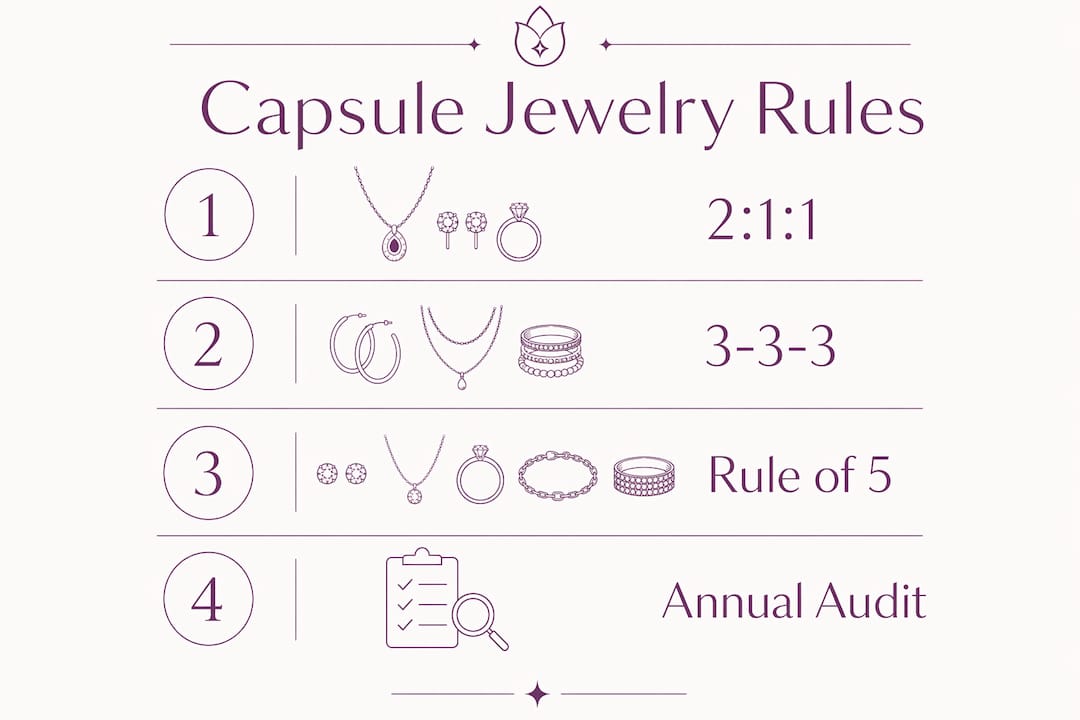
Table of Contents
- What is a jewelry capsule wardrobe, and why does it work?
- Which pieces should you actually own?
- How many pieces should you own, and which rules actually help?
- How do you choose metals so everything works together?
- How do you layer necklaces, stack rings, and style bracelets?
- What should you spend on which pieces?
- How do you care for and store your capsule pieces?
- What do copyable capsule templates actually look like?
- Why do ethical materials matter for a capsule wardrobe?
- How do you make your capsule feel like yours?
- Key Takeaways
- A note on priorities and real-world tradeoffs
- Merijaan’s collection maps directly to your capsule
- Further reading and sources
What is a jewelry capsule wardrobe, and why does it work?
A jewelry capsule wardrobe is a small, curated set of pieces that pair reliably across outfits and occasions. The goal isn’t minimalism for its own sake. It’s that every piece earns its place by working with everything else in the set.
The practical benefits are real. Fewer items mean faster decisions, less clutter in your jewelry box, and more money spent on quality rather than quantity. When you know every piece in your collection works together, getting dressed stops being a guessing game.
The capsule concept also functions as a system, not a static uniform. You build it once, then maintain it with an annual audit where you lay out every piece, note what you’ve actually worn, and replace selectively rather than accumulate. That single habit is what separates a capsule from a jewelry drawer that keeps growing.
Pro Tip: Schedule your annual audit for the same weekend every year, right before a seasonal wardrobe refresh. Treat it like a 30-minute appointment, not a project.
Which pieces should you actually own?
Stylist consensus clusters around the same six to twelve pieces across every editorial list. Here’s the practical breakdown, with a note on scale and material for each.
- Stud earrings: Your most versatile piece. Small (4–6mm) for everyday wear; slightly larger (7–8mm) if you want one pair to do double duty for evenings. Sterling silver or 14K gold. If you have metal sensitivities, look for surgical-grade titanium or solid gold posts.
- Medium hoops (25–35mm): The workhorse of any capsule. Small enough for the office, large enough for a night out. Gold vermeil or solid gold holds up better than thin plating for daily wear.
- Chain necklace (16–18 inches): A simple cable or box chain in your primary metal. This is your layering anchor. Go for 1–1.5mm width so it reads clean alone and doesn’t compete when layered.
- Pendant necklace (18–20 inches): One step longer than your chain so they layer without tangling. A simple geometric or solitaire pendant in lab-grown moissanite gives you the sparkle of a diamond at a fraction of the cost.
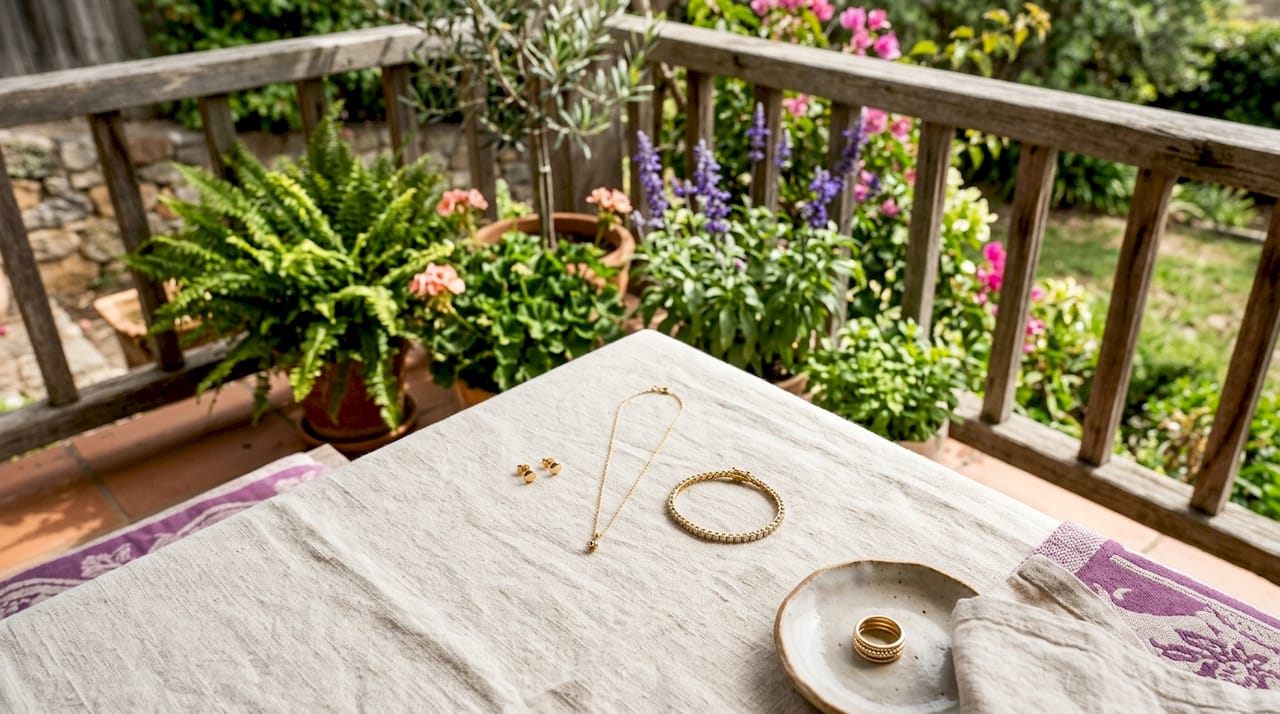
- Tennis bracelet or delicate chain bracelet: The tennis bracelet is the classic choice. A delicate chain bracelet works better for very active lifestyles. Either way, a secure clasp matters more than the price tag.
- Everyday ring or thin stacking band: Wear it alone for a clean look or stack two or three for texture. Sterling silver or gold vermeil for budget builds; solid gold if this is your anchor investment piece.
- One statement piece: A cocktail ring, sculptural earring, or bold cuff. Stylists consistently flag this as the piece that keeps a capsule from feeling flat. You only need one.
- Watch (optional): A classic metal-link or leather-strap watch pulls double duty as jewelry and function. It anchors your wrist stack and reads polished in any setting.
Pro Tip: For hypoallergenic needs, prioritize solid gold (14K or 18K), surgical-grade titanium, or platinum for any piece that sits against skin all day. Rhodium-plated sterling silver is a good middle ground for earrings if solid gold isn’t in the budget yet.
Vogue and Glamour editorial lists consistently align on hoops, studs, a chain necklace, and a tennis bracelet as the non-negotiable four. Build from those and add based on your lifestyle.
How many pieces should you own, and which rules actually help?
Three rules show up constantly in capsule jewelry guides. Here’s what each one means in practice.
2:1:1 means two everyday pieces for every one mid-range piece, and one investment piece. It’s a spend ratio as much as a count rule. Use it when budgeting, not when counting items.
3-3-3 means three necklaces, three rings, three earring pairs. It’s a category-based approach that works well if you tend to over-collect in one area (usually rings) and under-invest in others.
Rule of 5 means five core pieces that cover every occasion: studs, hoops, a chain, a bracelet, and a ring. Anything beyond five is a bonus, not a requirement.
Three ready-made templates
5-piece minimalist: Studs + medium hoops + chain necklace + everyday ring + tennis bracelet. This covers 90% of occasions and fits the rule of 5 exactly.
7-piece everyday: Add a pendant necklace and one statement piece to the 5-piece set. Now you have a layered necklace option and an evening anchor.
10-piece versatile: The 7-piece set plus a second ring for stacking, a delicate chain bracelet, and a watch. This maps to the 3-3-3 framework and gives you genuine range across casual, work, and formal occasions.
The annual audit rule applies to all three: replace rather than add. If a 13th piece is calling your name, one piece has to go first. That constraint is what makes the system work. For a step-by-step approach to building your everyday collection, Merijaan’s guide walks through the process in detail.
Pro Tip: Write the pieces in your current capsule on a sticky note and put it inside your jewelry box. When you’re tempted to buy something new, check the list first. If it doesn’t replace something, it doesn’t come home.
How do you choose metals so everything works together?
The short answer: match metals within a body zone, mix freely between zones. Ears and neck are one zone. Wrists and hands are another. Gold hoops with a gold chain looks intentional. Gold hoops with a silver ring stack on your hand? Also intentional, because they’re in different zones.
Dos:
- Pick one primary metal (gold or silver) and let it dominate at least 70% of your pieces.
- Use a single mixed-metal piece (a two-tone ring, a gold-and-silver chain) as your intentional bridge.
- Match your watch metal to your wrist stack, not necessarily to your necklace.
Don’ts:
- Don’t mix plating quality within the same zone. A gold vermeil necklace next to a thin gold-flash pendant will look mismatched within weeks as the plating wears differently.
- Don’t fight your skin tone. Warm undertones (yellow, peachy) tend to look better with yellow gold; cool undertones (pink, bluish) with white gold, silver, or platinum. Rose gold works across both.
On hypoallergenic options: Standard gold-plated brass can cause reactions for nickel-sensitive skin. Gold vermeil (sterling silver base with thick gold plating) is a safer and more durable choice. Solid gold, platinum, and surgical-grade titanium are the most reliable options for sensitive skin.
Plating durability note: Gold vermeil is significantly thicker than standard plating and holds up better for daily wear. Rhodium-plated silver resists tarnish well but will need re-plating every year or two with heavy use. The minimalist jewelry movement has pushed quality plating into the mainstream, which means more options at reasonable price points than there were five years ago.
How do you layer necklaces, stack rings, and style bracelets?
Layering works when pieces have different lengths and different visual weights. The moment two chains are the same length, they compete instead of complement.
Necklace layering
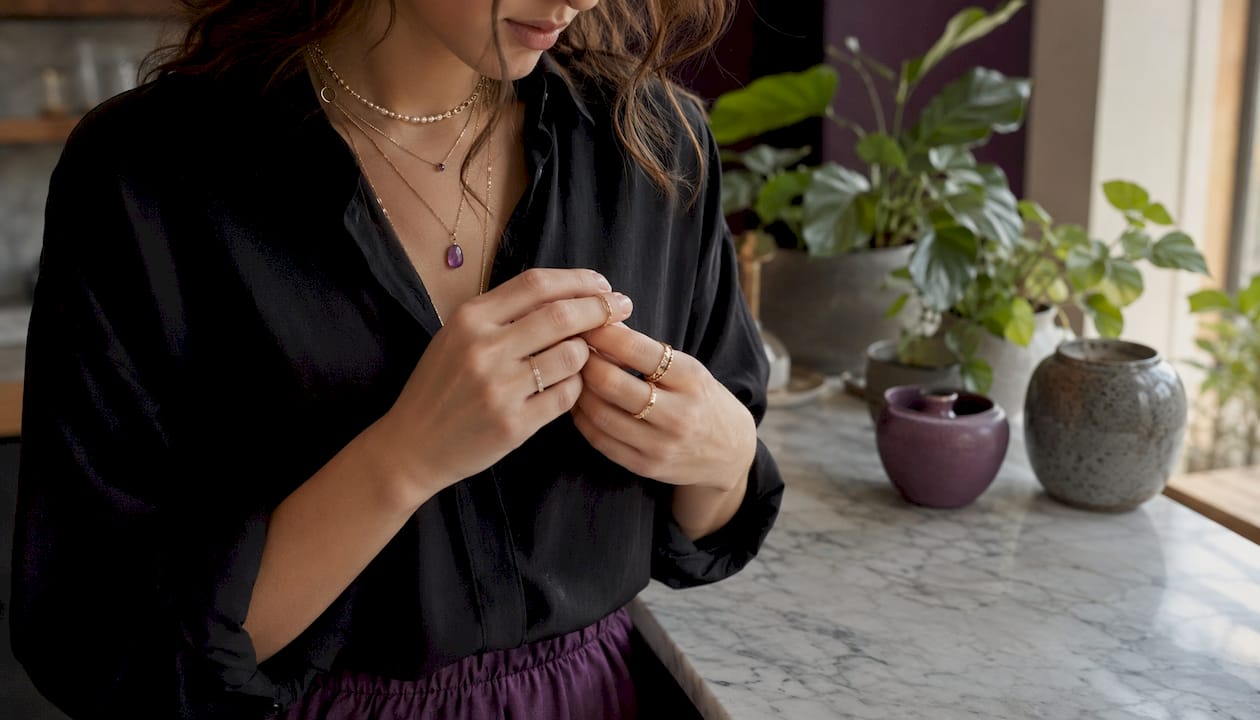
Start with a 16-inch choker or short chain as your anchor. Add a 18-inch chain or pendant as your mid-layer. A 20–22 inch longer pendant or lariat completes the stack. Keep chain weights similar so they don’t tangle. A delicate 1mm cable chain next to a chunky 4mm link will slide under the heavier chain constantly. For more on current layering techniques, Merijaan’s guide covers the trend in depth.
Ring stacking
Pick one anchor ring (your most substantial piece) and build around it with thinner bands. Contrast textures: a smooth band next to a twisted wire or a pavé band reads more intentional than three identical bands. If you wear a watch or bracelet on your left wrist, consider stacking rings on your right hand to balance visual weight across both sides.
One underused trick: interchangeable stud-and-jacket earrings extend your capsule without adding base pieces. One stud post, multiple jacket styles, multiple looks.
Bracelet layering
The classic wrist stack: one cuff or bangle, one tennis or chain bracelet, and a watch. The cuff anchors the stack; the delicate chain adds movement; the watch grounds it. Keep the total width proportional to your wrist. Three chunky bangles on a small wrist reads cluttered; one cuff and a delicate chain reads polished.
Three example combinations:
- Day: Studs + 16-inch chain + everyday ring + watch
- Office: Studs + layered 16 and 18-inch necklaces + thin ring stack + watch
- Evening: Statement earrings + pendant necklace + tennis bracelet + cocktail ring
Pro Tip: Before leaving the house, remove one piece. The edit almost always improves the look. This is the jewelry equivalent of the “remove one accessory” rule — and it works every time.
What should you spend on which pieces?
Not every piece in your capsule deserves the same budget. Here’s a practical split.
Invest (solid gold, lab-grown stones, fine materials):
- Everyday ring or ring stack anchor
- Stud earrings (worn daily, closest to your face)
- Chain necklace (your layering base)
These three get the most wear and the most visibility. Cutting corners here shows.
Mid-range (gold vermeil, sterling silver, quality plating):
- Hoops
- Pendant necklace
- Tennis bracelet
Trend buys (affordable, replaceable):
- Statement pieces that reflect current style
- Seasonal cuffs or bold earrings
- Layering chains you’ll rotate out
Quality checklist when shopping:
- Check the clasp: spring ring clasps are weaker than lobster clasps for daily wear.
- Look at stone settings: prong settings should be even and flush; pavé stones shouldn’t wiggle.
- Ask about metal weight: heavier pieces in the same style usually indicate better construction.
- Confirm the base metal: vermeil requires a sterling silver base by U.S. standards; anything else is just plated.
A lifetime warranty or repair program matters most for investment pieces. If a brand offers durable, professionally crafted jewelry with a warranty, that’s a meaningful signal about construction quality. Trend pieces don’t need warranties. Your everyday ring does.
How do you care for and store your capsule pieces?
The basics are simple and easy to ignore until something tarnishes or breaks.
Daily wear rules:
- Remove jewelry before swimming, showering, or exercising. Chlorine and saltwater degrade plating fast.
- Apply perfume, lotion, and hairspray before putting on jewelry, not after.
- Wipe pieces with a soft cloth after wearing, especially if you’ve sweated.
Storage by metal type:
- Sterling silver: store in an airtight pouch or zip-lock bag to slow tarnishing. A small anti-tarnish strip inside the bag extends the time between cleanings.
- Gold vermeil: store in a soft cloth pouch, away from other pieces that can scratch the plating.
- Fine gold and platinum: a fabric-lined box or individual compartments. These are more forgiving, but scratches still accumulate.
Cleaning:
- Warm water and a drop of dish soap, gentle scrub with a soft toothbrush, rinse, and pat dry. Works for most metals and lab-grown stones.
- Avoid ultrasonic cleaners for plated pieces or stones with inclusions.
- For deeper care guidance, Merijaan’s ethical jewelry care guide covers maintenance by material type.
Pro Tip: For any piece worth more than $200, photograph it and keep the receipt or certificate in a digital folder. If you have renters or homeowners insurance, check whether jewelry is covered under personal property — many policies cover it up to a sub-limit without a separate rider.
Professional cleaning once a year for fine pieces keeps prong settings tight and stones secure. It’s also when a jeweler will catch a loose stone before it falls out.
What do copyable capsule templates actually look like?
5-piece minimalist capsule
| Piece | Why it’s here |
|---|---|
| Small gold studs | Daily anchor; works with everything |
| Medium hoops (30mm) | Casual to evening in one swap |
| 16-inch chain necklace | Layering base or solo minimalist look |
| Everyday ring (thin band) | Clean, wearable, stackable |
| Tennis bracelet | Elevates any outfit without effort |
Day pairing: Chain necklace + studs + everyday ring + jeans and a white shirt. Evening pairing: Hoops + tennis bracelet + ring + a slip dress or blazer.
10-piece versatile capsule
- Small gold studs
- Medium hoops (30mm)
- Statement earrings (sculptural or bold drop)
- 16-inch chain necklace
- 18-inch pendant necklace
- Everyday ring (thin band)
- Second stacking ring (textured or pavé)
- Cocktail ring (statement)
- Tennis bracelet
- Delicate chain bracelet
Casual stack: Studs + chain necklace + everyday ring + delicate bracelet. Work stack: Hoops + layered chains (16 + 18 inch) + thin ring stack + tennis bracelet. Evening stack: Statement earrings + pendant necklace + cocktail ring + tennis bracelet.
Substitution table
| If you want… | Swap this in | Swap this out |
|---|---|---|
| More minimal | Thin stud instead of hoops | Statement earrings |
| More polished | Pearl studs instead of plain studs | Everyday chain studs |
| More bold | Sculptural drop earring | Medium hoops |
| More versatile | Convertible stud-and-jacket set | Two separate earring pairs |
Lifestyle tailoring: Commuters and remote workers tend to wear the 5-piece set most days and reach for the 10-piece on weekends or events. Event-focused lifestyles benefit from investing earlier in the statement piece and cocktail ring. If you’re mostly at a desk, office-appropriate jewelry guidance helps narrow which pieces to prioritize.
Why do ethical materials matter for a capsule wardrobe?
Ethical materials aren’t just a values statement. They’re a practical advantage for a capsule built to last.
Lab-grown moissanite offers comparable sparkle to mined diamonds at a significantly lower price point. The stone rates 9.25 on the Mohs hardness scale, making it one of the most durable options for daily wear. For a capsule piece you’ll wear every day, that durability matters more than provenance.
Practical benefits of lab-grown stones and recycled metals:
- Lower cost per carat means you can invest in better settings and metalwork.
- No mining impact means a smaller environmental footprint without sacrificing quality.
- Lab-grown stones are graded for clarity and cut just like mined stones, so you know what you’re getting.
- Recycled metals (recycled sterling silver, recycled gold) reduce demand for new extraction without changing the material properties.
Merijaan’s entire line is built on lab-grown moissanite and ethical sourcing, with a lifetime warranty on pieces and unlimited exchanges for club members. That warranty matters specifically for capsule pieces: an everyday ring or pendant that you wear 300+ days a year needs a brand that stands behind it. Merijaan also directs 100% of profits back to the artisans who make the jewelry, which is an unusual commitment in the industry. For a deeper look at lab-grown moissanite and how it fits a minimalist approach, Merijaan’s guide covers the comparison in detail.
Gold vermeil is a strong alternative to solid gold for mid-range capsule pieces: thicker plating, sterling silver base, and better durability than standard gold-plated brass. It’s not a forever piece the way solid gold is, but maintained correctly, it holds up well for two to three years of regular wear.
How do you make your capsule feel like yours?
Rules give you a framework. Personal choices are what make a capsule worth wearing.
The simplest way to personalize is through one meaningful piece. A birthstone ring, an initial pendant, or a charm that references something specific to your life gives the whole set a signature. It doesn’t need to be expensive. It needs to be intentional.
Beyond that, consider scale as a personality signal. Delicate pieces read understated and refined. Larger, bolder pieces signal confidence and presence. Neither is better. The question is which one feels more like you on a regular Tuesday, not just on a special occasion.
Interchangeable components are an underused tool here. A stud post with multiple jacket styles lets you shift from minimal to dramatic without adding new base pieces to your count. A pendant that transfers across two different chains gives you two looks from one stone. These modular choices let you express range without expanding the capsule.
If you want to go further, engraving an initial or date on a band, or commissioning a custom setting for a stone you already own, turns a standard piece into something no one else has. That’s the version of personalization that actually lasts. For more on how jewelry reflects personal expression, Merijaan’s piece on the subject is worth reading.
Key Takeaways
A well-built capsule jewelry wardrobe of 5–12 pieces, anchored by studs, a chain, a bracelet, and one statement piece, creates more outfit combinations than most full jewelry drawers.
| Point | Details |
|---|---|
| Start with the audit | Lay out everything you own, keep only what you’ve worn recently, and identify gaps before buying. |
| Anchor with three investments | Studs, a chain necklace, and an everyday ring get the most wear and justify better materials. |
| Use the replace rule | Never add a new piece without removing one; a 12-piece capsule can produce 240+ combinations when built intentionally. |
| Match metals within zones | Keep the same metal within ears-and-neck or wrists-and-hands; mix freely between zones. |
| Merijaan for staple pieces | Merijaan’s lab-grown moissanite pieces, lifetime warranty, and ethical sourcing make them a reliable source for the investment pieces in your capsule. |
A note on priorities and real-world tradeoffs
The conventional wisdom in jewelry styling tends to push people toward buying more. More layers, more stacks, more options. The capsule approach pushes back on that, and I think it’s right to do so.
Where I’d push back on the capsule orthodoxy: the rules are tools, not laws. The 3-3-3 framework is useful if you tend to over-collect in one category. The rule of 5 is useful if you’re starting from scratch. But if you already own eight pieces you love and wear constantly, you don’t need to pare down to five just to follow a framework.
The vermeil-versus-solid-gold question comes up constantly for busy lifestyles. My honest read: if you’re wearing a piece every single day, solid gold is worth the investment over a two-to-three year horizon because you won’t be re-plating it. If you’re building a capsule for the first time and aren’t sure which pieces you’ll actually reach for, start with quality vermeil and upgrade the ones that earn daily wear. That’s a more practical path than spending on solid gold pieces that turn out not to fit your life.
Personal taste always wins over rules. The rules exist to simplify decisions when you’re uncertain. Once you know what you love and what you actually wear, trust that over any framework.
Merijaan’s collection maps directly to your capsule
If you’re ready to fill the gaps in your capsule with pieces built to last, Merijaan is a direct fit. Every piece uses lab-grown moissanite and ethically sourced metals, backed by a lifetime warranty and unlimited exchanges for club members. That’s not a standard offer in this price range.

For the ring components in your capsule, Merijaan’s women’s rings collection covers everyday bands, stackable sets, and statement cocktail rings. For the necklace layer, the women’s necklaces collection includes chain and pendant options that map directly to the 5-piece and 10-piece templates above. Both collections are available now, with 100% of profits going back to the artisans who make each piece. Browse the collections and pick the one gap in your capsule to fill first.
Further reading and sources
- Curated Sense: How to Build a Capsule Jewelry Wardrobe — The 12-piece framework and combinatorics data used throughout this guide; also covers the annual audit methodology.
- Glamour: The Perfect Jewelry Capsule Wardrobe Needs These 12 Pieces — Editorial staple list and guidance on gold vermeil durability and statement piece rationale.
- Vogue: 10 Jewelry Essentials Every Wardrobe Needs — Editorial consensus on core essentials; useful for validating the staple list against high-fashion standards.
- Jewels & Aces: The Earring Capsule — Covers interchangeable stud-and-jacket systems and modular capsule building.
- Diamonds on Wabash: The Jewelry Capsule Wardrobe — Practical audit-to-purchase flow and the 6-piece forever framework.
For product-specific details, care guides, and Merijaan’s full collection, visit merijaan.co. The brand’s buying and care guides are the most current source for piece-specific information.
This article is general styling and purchasing guidance, not professional financial or insurance advice. Confirm coverage details with your insurance provider and verify current product availability directly with retailers.

