

For most buyers, the beste schmuck garantie is a clear lifetime-style care plan that spells out inspection terms and repair coverage in plain language, paired with an optional protection plan if loss or theft worries you. Look for brands that combine that structure with ethical sourcing, like lab-grown moissanite. Whatever you choose, keep your receipt and certificate; without proof of purchase, even the best-written guarantee is unenforceable.
TL;DR:
- A trustworthy jewelry guarantee should explicitly cover workmanship defects, stone tightening or replacement, regular inspections, and clear shipping or repair costs.
- Lifetime care plans usually require inspections every six months and are more comprehensive than limited warranties, which only cover manufacturing faults for a limited period.
- Always review the guarantee’s detailed terms, check who pays for shipping and repairs, and verify if coverage transfers if reselling or gifting the jewelry.
- In most regions, statutory warranty rights remain independent of seller guarantees and often protect against defects regardless of guarantee exclusions.
- Buying from established brands or online retailers with transparent policies and proper documentation reduces the risk of denied claims or disputes.
Table of Contents
- What Should a Good Jewelry Guarantee Actually Cover?
- Lifetime Care Plans vs. Limited Warranties vs. Protection Plans
- How to Evaluate a Jewelry Guarantee Before You Buy
- How Do You File a Jewelry Warranty Claim?
- Is a Jewelry Guarantee the Same as Your Legal Warranty Rights?
- How Do Guarantee Terms Compare Across Major Jewelry Brands?
- What Consumer Rights Apply to Jewelry Purchases in Your Country?
- Does It Matter If You Buy Jewelry Online or In a Store?
- How Do You Extend or Renew a Jewelry Care Plan?
- Why Ethical Sourcing and Clear Guarantees Actually Lower Your Cost Over Time
- Meri Jaan’s Approach to Guarantees and Ethical Value
- Sources
- FAQ
What Should a Good Jewelry Guarantee Actually Cover?
A guarantee worth trusting spells out exactly what happens when something goes wrong, not just that “your satisfaction is guaranteed.” Vague promises are where buyers get burned.
The strongest guarantees cover four things clearly: workmanship defects, stone security, routine inspections, and cost allocation for shipping and repairs. Here’s what each should actually include:
- Repairs for workmanship defects — loose clasps, weak solder joints, or prongs that fail under normal wear, not damage you caused.
- Stone tightening and replacement — most guarantees will re-tighten a loose stone for free, but full replacement policies often come with conditions, and lab-grown stones are sometimes replaced only with lab-grown stones rather than natural ones.
- Inspection requirements — many plans expect you to bring the piece in on a set schedule, often every six months, to keep coverage active.
- Shipping and repair cost allocation — some brands cover both ways, others only cover the return shipment.
Pro Tip: Ask the seller, in writing, who pays to ship your ring back to them for a repair. If they can’t answer instantly, that’s a sign the guarantee hasn’t been thought through.
Exclusions matter just as much as coverage. Nearly every guarantee, from mall jewelers to luxury houses, excludes normal wear and tear, accidental loss or theft, chemical damage from cleaning products or chlorine, and anything touched by an outside jeweler. Swarovski’s warranty terms are a good example of how specific these exclusions get, right down to naming unauthorized repairs as a disqualifying event.
Lifetime Care Plans vs. Limited Warranties vs. Protection Plans
These three terms get used interchangeably by salespeople, but they are not the same product, and mixing them up costs you money.
A lifetime care plan is the most generous structure on paper. It typically covers stone tightening, prong repair, resizing, and cleaning for as long as you own the piece. Helzberg’s lifetime care plan requires inspections roughly every six months to stay valid, which sounds like a hassle until you realize that’s exactly what catches a loosening prong before you lose a stone on the subway.
A limited warranty covers less and for less time, usually one to five years, focused narrowly on manufacturing defects. It won’t touch stone replacement or accidental damage, and it often expires before you’d notice a real problem.
An optional protection plan is the add-on you buy separately, usually at checkout, to cover loss, theft, or accidental damage that the base guarantee excludes. Whether it’s worth the extra cost comes down to math:
- On lower-value pieces, a protection plan rarely pays for itself; self-insuring, meaning you accept the risk yourself, usually wins.
- On higher-value engagement rings, investing in a protection plan can be worth it if you travel often or have a history of losing jewelry.
- If a piece has strong sentimental value that no repair can restore, protection plans still won’t cover that loss. Nothing does.
How to Evaluate a Jewelry Guarantee Before You Buy
Run through this checklist before you hand over your card, not after something breaks.
- Read the actual guarantee text, not the marketing summary. Ask what “lifetime” or “unlimited” specifically covers, and get the exclusions list.
- Check the inspection schedule and its cost. Some brands charge for the inspection visit itself; others fold it into the original price.
- Ask who pays shipping, customs, and repair costs during a claim. This detail is often buried or missing entirely, which is itself a red flag.
- Verify transferability. If you gift or resell the piece, does coverage survive, or does it die with the original buyer?
- Look for a dispute resolution process. A guarantee with no stated appeals path or local contact point is a guarantee you can’t actually use.
- Watch for red flags: vague phrases like “at our discretion,” mandatory repair windows priced above market rate, or a seller who won’t put terms in writing.
Pro Tip: If a seller can’t hand you a printed or emailed copy of the guarantee terms before you buy, walk away. A guarantee you can’t read isn’t a guarantee, it’s a sales pitch.
Before buying, it also helps to know how the material itself holds up daily. Checking how to keep gold jewelry shiny without frequent polishing gives you a sense of what “normal wear” actually looks like in practice, so you’re not blind sided when a guarantee excludes it.
How Do You File a Jewelry Warranty Claim?
- Document the defect immediately. Take dated photos, write down when you noticed it, and note how it likely happened if you know.
- Contact the original seller first, not a third-party repair shop. Follow whatever submission or registration process the guarantee specifies.
- Gather your paperwork: the original receipt, the certificate of authenticity, and any prior repair records. Keeping this evidence together is often the deciding factor in whether a claim gets approved without argument.
- Ask about timelines up front. Inspection and repair can take anywhere from a few days to several weeks depending on the issue; ask if there’s interim coverage for a piece with sentimental value while it’s away.
- If denied, request written reasons. A vague rejection is worth pushing back on, and persistent disputes may warrant a look at local consumer-protection resources or legal advice.
Is a Jewelry Guarantee the Same as Your Legal Warranty Rights?
No, and this distinction trips up more buyers than anything else on this list. A guarantee is a voluntary promise the seller chooses to offer. It can be generous, stingy, or somewhere in between, because nothing forces the seller to offer one at all.
Statutory warranty rights are different. In most European markets, buyers get baked-in legal protection against defects that exist at the time of purchase, typically running for a set period regardless of what the seller’s marketing promises. A retailer’s voluntary guarantee sits on top of those legal rights. It cannot take them away, even if the fine print tries to imply otherwise.
The practical difference shows up when a guarantee expires but the defect was there from day one. A worn-through clasp after three years of normal use is probably not covered by either. A clasp that snapped during the first month you owned it is a different story, and statutory rights may apply even if the voluntary guarantee has technicalities that seem to exclude it.
This is exactly why documentation matters so much. If you’re ever unsure which protection applies, the paper trail, your receipt, your photos, your dated correspondence, is what determines whether you’re arguing from a position of strength or guessing.
How Do Guarantee Terms Compare Across Major Jewelry Brands?
Guarantee terms vary more than most shoppers expect, even among brands that sound similarly generous on their websites.
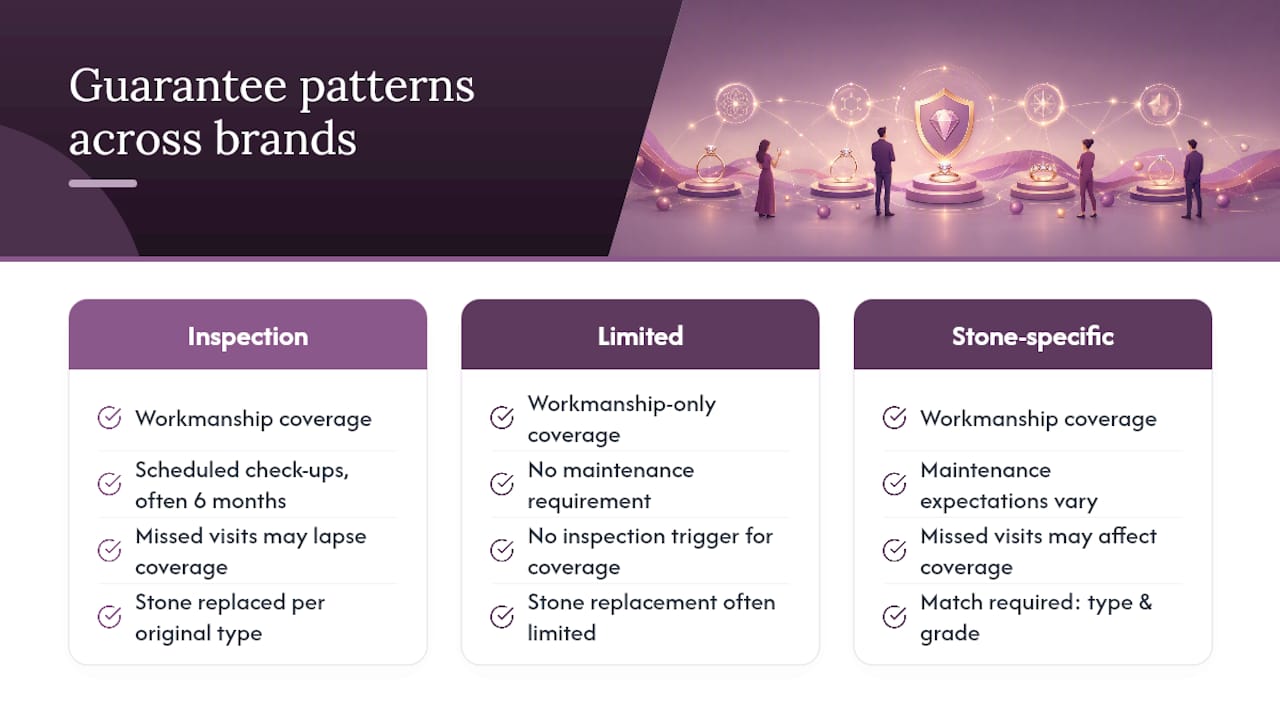
Some retailers structure coverage around lifetime inspection requirements, where staying enrolled means showing up on a schedule, often every six months, to have the piece checked and cleaned. Miss too many visits and coverage can lapse quietly. Other brands run limited lifetime guarantees that sound similar in name but cover a narrower set of issues, typically manufacturing defects only, and explicitly exclude loss, theft, and unauthorized repairs.
A third pattern shows up around stone replacement specifically. Some guarantees replace a lost stone only if it matches the original in type and grade, which matters if your piece contains a lab-grown stone. Certain brands state directly that a lab-grown stone will be replaced with another lab-grown stone, not a natural one, even under a lifetime guarantee.
The market standard, once you strip away the marketing language, tends to land on three things: some form of workmanship coverage, an inspection or maintenance expectation, and a defined set of exclusions around damage you cause yourself. Anything beyond that, extended loss coverage, transferability, expedited service, is where brands actually differentiate, and where reading the fine print pays off.
What Consumer Rights Apply to Jewelry Purchases in Your Country?
Consumer protection for jewelry purchases is not uniform worldwide, and assuming your home country’s rules apply everywhere is a common mistake.
In much of the European Union, buyers benefit from statutory warranty protections that exist independent of any seller-offered guarantee, generally running for a fixed period after purchase and covering defects present at the time of sale. These rights apply whether or not the retailer advertises a guarantee at all.
Outside the EU, protections vary widely by jurisdiction, and some markets rely far more heavily on the seller’s voluntary guarantee because statutory consumer protection for goods like jewelry is thinner or less specific. That makes the written guarantee text more important, not less, in those markets, since it may be the only real recourse you have.
The practical takeaway: never assume a guarantee’s legal backing travels with you. If you buy while traveling, or from an international online retailer, check which country’s consumer law actually governs the sale, and don’t rely on assumptions borrowed from wherever you happen to live.
Does It Matter If You Buy Jewelry Online or In a Store?
Purchase location affects guarantee validity more than most shoppers realize, and it usually comes down to documentation and jurisdiction, not the guarantee’s written terms themselves.
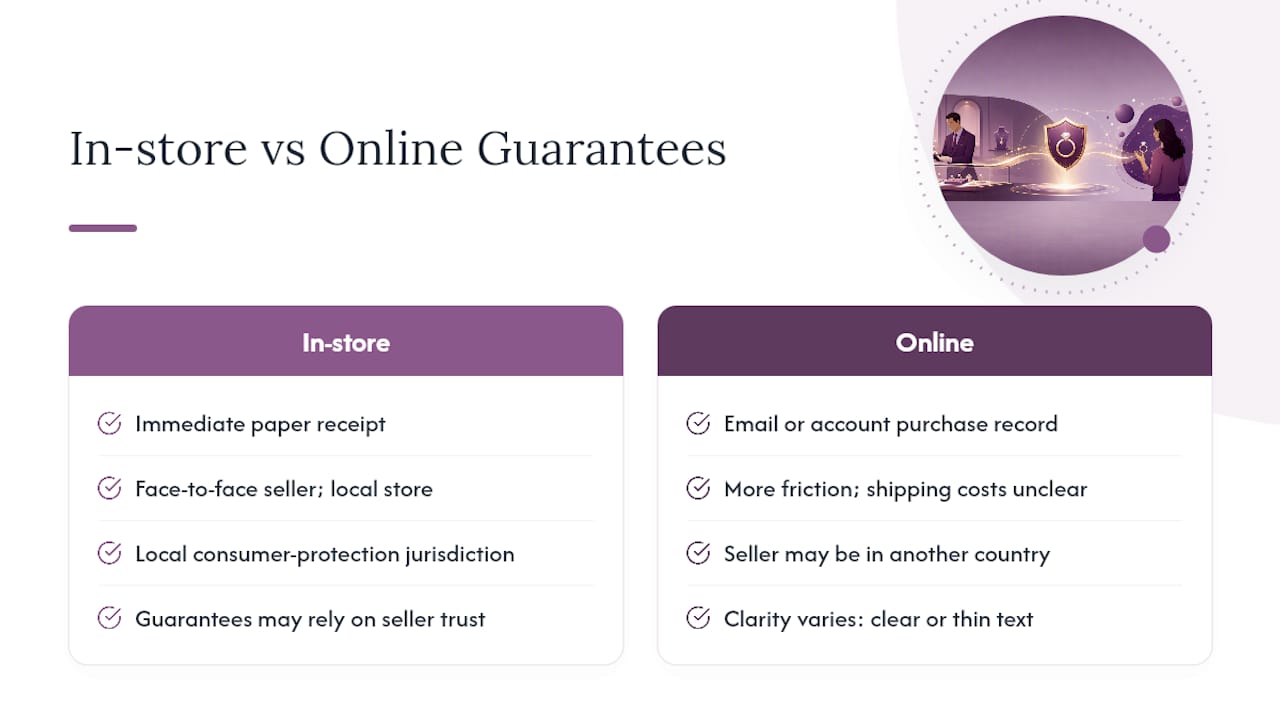
Buying in person gives you an immediate paper receipt, a face-to-face relationship with the seller, and often a physical store to return to if something goes wrong. Buying online adds a layer of friction: your proof of purchase lives in an email or account history, shipping costs for claims may not be spelled out clearly, and the seller might be based in a different country than you, which can complicate which consumer protection laws actually apply.
That said, online guarantees are not inherently weaker. Established online jewelers often have clearer, more standardized guarantee terms precisely because they can’t rely on in-person trust to smooth over ambiguity. The real risk is with smaller or less established online sellers, where the guarantee text is thin, exclusions aren’t listed, and there’s no clear contact point if a claim gets denied.
Whichever route you buy through, screenshot the guarantee terms at the time of purchase. Retailers update their policies, and having the version that applied when you bought is what protects you if language changes later.
How Do You Extend or Renew a Jewelry Care Plan?
Most care plans aren’t renewed automatically. They’re maintained through action, and letting that lapse is the most common way buyers lose coverage they think they still have.
The single biggest factor is showing up for scheduled inspections. If your plan requires a check every six months, missing that window can void coverage even if nothing appears wrong with the piece. Keep a simple log, a note in your phone with the date of each inspection works fine, along with the stamped card or emailed confirmation the jeweler gives you.
Some plans allow a grace period if you’re late, but don’t assume that’s universal; ask explicitly rather than finding out during a claim. If you move, check whether the original jeweler has a partner location near you or whether the plan only services one store.
For pieces you plan to give as gifts, ask about transferring the plan to a new owner before you hand it over. A thorough storage and handling routine between inspections also reduces the odds you’ll show up to a checkup with damage that complicates renewal.
Why Ethical Sourcing and Clear Guarantees Actually Lower Your Cost Over Time
Buyers tend to treat ethics and cost as opposing priorities. That’s backwards. A guarantee built around transparent materials, like lab-grown moissanite, tends to have fewer of the murky exclusions that natural-stone guarantees rely on to limit their own liability.
Lab-grown stones have consistent, documented origins, which makes replacement claims simpler to process and dispute less often. Natural stones carry more variability in grading and sourcing, which gives some brands room to argue over what counts as an equivalent replacement.
There’s a business-model angle too. Brands that return their profits directly to the people making the jewelry generally have less incentive to write guarantees full of loopholes, since their margin isn’t built on claims denial. That’s not a guarantee of perfect service, but it’s a structural reason to trust brands whose incentives point toward keeping customers rather than minimizing payouts.
The lesson holds regardless of brand: a guarantee’s clarity is often a better predictor of good service than its length or the size of the word “lifetime” on the box.
— Ammar
Meri Jaan’s Approach to Guarantees and Ethical Value
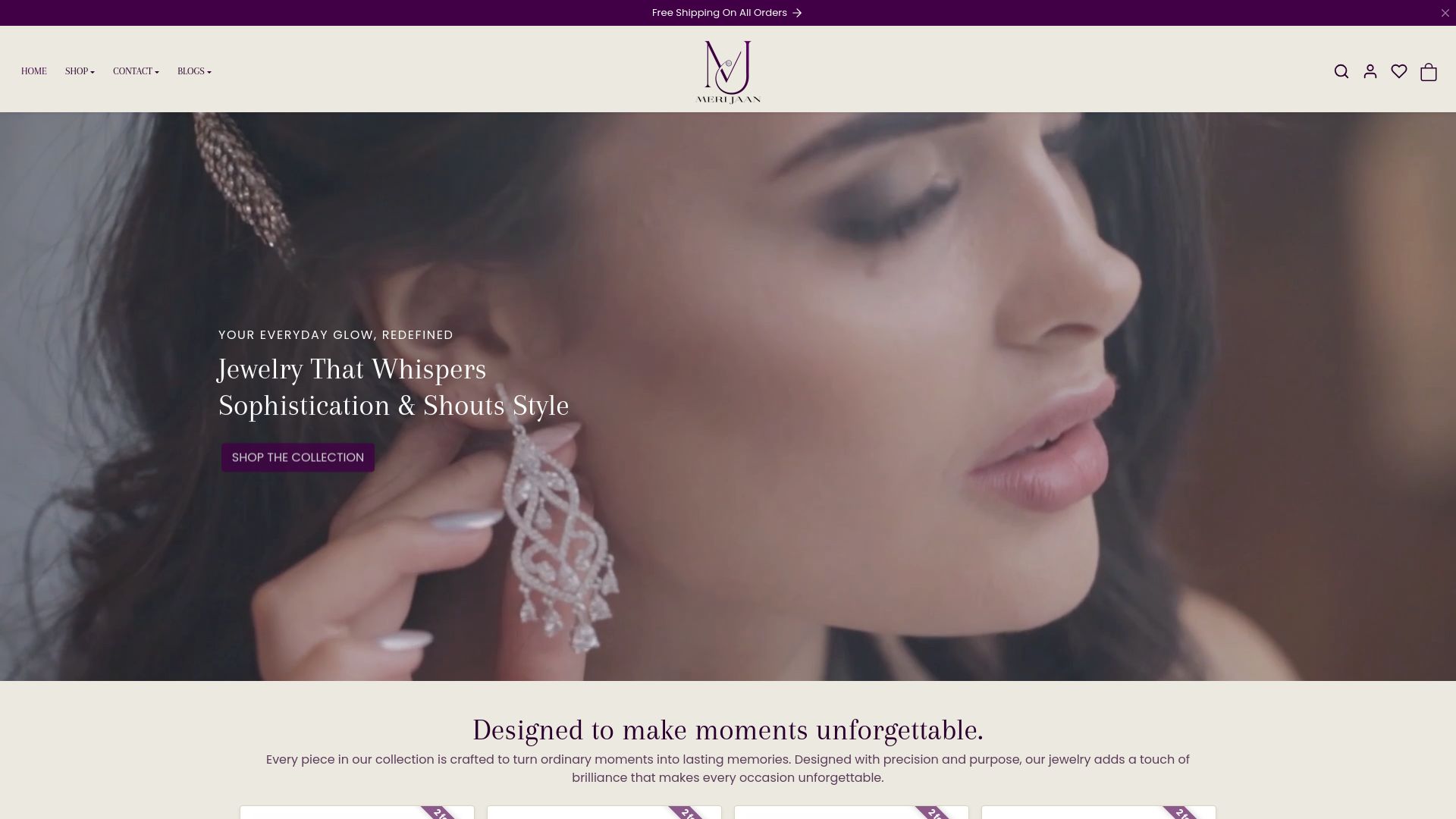
Merijaan is the alternative to guessing about guarantee fine print: every piece uses lab-grown moissanite, which means stone replacement claims aren’t complicated by grading disputes the way natural-stone claims often are. Combined with a lifetime warranty and unlimited exchanges for club members, that structure keeps your total cost of ownership predictable instead of buried in exclusions.
Here’s what to actually keep: your order confirmation and any certificate that came with your piece. If something needs attention, reach out to Merijaan directly with those documents rather than an outside jeweler, since unauthorized repairs can complicate warranty claims with almost any brand, this one included. Club members get the added benefit of unlimited exchanges, which matters if your taste changes or a gift doesn’t land the way you hoped.
If you want to see what that looks like in practice, browse the rings collection or check out the full product lineup to find a piece backed by terms you can actually read in one sitting.
Sources
For a deeper look at statutory rights versus voluntary guarantees, see this legal explainer on jewelry guarantees. For real-world examples of care plan and warranty structures, review Helzberg’s lifetime care plan terms, Swarovski’s warranty FAQ, and Zales’ lifetime diamond guarantee. Consumer protection rules vary by country, so confirm specifics with your local authority before relying on any single source.
FAQ
What Is the Best Type of Jewelry Guarantee?
A clear lifetime-style care plan with defined inspection terms and repair coverage generally offers the best balance of protection and cost for most buyers. Pair it with an optional protection plan only if loss or theft is a realistic concern for how you’ll wear the piece.
Does a Jewelry Guarantee Replace My Legal Warranty Rights?
No. A guarantee is a voluntary promise from the seller that sits alongside, and never replaces, your statutory warranty rights. Keep your receipt and documentation regardless of which protection you end up relying on.
What Documents Do I Need to Keep for a Jewelry Warranty Claim?
Keep your original receipt, any certificate of authenticity, dated photos of the piece, and records of prior repairs. This documentation is often what determines whether a claim gets approved smoothly or disputed.
Are Lab-Grown Stones Covered the Same Way as Natural Stones Under a Warranty?
Not always. Some retailers replace a lost lab-grown stone only with another lab-grown stone rather than a natural one, so it’s worth confirming the replacement policy before you buy.
Does Merijaan Offer a Lifetime Warranty?
Yes. Merijaan backs its lab-grown moissanite pieces with a lifetime warranty, and club members get unlimited exchanges as an added benefit. Current pricing and full terms are available directly on the Merijaan site.

