
Jewelry layering is defined as the intentional practice of wearing multiple pieces together, combining varied lengths, textures, and metals to create a personalized, balanced look. This styling technique, also called jewelry stacking, has moved well beyond simple accessorizing. The 2026 approach favors what stylists call “minimalist-leaning maximalism,” where 2–4 necklaces or 3–5 bracelets work together with deliberate spacing rather than random piling. The goal is visual harmony, not volume. Understanding the rules behind this trend separates a curated stack from a cluttered one.
What are the essential rules and techniques for successful jewelry layering?
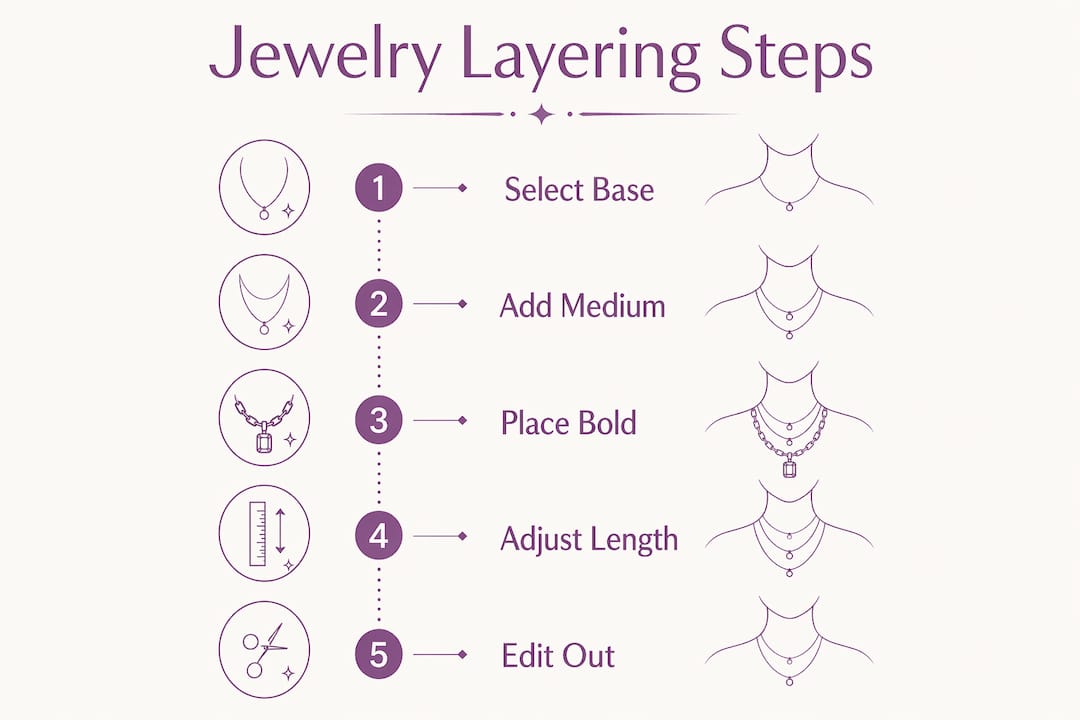
The 2:1:1 rule is the most reliable framework for balanced layering. It calls for two simple base pieces, one medium-impact piece, and one bold statement piece. This arrangement manages visual weight so no single area of your look feels overloaded.
Spacing is equally critical. Stylists recommend 1–2 inch gaps between necklace chains to prevent tangling and keep each piece visible. When chains sit at the same length, they compete rather than complement. Incremental length differences create the clean cascade effect that defines polished layering.
Metal mixing is no longer a style mistake. The modern approach repeats one metal at 60–70% dominance and uses a second metal as an accent. Gold as the primary with silver accents, for example, reads as intentional rather than mismatched. Bridge pieces that feature both metals in a single design help tie the look together.
- Start with your base: Choose your shortest, most delicate piece first, then build outward.
- Vary chain textures: A rope chain next to a box chain adds visual interest and reduces friction between links.
- Mix metals with a dominant color: Pick one metal to lead and let the second play a supporting role.
- Balance across your body: If your neckline is heavy, keep wrists and ears minimal.
- Apply the 2:1:1 rule: Two simple pieces, one medium, one bold. No exceptions.
Pro Tip: After you finish layering, remove one piece. Stylists call this the “edit one out” rule, and it consistently transforms an overcrowded stack into a curated look.
How to layer necklaces, bracelets, and rings for different occasions
Necklace layering follows a clear length progression. Start with a choker or collarbone piece at 14–16 inches, add a mid-length chain at 17–19 inches, then finish with a pendant at 20–24 inches or longer. This cascading length structure keeps each necklace visible and prevents the chains from merging into one tangled mass.
For bracelets, the same logic applies. Mix smooth bangles, textured cuffs, and gemstone pieces in a stack of 3–5 for depth without bulk. The Merijaan Engadine Bracelet works well as a textured anchor piece in a mixed-metal stack.
Rings reward a different approach. Rather than loading one hand, distribute widths across both. A thin band on one finger, a wider etched ring on another, and a statement piece on the opposite hand creates balance without concentration. The Merijaan Arosa Ring is a vintage-inspired stackable option that pairs naturally with both delicate and bolder bands.
Occasion matters more than most people realize. Here is how to adapt your layering complexity:
- Casual everyday: Two necklaces at most, a simple bracelet stack of three, and one or two rings per hand. Keep metals consistent.
- Professional settings: Stick to the 2:1:1 rule strictly. One statement necklace, one delicate base chain, and minimal wrist jewelry. Read more on professional jewelry choices for daily wear.
- Evening or events: This is where you can push to four necklaces and a fuller bracelet stack. Let one area lead, whether that is the neck or the wrists, and keep the other restrained.
- Formal occasions: Choose one focal point. A dramatic layered necklace with bare wrists reads more elegant than competing statements at every level.
- Casual weekend: Experiment freely. This is the best context to test new combinations before committing them to higher-stakes settings.
Ears factor into the equation too. Stacked ear cuffs or multiple piercings on one ear balance a minimal necklace look. A full necklace stack calls for simple studs or no earrings at all.
What are current styling trends and expert tips for modern jewelry layering in 2026?
The most important distinction in 2026 layering is the difference between layering and piling. Intentional curation is what separates a styled look from a collection of random pieces worn at once. Every piece in a stack should earn its place by contributing to a specific visual story.
The modern mash-up trend encourages combining sentimental heirlooms with contemporary statement pieces for a narrative that feels personal rather than trend-chasing. A grandmother’s gold chain layered with a moissanite pendant creates contrast that no store-bought set can replicate. This is where layering becomes genuinely expressive rather than decorative.
“Layering jewelry is about personal expression and intentionality rather than wearing the most pieces possible. A curated wearable archive, edited down to its best version, achieves effortless luxury styling.” — Vogue
Texture and shine contrast add editorial polish that flat, matching sets cannot achieve. A matte hammered cuff next to a high-shine chain reads as considered. A snake chain paired with a rope chain minimizes tangling while creating surface variety that catches light differently at each layer.
- Lead with one focal point: Choose your strongest piece first and build around it, not toward it.
- Use texture contrast deliberately: Matte against shine, smooth against textured, delicate against chunky.
- Incorporate personal pieces: Heirlooms, travel finds, and gifted jewelry add meaning that elevates the whole stack.
- Repeat one element: A shared metal tone, stone color, or chain style ties disparate pieces into a cohesive look.
- Distribute visual weight: Bold at the neck means minimal at the wrist. Balance across your body rather than concentrating statement pieces in one zone.
What common mistakes to avoid when building a layered jewelry look
The most frequent mistake is wearing pieces at the same length. When two necklaces sit at identical lengths, they tangle constantly and read as one confused layer rather than two distinct pieces. Length differentiation is not optional. It is the structural foundation of the entire technique.
Choosing multiple competing statement pieces is the second most common error. A chunky collar necklace, a bold cuff bracelet, and an oversized cocktail ring worn together create visual noise rather than style. The 2:1:1 rule exists precisely to prevent this. One bold piece anchors the look; everything else supports it.
- Avoid same-length necklaces: Always maintain at least a 2-inch difference between chains.
- Skip matching sets: Perfectly matched sets look coordinated, not layered. Variation is the point.
- Don’t ignore chain texture: Smooth chains of the same style tangle and flatten the look. Varied textures add both style and function.
- Resist adding one more piece: When the look feels almost right, adding another piece rarely improves it. Removing one usually does.
- Don’t neglect the full picture: Check your look from a distance. What reads as layered up close can look cluttered from across a room.
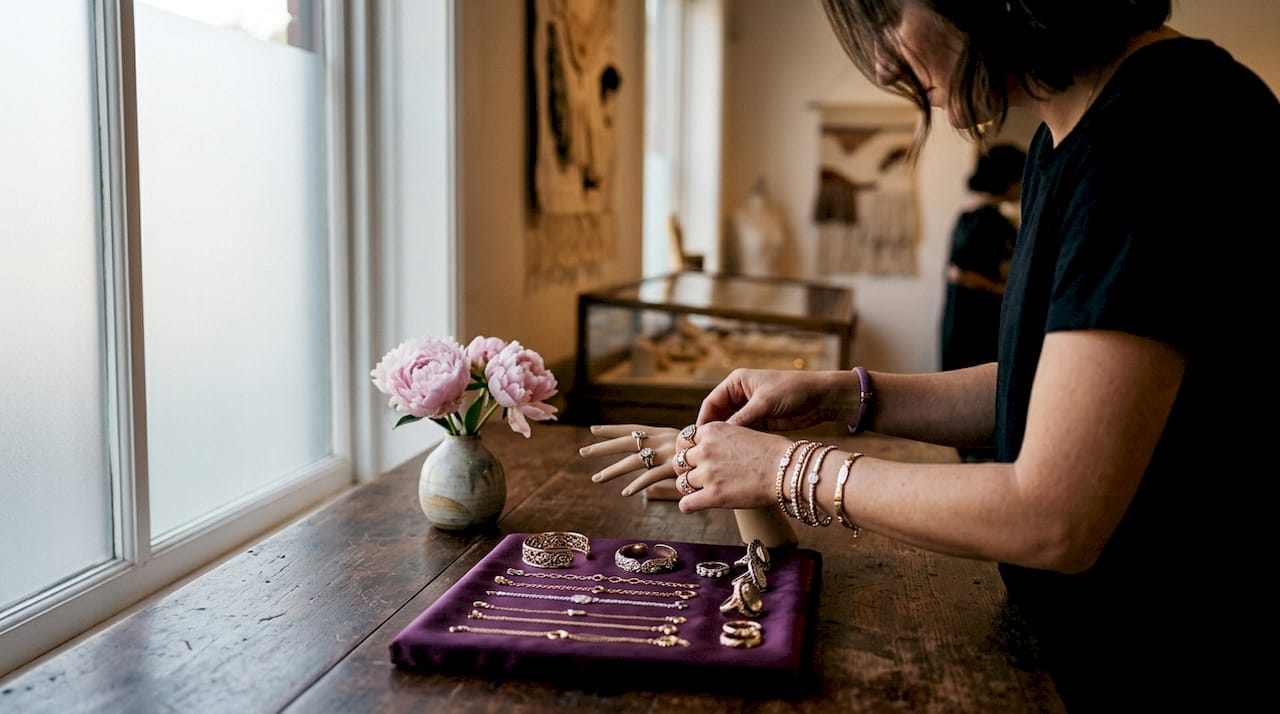
Pro Tip: Lay your pieces flat on a table before putting them on. Arrange them by length and texture to preview the stack visually. This simple step catches conflicts before they end up around your neck.
Jewelry that tells a story about self-expression works better in a layered context because each piece carries meaning. Intentionality shows. Random accumulation does not.
Key Takeaways
Jewelry layering works best when intentional curation, the 2:1:1 rule, and deliberate length variation replace random accumulation.
| Point | Details |
|---|---|
| Apply the 2:1:1 rule | Use two simple pieces, one medium, and one bold to manage visual weight. |
| Space necklaces 1–2 inches apart | Consistent gaps prevent tangling and keep each layer visible and distinct. |
| Mix metals with one dominant tone | Let one metal lead at 60–70% and use a second as an accent for cohesion. |
| Edit one piece out | After layering, remove one item to transform a pile into a curated stack. |
| Balance visual weight across your body | If your neck carries bold pieces, keep wrists and ears minimal, and vice versa. |
Why jewelry layering changed how I think about personal style
I used to believe that more was more. I would put on every piece I loved and call it a look. What I actually had was noise. The shift happened when I started treating my jewelry like a sentence rather than a paragraph. Every word, or piece, had to earn its place.
What surprised me most was how much layering rewards restraint. The edit-one-out rule felt counterintuitive at first. Removing a piece I loved seemed like a loss. But the look that remained was always sharper, more intentional, and more “me” than the version with everything on.
The trend toward mixing heirlooms with new pieces is the part I find most compelling. A layered stack that includes your grandmother’s chain alongside a moissanite pendant from Merijaan carries a kind of personal weight that a matching set never can. That combination tells a story. Matching sets just tell you someone went to the same store.
The real value of mastering this technique is that it makes your wardrobe feel larger without buying more. Three necklaces worn in different combinations across a week create more distinct looks than ten worn one at a time. That is not a styling trick. That is a genuinely smarter way to dress.
— Ammar
Merijaan’s collections are built for layering
Merijaan designs pieces with layering in mind, from delicate base chains to textured statement necklaces and stackable rings. Every piece uses lab-grown moissanite and quality metalwork, so your stack holds up whether you wear it to work or an evening out.
The women’s necklace collection covers the full length range you need for a proper cascade, from collarbone pieces to longer pendants. The women’s rings include stackable styles like the Arosa Ring that mix naturally with both bold and delicate bands. If you want pieces that work together without looking like a set, Merijaan’s range gives you that flexibility. Every purchase also supports the artisans who make the jewelry directly.
FAQ
What is the jewelry layering trend?
Jewelry layering is the practice of wearing multiple pieces together, combining varied lengths, textures, and metals to create a personalized, balanced look. The 2026 version favors intentional curation over volume, typically using 2–4 necklaces or 3–5 bracelets spaced 1–2 inches apart.
How many necklaces should I layer at once?
Most stylists recommend 2–4 necklaces for a clean layered look. Start with a choker or collarbone piece at 14–16 inches, add a mid-length chain at 17–19 inches, and finish with a longer pendant at 20–24 inches or beyond.
Can you mix gold and silver when layering jewelry?
Yes. The modern approach uses one metal as the dominant tone at roughly 60–70% of the stack and introduces a second metal as an accent. Bridge pieces that feature both metals help tie the combination together naturally.
What is the 2:1:1 rule in jewelry layering?
The 2:1:1 rule calls for two simple base pieces, one medium-impact piece, and one bold statement piece in a single look. This structure manages visual weight and prevents any one area from feeling overloaded.
How do I stop layered necklaces from tangling?
Use chains with different textures, such as a snake chain paired with a rope chain, and maintain 1–2 inch gaps between each layer. Varied textures reduce friction between chains and keep each piece in its own visual lane.

