

A lobster clasp is a spring-loaded, claw-shaped fastener that clicks shut automatically when you release its lever. You’ll find it on necklaces, bracelets, and anklets more than almost any other closure type. It goes by several names: lobster claw, trigger clasp, lobster hook, and occasionally bocklebee clasp. The shape is unmistakable once you know it, a small rounded body that tapers to a pincer, with a tiny lever on one side.
Key Takeaways
A lobster clasp is the most secure and widely used jewelry fastener for everyday pieces, and matching its size and metal to your chain determines how long it lasts and how easy it is to use.
| Point | Details |
|---|---|
| Definition | A spring-loaded, claw-shaped fastener that locks shut automatically when the lever is released. |
| Best use cases | Medium to heavy necklaces, bracelets, and charm pieces that need a reliable daily-wear closure. |
| Main trade-off | High security and durability, but small sizes can be difficult for people with limited dexterity. |
| Material matching | Always match clasp metal and finish to the chain to prevent visible wear and galvanic mismatch. |
| Care and replacement | Wipe after wear, inspect the bottom eye regularly, and swap a worn clasp with basic pliers and a jump ring. |
Table of Contents
- What are the parts of a lobster clasp?
- How does a lobster clasp actually work?
- What are the different names and sizes of lobster clasps?
- What are the pros and cons of a lobster clasp?
- How do you pick the right material and size?
- How do you care for, repair, or replace a lobster clasp?
- How does a lobster clasp compare to other common clasps?
- A jeweler’s perspective on clasp choice
- Sources
What are the parts of a lobster clasp?
Every lobster clasp shares the same four-part anatomy, and knowing each piece helps you spot wear before a piece is lost.
- Body (claw): The outer shell, shaped like a crustacean claw. This is the structural frame that everything else sits inside.
- Lever (trigger): The small tab on the side. Pressing it inward compresses the spring and opens the jaw.
- Internal spring: Hidden inside the body. It pushes the jaw closed the moment you release the lever. This is the part that wears out first on heavily used clasps.
- Bottom eye (loop): The small ring or hoop at the base of the body. The Bead Chest notes this is a universal attachment point, where the clasp connects to thread, wire, or a jump ring on your chain.
When inspecting a clasp for wear, start at the bottom eye, where metal fatigue tends to show first, and then test the spring tension by pressing the lever a few times. A sluggish return means the spring is weakening.
How does a lobster clasp actually work?
The mechanism is simple: press the lever, the jaw opens; release it, the spring snaps the jaw shut. That spring-loaded lock is what separates a lobster clasp from a basic hook closure.
In practice, the sequence goes like this. You press the lever with your thumbnail, the pincer-shaped jaw swings open, you hook the open jaw onto a jump ring or chain link, and then you let go. The spring drives the jaw closed around the ring, and the piece is secured. No threading, no screwing, no fiddling with a tiny barrel.
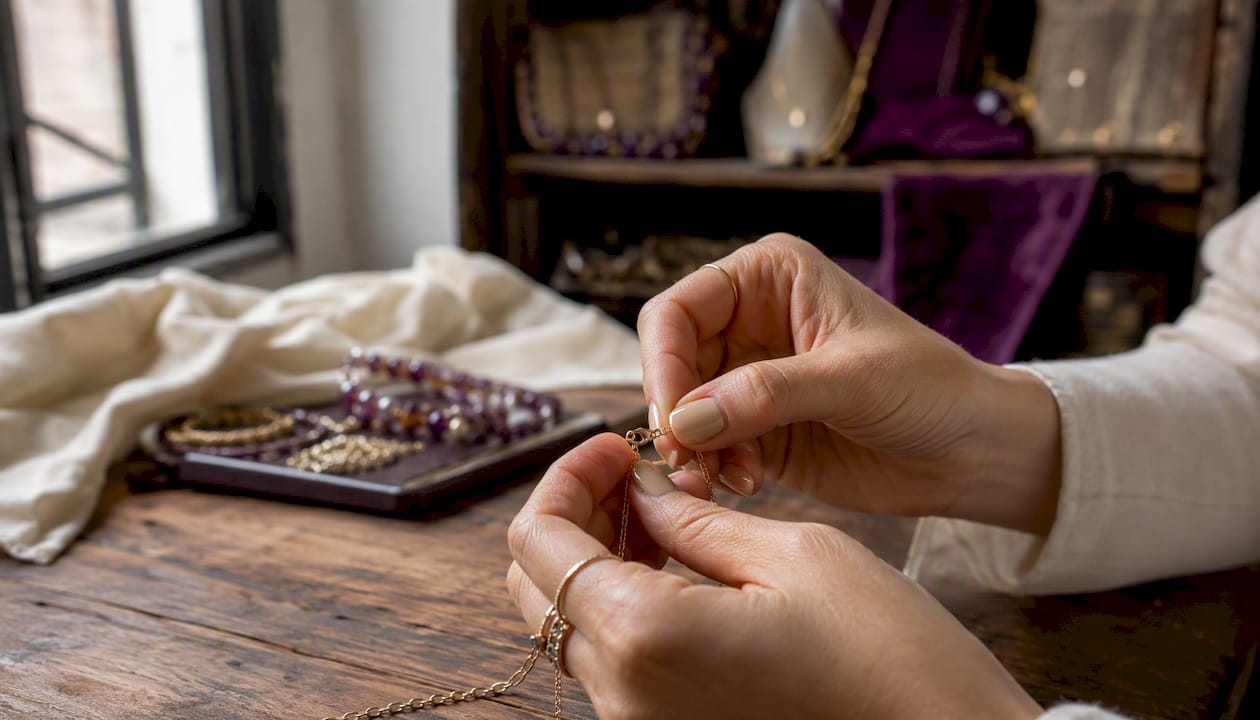
Some versions add a swivel base, a rotating joint between the body and the bottom eye. Halstead explains that swivel lobster clasps prevent chain twisting, which matters on longer necklaces or heavier pendants where kinking is a real annoyance. One-sided levers are standard; two-sided lever designs exist but are less common in fine jewelry.
Pro Tip: Adding a short diagram or GIF showing the lever-press-and-hook sequence is the single fastest way to help a new jewelry owner understand this clasp. A still photo of the open jaw next to a closed one does the job in two seconds.
What are the different names and sizes of lobster clasps?
The naming situation is genuinely confusing because the same clasp gets different labels depending on the supplier, the country, and the catalog.
Common alternate names:
- Lobster claw clasp
- Trigger clasp
- Lobster hook
- Bocklebee clasp
- Fermoir pince de homard (French-language product listings)
Typical size ranges and best uses:
- Small (7–10 mm): Delicate chains, lightweight necklaces, thin anklets. The lever can be fiddly at this scale.
- Medium (11–14 mm): The most versatile range. Works on standard necklaces and most bracelets.
- Large (15–18 mm): Heavier chains, charm bracelets, statement pieces. Easier to operate and visually proportionate on bold designs.
Beyond size, manufacturers produce oval lobster clasps (a rounder body profile), fancy-shaped versions with decorative detailing, and the swivel variants mentioned above. Oval shapes tend to sit flatter against the neck, which some wearers prefer on finer chains.
What are the pros and cons of a lobster clasp?
Wescott Jewelry puts lobster claws among the most secure common clasp options because the locking lever mechanism doesn’t rely on tension alone. That security advantage is real, but it comes with trade-offs.
Pros:
- Strong spring lock holds under daily wear and movement
- Durable construction, especially in solid sterling or gold
- Widely available in every metal and size
- Easy to operate for most wearers once the technique clicks
Cons:
- The lever can be genuinely difficult for people with arthritis or limited finger dexterity
- Very small sizes (under 8 mm) are fiddly even for people with full dexterity
- Spring tension weakens over time with heavy use
- On delicate, thin chains, a standard lobster clasp can look visually heavy
For wearers with limited dexterity, a larger clasp size helps considerably. Extender chains and clasp adapters are also practical fixes that don’t require replacing the whole piece. Choosing durable jewelry for daily wear means thinking about clasp accessibility from the start, not as an afterthought.
How do you pick the right material and size?
Cooksongold recommends lobster clasps for medium- to heavy-weight necklaces and bracelets, and material choice matters as much as size for long-term wear.
Common materials:
- Sterling silver (.925): Classic, affordable, tarnishes without care but polishes easily.
- 14k/18k gold: Best longevity and color consistency; worth the cost on pieces you wear daily.
- Gold-filled: A thick bonded layer of gold over base metal. More durable than plating; a solid middle-ground option.
- Gold-plated base metal: Affordable but the plating wears through at high-contact points, exposing the base metal underneath.
- Stainless steel: Highly resistant to tarnish and corrosion; common on fashion jewelry.
Size and weight guide:
| Clasp size | Best for |
|---|---|
| 7–10 mm | Lightweight chains, thin anklets, delicate necklaces |
| 11–14 mm | Standard necklaces, most bracelets, everyday wear |
| 15–18 mm | Heavy chains, charm bracelets, statement pieces |
The matching rule is straightforward: use the same metal type and finish on the clasp as on the chain. A gold-plated clasp on a sterling silver chain looks mismatched immediately and creates galvanic wear over time. For pieces you wear every day, solid or gold-filled clasps outlast plated options by a significant margin.
Pro Tip: On high-contact pieces like bracelets, avoid plated clasps entirely. The lever area rubs against skin and surfaces constantly, and the plating wears through faster there than anywhere else on the piece.
How do you care for, repair, or replace a lobster clasp?
Most lobster clasp problems are preventable with basic maintenance, and a worn clasp is usually a straightforward DIY swap.
Routine care:
- Wipe the clasp with a soft cloth after each wear, especially after contact with sweat or lotion
- Keep jewelry away from saltwater, chlorine, and harsh cleaning products
- Inspect the bottom eye and jump ring for stress cracks every few months
- Store pieces so the clasp isn’t under tension
For more detailed maintenance guidance, Merijaan’s ethical jewelry care guide covers cleaning and storage practices that apply directly to lobster-clasped pieces.
Troubleshooting a sticky or weak spring:
- Clean the clasp with a soft brush and warm soapy water to remove debris caught in the lever mechanism.
- Rinse thoroughly and dry completely before testing.
- Apply one tiny drop of jewelry lubricant (or mineral oil) to the lever joint.
- Press the lever repeatedly to work the lubricant in and test spring return.
- If the spring still feels sluggish or the jaw won’t close fully, the spring is worn and the clasp needs replacing.
Replacing a lobster clasp (DIY):
- Tools needed: two pairs of flat-nose pliers, a replacement lobster clasp, and a jump ring if the original is damaged.
- Open the jump ring connecting the old clasp to the chain by twisting it sideways (not pulling it apart).
- Slide the old clasp off and thread the new one onto the jump ring.
- Close the jump ring by twisting it back to its original position until the ends meet flush.
When to call a jeweler: a broken internal spring, a bent or distorted clasp body, or a clasp that’s been soldered directly to the chain all require professional tools to fix safely.
How does a lobster clasp compare to other common clasps?
| Clasp type | Security | One-handed use | Best for | Typical limitation |
|---|---|---|---|---|
| Lobster clasp | High | Moderate | Medium to heavy pieces, daily wear | Harder with limited dexterity |
| Spring ring | Moderate | Moderate | Lightweight, delicate chains | Small tab is fiddly; spring wears faster |
| Toggle clasp | Low to moderate | Easy | Decorative, casual bracelets | Can slip open on active wear |
| Magnetic clasp | Moderate | Very easy | Accessibility needs, lightweight pieces | Not suitable for heavy pendants; can open accidentally |
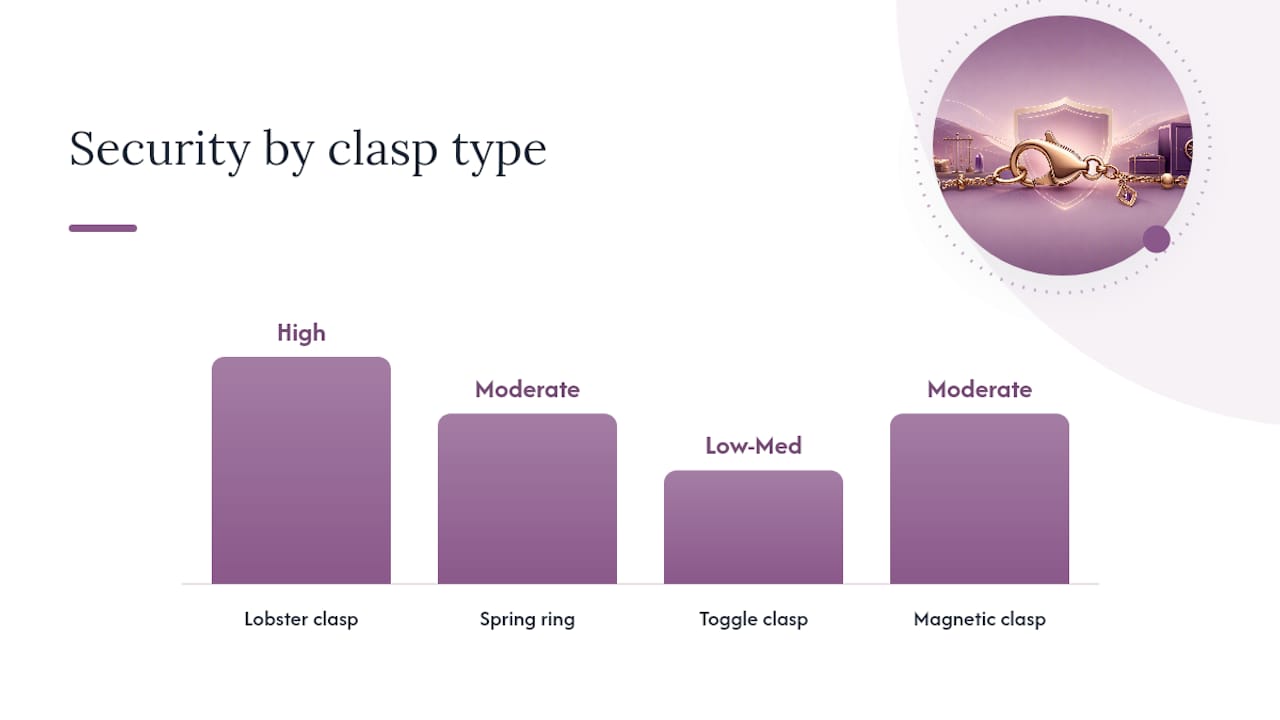
The lobster clasp wins on security for most everyday jewelry. Spring rings are lighter and less visible on fine chains but their springs tend to fail sooner. Toggle clasps are the easiest to put on one-handed but aren’t reliable on pieces that move around a lot. Magnetic clasps are genuinely useful for anyone who struggles with small levers, though they’re not the right call for a heavy pendant necklace.
A jeweler’s perspective on clasp choice
The clasp is the most-handled part of any necklace or bracelet, yet most buyers spend zero time thinking about it. That’s a mistake. A beautiful piece with a failing clasp is a piece you stop wearing, or worse, lose.
At Merijaan, every design decision, including clasp selection, connects back to how a piece holds up over years of real wear. The Baden necklace and the Chasseral Bracelet both reflect that thinking: clasp size and metal are matched to the piece’s weight and finish, not chosen as an afterthought.
The one thing most guides skip: size up your lobster clasp if you’re buying for someone else. A 12 mm clasp is noticeably easier to operate than a 9 mm one, and on most necklaces, the size difference is invisible when worn.
Sources
- Lobster clasp
- Types of Jewelry Clasps & Closures - Halstead
- Different Types of Jewellery Clasps | Cooksongold Blog
- How to Use Lobster Clasps DIY Tutorial: 13 Steps (with Pictures) — The Bead Chest
- Clasp Wars: The Lobster Claw | Wescott Jewelry

