
There’s no universal right price for an engagement ring. Skip the three-months-salary formula entirely and build your engagement ring budget around what you can actually afford, what matters to both of you, and where you’re headed financially. A symbolic band, a daily-wear stone, or a statement piece can all work at wildly different price points, and lab-grown moissanite now makes any of those tiers more attainable without cutting corners on sparkle.
TL;DR:
- Spending three months’ salary on a ring is an outdated marketing myth; most rings typically cost between a few hundred to several thousand euros.
- Prioritize cut quality and ethical or lab-grown stones over carat size, as these factors deliver better long-term satisfaction and sparkle.
- Metal choice influences both price and durability, with platinum being the most costly and durable, while sterling silver is cheaper but softer.
- Budget for additional costs like resizing, engraving, insurance, and resale options, which can significantly add to the total expense over time.
- Buying from online retailers with certified stones and clear return policies can save money, and lab-grown moissanite offers a cost-effective, ethical alternative to mined diamonds.
Table of Contents
- How much should you spend on an engagement ring?
- How do you set a personal engagement ring budget?
- What actually drives the price of an engagement ring?
- How can you get more ring for less money?
- What should you budget for insurance and upkeep?
- Should you buy your ring online or from a local jeweler?
- Why lab-grown moissanite makes budget sense
- What actually matters when you’re setting this budget
- A lower-cost path to the same sparkle
- Sources
How much should you spend on an engagement ring?
Forget the outdated formula. The “spend three months’ salary” line didn’t come from financial planners. It came from a mid-20th-century diamond marketing campaign, and it has stuck around far longer than it deserves, according to ING’s breakdown of ring costs. Treating it as a rule is like letting a jewelry ad set your grocery budget.
Real spending in German-speaking markets tells a different story. Surveys show typical ring prices ranging from a few hundred euros up to several thousand, with a common mid-range average landing around €700 to €1,000, per Bridebook’s pricing overview. That’s a wideband, and it’s wide on purpose, because a ring’s price depends on far more than one number.
Here’s a rough map of what different budgets tend to buy:
- Lower budget ranges: Sterling silver or gold-plated bands, moissanite or cubic zirconia accents, simple solitaire or minimalist designs.
- Moderate budgets: 14k gold or 925 silver settings, a lab-grown moissanite or small diamond center stone, more refined detailing like a thin halo or milgrain edge.
- Higher budgets: 18k gold or platinum options, a larger or higher-grade center stone, custom engraving, and often a certificate from a recognized grading body.
- Premium budgets: Premium metals, larger carat weights, intricate custom design work, and certified diamonds with strong 4 Cs across the board.
Two rings at the same price can look completely different, because carat, cut, clarity, color, metal choice, and design complexity all pull the price in different directions independently. A 1 carat stone with mediocre cut can cost less than a 0.7-carat stone cut to maximize brilliance. That overlap is normal, not a sign you’re being overcharged.
How do you set a personal engagement ring budget?
Before you look at a single ring, answer five questions together (even if the proposal is a surprise, these conversations tend to happen before the ring shopping starts):
- What’s genuinely affordable without touching savings meant for rent, debt payoff, or emergencies?
- What does your partner actually value: a certified diamond, an ethical stone, a vintage design, or something else entirely?
- Are you both planning other major costs soon, like a wedding or a move?
- Would financing this purchase create stress, or is it a manageable stretch?
- Is resale value or long-term wear more important than the initial “wow”?
A short-term savings plan, even three to six months of setting aside a fixed amount, beats debt every time.
Two tactics stretch a modest budget further than almost anything else: prioritize cut quality over carat size, and consider lab-grown moissanite instead of a mined diamond for the center stone.
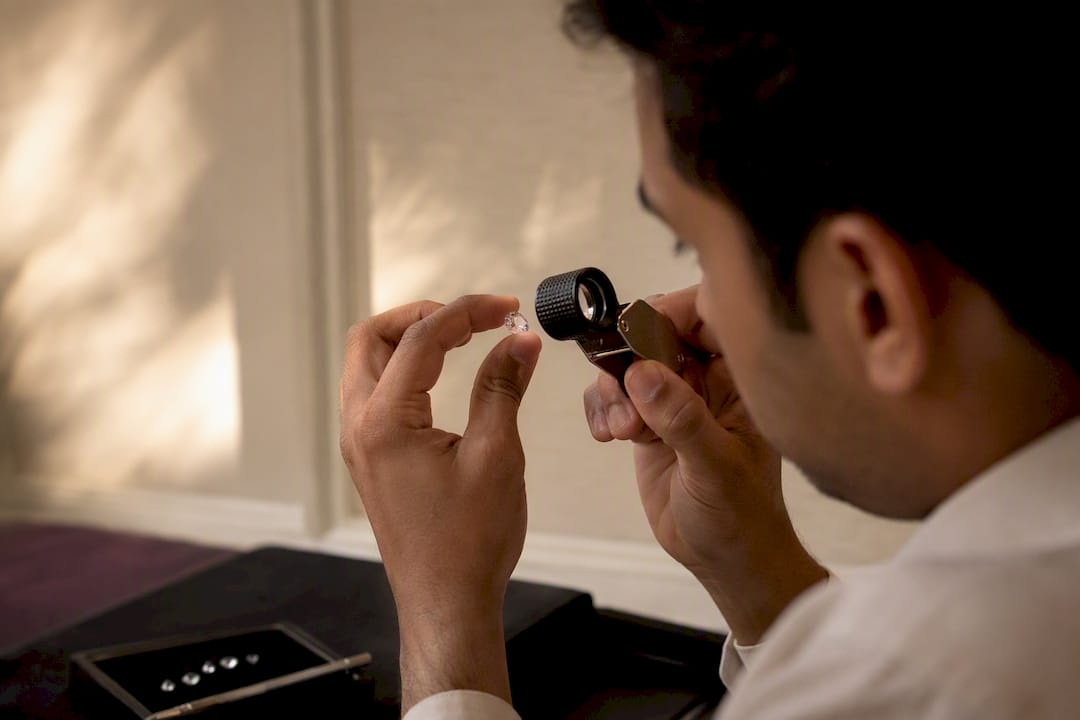
Pro Tip: Set your budget as a range, not a fixed number. A €600–800 range gives you room to negotiate or upgrade one feature (like the metal) without blowing past what you can afford.
What actually drives the price of an engagement ring?
Three things determine most of what you pay: the stone, the metal, and the craftsmanship behind the design. Understanding each one lets you decide exactly where to spend and where to save.
The 4 Cs, Carat, Cut, Clarity, and Color, rank differently in terms of visual impact versus price impact. Cut affects how a stone sparkles more than any other factor, yet it’s often the easiest place buyers under-invest. Carat weight drives price up fast (bigger stones are rarer), but a well-cut smaller stone frequently reads as more brilliant than a larger, poorly cut one, a point backed by Treuheld’s cost guide for engagement rings. Clarity and color matter less to the naked eye than most buyers assume, especially a grade or two below “flawless.”
Metal choice changes both price and durability:
- 925 sterling silver: Most affordable, but softer and prone to tarnishing over years of daily wear.
- 14k gold: A durable, mid-price standard that resists scratching better than 18k.
- 18k gold: Richer color, softer metal, higher price per gram.
- Platinum: The most durable and hypoallergenic option, also the most expensive.
Craftsmanship and customization, hand engraving, intricate filigree, bespoke settings, add a premium on top of raw materials. Extras like engraving or future resizing carry their own separate costs worth budgeting for upfront. Learning how price per carat is actually calculated helps you spot when a “deal” is really just a smaller stone dressed up in marketing language.
How can you get more ring for less money?
Cut and color quality deliver more visible brilliance per dollar than raw carat size ever will. A well-cut 0.9 carat stone with good color often outshines a poorly cut 1 carat stone, and it usually costs noticeably less, according to Treuheld’s guidance on ring costs.
A few swaps and design choices stretch your budget further:
- Lab-grown moissanite delivers comparable or superior sparkle to diamonds at a fraction of the price, with the added benefit of a traceable, ethical origin.
- Sapphires and morganite offer color and personality at lower price points than diamonds of similar size.
- Halo settings make a center stone look larger by surrounding it with smaller accent stones.
- Thin bands draw the eye upward to the stone, making it appear bigger without added cost.
Pro Tip: If your partner’s ring size might change, buy a simpler band now and plan a resetting or upgrade later. It’s far cheaper than redoing an intricate design twice.
What should you budget for insurance and upkeep?
Insurance makes sense once a ring’s value exceeds what your household or renters policy comfortably covers, especially for rings worn daily and exposed to knocks, water, and chemicals. Below a certain value, many people skip a standalone policy and rely on existing home coverage instead.
Budget for these recurring or one-time costs beyond the purchase price:
- Engraving: typically a modest flat fee per ring.
- Resizing: costs vary by metal, with platinum resizing generally pricier than gold or silver.
- Annual cleaning or prong checks: often free or low-cost through the original seller.
Before buying, confirm the warranty length, what it actually covers, and whether resizing or exchanges are included at no extra charge.
Should you buy your ring online or from a local jeweler?
Each channel trades off differently. Online sellers typically offer lower prices, wider selection, and clearer certificates upfront. Local jewelers offer try-on ability, face-to-face customization, and faster in-person resizing.
Before committing, run through this checklist:
- Ask for a certificate from a recognized grading lab like GIA or IGI if the stone is graded.
- Confirm the return window and whether it covers a full refund or store credit only.
- Ask about resizing turnaround time and whether it’s included in the price.
- Check shipping insurance and delivery timelines if buying online.
Return and resizing timelines matter for budgeting too: a slow resizing process might mean covering a temporary ring for a proposal deadline.
Why lab-grown moissanite makes budget sense
Meri Jaan built its collection, including the Vaduz Ring, Menzingen Ring, and Eternity Wedding Ring, around lab-grown moissanite because it delivers the brilliance of a diamond at a lower price point, ethically sourced. Every piece carries a lifetime warranty and unlimited exchanges for club members, which quietly lowers the real cost of ownership over years of wear.
What actually matters when you’re setting this budget
The conventional advice on ring budgets fails in one specific way: it treats price as the variable to optimize, when priority is the actual decision. Every guide tells you to “spend what you can afford,” which is true and also useless without a framework for what “afford” means alongside what you actually value.
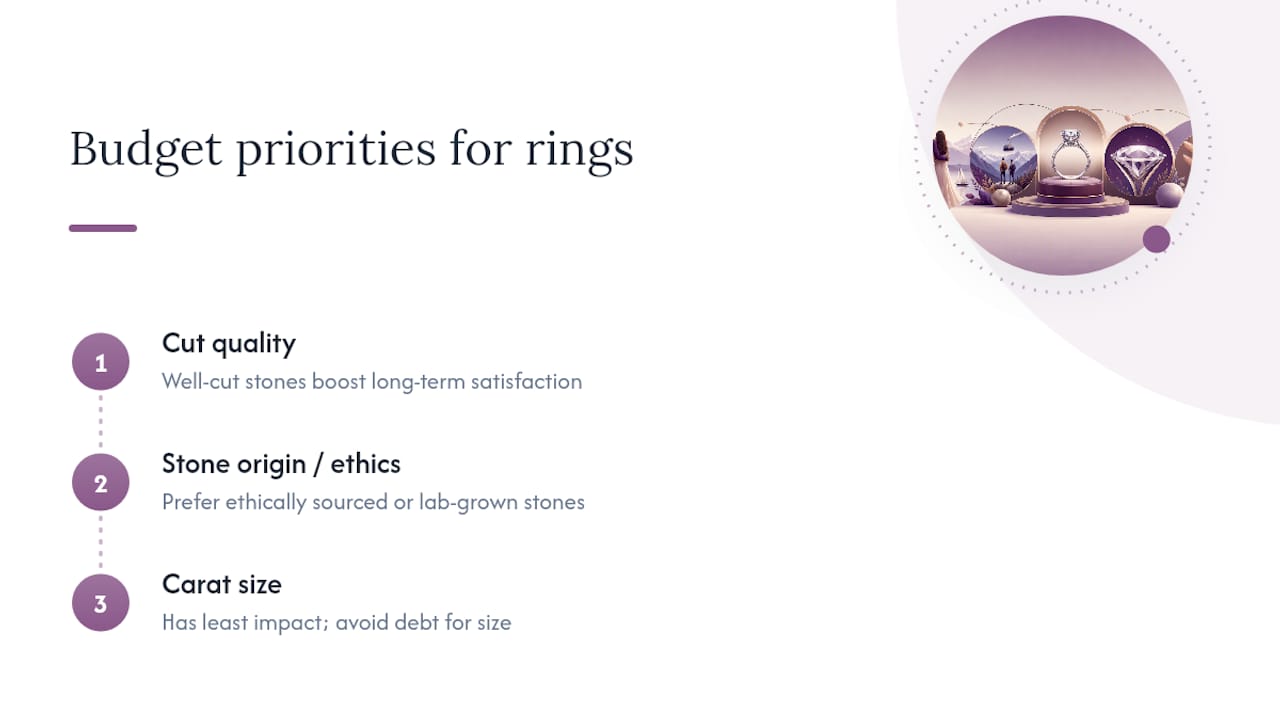
Here’s what the evidence in this guide supports: cut quality and stone origin matter more to long-term satisfaction than carat size ever will. Buyers who choose a well-cut, ethically sourced stone rarely report regret over size. Buyers who stretch into debt for an extra half-carat often do.
Sustainability is the underrated variable in this whole conversation. Lab-grown stones aren’t a compromise anymore. They’re a legitimate first choice for buyers who’ve done the math and realized a mined diamond’s premium buys geology, not visible quality. Prioritize the cut, prioritize the ethics, and let the carat number fall wherever your budget lands. That order of operations, not a fixed dollar figure, is what actually produces a ring you’ll be happy with in ten years.
— Ammar
A lower-cost path to the same sparkle
There are other routes to an engagement ring: mined diamonds through traditional jewelers, custom work through local goldsmiths, or big-box retailers with fixed inventory. Merijaan takes a different route entirely. Every piece uses lab-grown moissanite, so you get comparable brilliance to a diamond at a meaningfully lower price, backed by a lifetime warranty and unlimited exchanges for club members.
That warranty matters more than it sounds. It means resizing, exchanges, and long-term wear issues don’t turn into unplanned costs down the road, which is exactly the kind of hidden expense this guide has walked through. The Vaduz Ring and Menzingen Ring are two starting points if you want to see what a budget-conscious, ethically sourced ring actually looks like. Browse the full ring collection and check which style fits both your budget and your partner’s taste before you commit.
Sources
- Wie viel kosten Verlobungsringe? Die aktuellen Preise im Überblick | Bridebook
- Wie teuer sollte ein Verlobungsring sein? – ING
- IGI — International Gemological Institute

