

Eight statement jewelry ideas you can wear today or make this weekend: a chunky gold chain layered over a plain tee, oversized resin drop earrings with hair pulled back, a sculptural cuff worn solo on one wrist, a cocktail ring on a bare hand, an enamel brooch pinned to a lapel, a Y-necklace on a deep V-neck, a polymer clay pendant on a leather cord, and a pearl-cluster ear cuff. The single rule that holds all of them together is visual hierarchy: pick one star piece and let everything else recede. A statement necklace pairs with small studs or none at all. Oversized resin earrings work best when the neckline is clean and the hair is up.
Quick reference:
- Chunky chain necklace — ready-to-wear, beginner-friendly; wear with a white tee or crewneck
- Sculptural resin pendant — DIY with epoxy resin and aluminum wire; intermediate level
- Oversized enamel hoop earrings — ready-to-wear; pair with a pulled-back updo
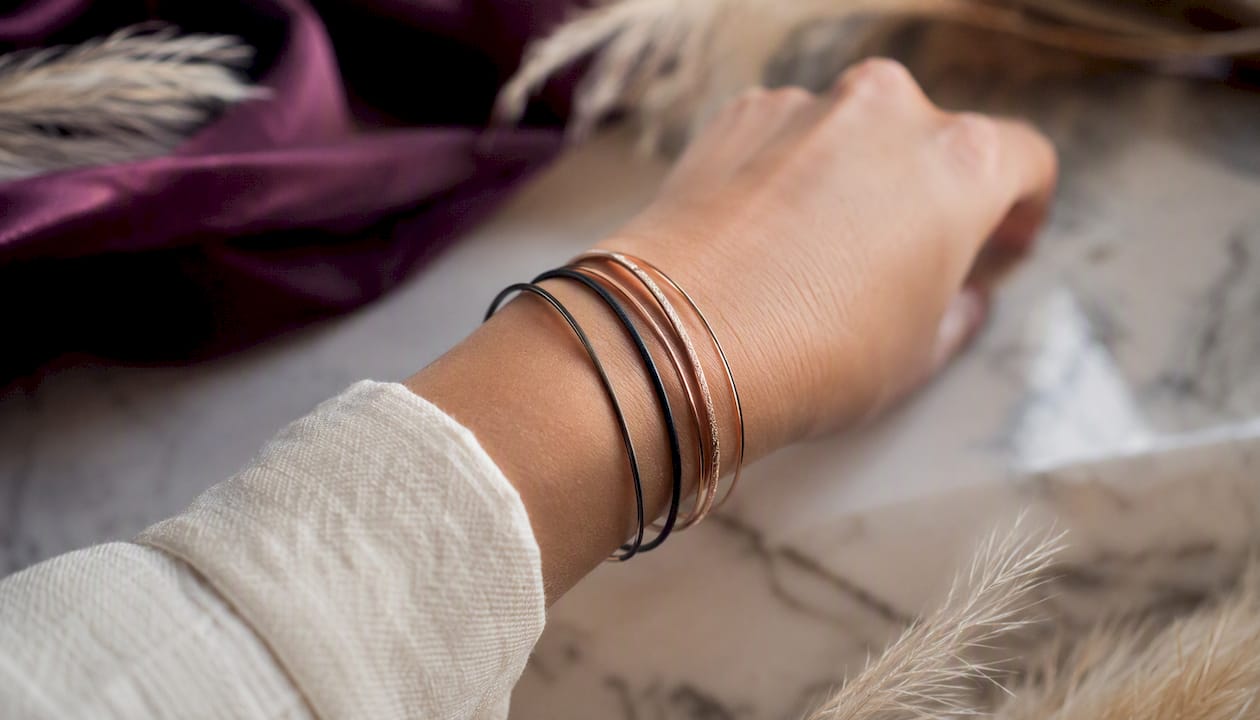
- Stacked cuff bracelet — wear one wide cuff solo or two thin ones together
- Cocktail or architectural ring — ready-to-wear; Merijaan’s lab-grown moissanite rings are a strong ethical pick here
- Y-necklace or lariat — ready-to-wear; maps perfectly to a V-neck or plunging neckline
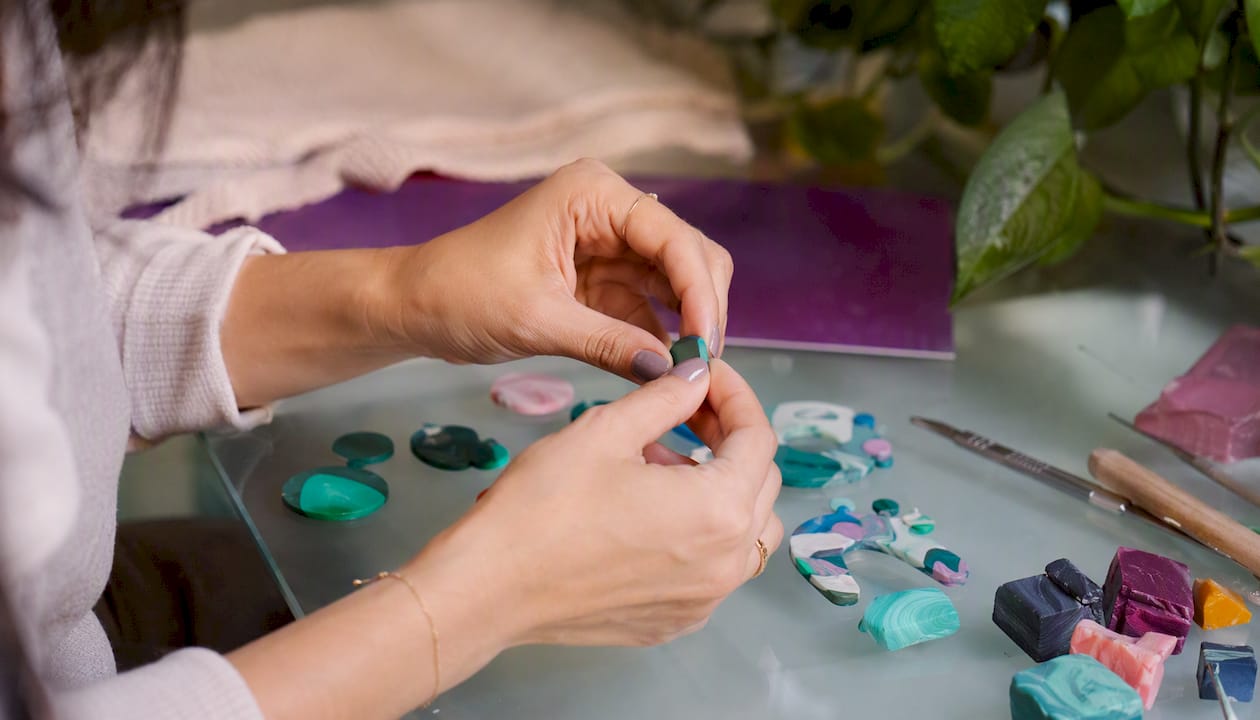
- Polymer clay (FIMO) pendant or earrings — DIY; beginner-friendly with no metalworking tools needed
- Pearl-cluster ear cuff — ready-to-wear; no piercing required, instant impact
Key Takeaways
Statement jewelry works best when one piece leads and everything else supports — that single rule covers most styling decisions you’ll face.
| Point | Details |
|---|---|
| One star piece per outfit | Visual hierarchy means one dominant piece; keep other jewelry minimal in the same zone. |
| Match necklace to neckline | V-necks suit Y-necklaces; crewnecks suit long pendants; off-shoulder styles suit chokers. |
| DIY: go hollow or thin-walled | Hollow resin cores and thin polymer clay walls keep large pieces light enough to wear comfortably. |
| Check weight and stamps before buying | Look for metal stamps (925, 585) and hold the piece to assess real weight before committing. |
| Merijaan for ethical ready-made options | Lab-grown moissanite, lifetime warranty, and unlimited exchanges make Merijaan a strong alternative to DIY or fast-fashion statement pieces. |
Table of Contents
- What are the best statement jewelry ideas by type?
- How do you style statement jewelry so it looks intentional?
- How to make your own statement pieces at home
- What statement jewelry trends should you know for 2026?
- How do you pick statement jewelry worth buying?
- How do you care for statement jewelry?
- How do you combine statement pieces with other accessories?
- Where can you find budget-friendly materials and kits for DIY statement jewelry?
- Why statement jewelry is really about storytelling
- Merijaan: ethical statement jewelry, ready to wear
- Sources
What are the best statement jewelry ideas by type?
Necklaces
The chunky chain is the easiest entry point: a single gold or silver link chain in a 20–24 inch length reads bold without effort. For DIY, an epoxy resin pendant cast around an aluminum wire armature gives you a sculptural, high-gloss focal point at a fraction of retail cost. A lariat or Y-necklace is the most neckline-specific option — it draws the eye downward and works best on V-necks or open collars. Layering two chains at different lengths (statement ketten kombinieren) works when one chain is clearly dominant in scale.
Pro Tip: If you layer two necklaces, make sure one is at least 4 inches longer than the other — identical lengths create visual clutter, not depth.
Earrings
Oversized geometric hoops in enamel or resin are the fastest way to shift an outfit’s energy. A sculptural drop earring — asymmetric, architectural, or featuring a bold color block — works especially well with a simple crewneck or a sleek bun. For DIY, polymer clay (FIMO) earrings are the most beginner-friendly option: no molds, no casting, just shape, bake, and attach a finding.
Bracelets
A single wide cuff worn on one wrist is a complete statement on its own. Stacking two or three thin bangles in mixed metals (gold + oxidized silver, for example) reads as intentional when the metals share at least one common finish. For DIY, a resin bangle cast in a silicone mold with embedded dried botanicals or metallic foil is an intermediate project that produces a genuinely unique piece.
Rings
A cocktail ring — wide band, large center stone, or sculptural setting — is the most concentrated form of statement jewelry. It works on a bare hand with no other rings, or as the anchor in a two-ring stack where the second ring is a plain thin band. Merijaan’s women’s rings collection includes lab-grown moissanite options that deliver genuine sparkle without the ethical or financial weight of mined stones.
Brooches
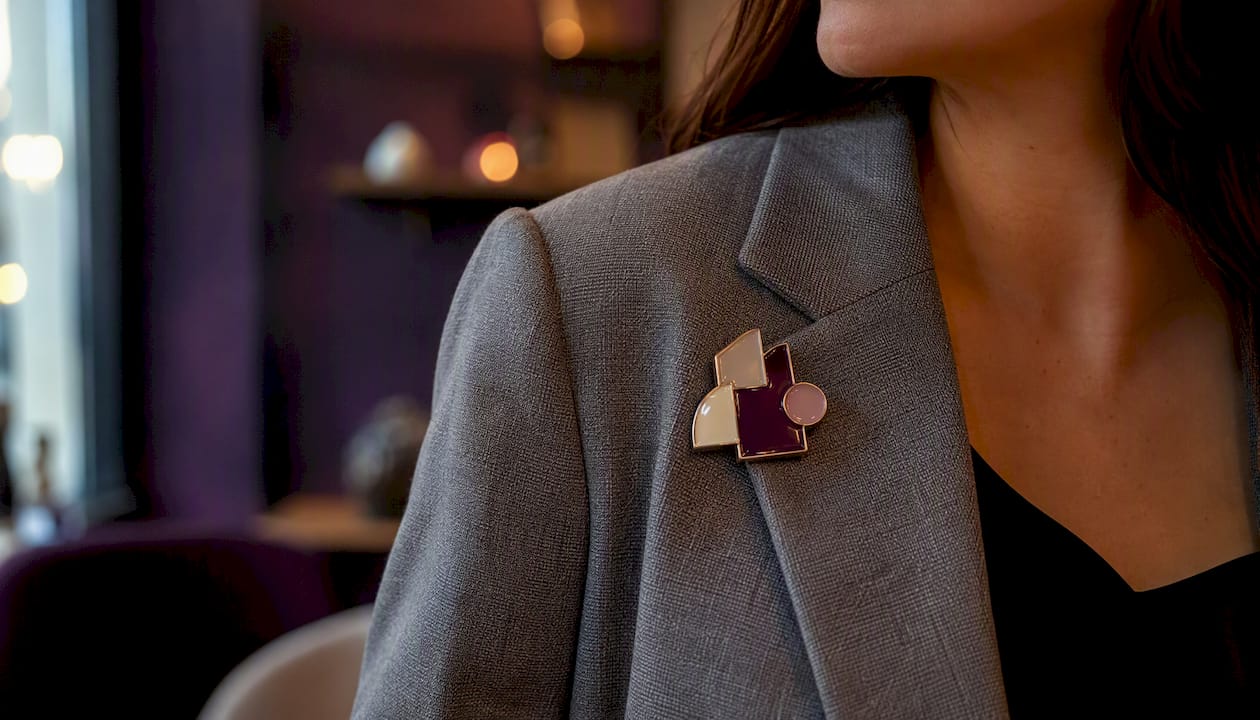
The brooch is the most underused statement piece in most wardrobes. Pin an architectural enamel or resin brooch to a blazer lapel, a coat collar, or even a denim jacket pocket. Asymmetric placement (slightly off-center) reads more editorial than a centered pin. DIY difficulty: intermediate, since findings need to be securely attached to heavier clay or resin forms.
How do you style statement jewelry so it looks intentional?
The direct answer: build your outfit around a neutral canvas, then let one piece do all the talking. Plain colors, simple cuts, and minimal pattern give the jewelry room to read clearly. Styling guides consistently recommend pulling hair back when wearing statement earrings or necklaces — visibility matters as much as the piece itself.
Neckline-to-necklace mapping
| Neckline | Best necklace type | Notes |
|---|---|---|
| Crewneck | Long pendant or chunky chain | Sits below the neckline; adds length |
| V-neck | Y-necklace or lariat | Follows the V’s natural line |
| Turtleneck | Long chain or layered strands | Short necklaces disappear; go 28"+ |
| Off-shoulder | Choker or collar necklace | Frames the collarbone directly |
| Scoop neck | Bib necklace or short pendant | Fills the open space without competing |
For earrings, face shape matters more than neckline. Long drops lengthen a round face; wide hoops add width to an oval or long face. Studs and ear cuffs are shape-neutral.
Core styling rules
- Singular focus first. One dominant piece per zone (neck, ears, wrists, hands). Mixing a statement necklace with statement earrings usually cancels both out.
- Tie metals to the outfit’s undertone. Warm-toned fabrics (camel, rust, cream) read better with gold; cool tones (navy, gray, white) with silver or platinum.
- Scale to body proportion. Petite frames benefit from medium-scale pieces rather than truly oversized ones; taller frames can carry larger, more architectural forms.
- Distribute visual weight. A chunky earring without any wrist interest can feel top-heavy. A simple bracelet or ring on the opposite side balances the composition.
Pro Tip: For large statement earrings, choose hollow or resin constructions over solid metal — the visual scale stays the same but the weight on your earlobe drops significantly.
Pro Tip: Keep one or two subtle accessories in the mix (a thin ring, a delicate bracelet) rather than going completely bare everywhere else — total absence of secondary jewelry can look unfinished rather than minimal.
How to make your own statement pieces at home
Yes, you can make high-impact, lightweight statement jewelry at home using epoxy resin with aluminum wire or polymer clay (FIMO). Both methods skip professional casting equipment entirely.
Materials list (both projects):
- Epoxy resin + hardener (two-part, jewelry grade)
- Aluminum wire (18–20 gauge)
- Polymer clay: FIMO Soft and FIMO Effect for metallic or pastel finishes
- Silicone release molds or hand-shaped forms
- Sandpaper (400, 800, 1200 grit)
- Respirator mask, nitrile gloves
- Jewelry findings (ear hooks, jump rings, bail pins, clasps)
- UV resin or clear varnish for finishing
Project A: Resin + wire pendant or earrings (intermediate, 2–3 hours + 24-hour cure)
- Bend aluminum wire into your desired shape — an open geometric frame, a leaf, or an abstract loop.
- Seal the wire frame with tape or a silicone mold base to create a contained pour area.
- Mix epoxy resin and hardener per the manufacturer’s ratio; add pigment, foil, or dried botanicals if desired.
- Pour in thin layers (2–3 mm at a time) to avoid heat buildup; let each layer partially cure before adding the next.
- After full cure (24 hours minimum), remove the mold, sand edges from 400 to 1200 grit, and polish with a UV topcoat.
- Attach a bail pin or jump ring and connect to an ear hook or necklace chain.
Safety: Work in a ventilated space. Wear your respirator when sanding cured resin — the dust is a respiratory hazard. Gloves are non-negotiable when mixing uncured resin.
Pro Tip: Use a thin wire armature inside the resin pour rather than filling the entire form solid. A hollow or thin-walled piece at 3 cm diameter weighs a fraction of a solid cast — and your earlobes will thank you after an hour.
Project B: Polymer clay sculptural earrings or pendant (beginner, 1–2 hours + bake time)
- Condition FIMO Soft by kneading until pliable (2–3 minutes).
- Roll to 3–4 mm thickness and cut your shape with a craft knife or cookie cutter.
- Apply texture with a stamp, lace, or crumpled foil pressed into the surface.
- For metallic effects, layer FIMO Effect (gold, silver, or copper) on top and blend the edges.
- Press an embedded aluminum wire or stainless-steel pin into the back for structural support on larger pieces.
- Bake at 230°F (110°C) for 30 minutes per the clay manufacturer’s guidance; let cool completely before handling.
- Sand lightly if needed, then seal with a water-based varnish and attach findings.
Safety: Sand only in a ventilated area; clay dust from sanding is an irritant. Bake in a dedicated craft oven or a well-ventilated kitchen oven.
What statement jewelry trends should you know for 2026?
The 2025–2026 cycle is running on what stylists are calling refined maximalism: chunky shapes reinterpreted as sculptural, architectural pieces rather than purely flashy decorations. The trends worth tracking now, and how to translate each into something wearable:
- Chunky chains → Layer two chain necklaces at different lengths; let the heavier one sit at collarbone level. See the full 2026 jewelry trend breakdown for context on how this cycle is evolving.
- Sculptural and architectural forms → An asymmetric brooch or a single abstract resin earring worn solo (one ear only) is the most wearable version of this trend.
- Mixed metals → Pair a gold chain with a silver cuff; the key is keeping the finish consistent (both matte, or both polished) so the mix reads deliberate.
- Baroque and freshwater pearls → A pearl-cluster ear cuff or a pearl-drop pendant modernizes the material without the formal associations of a classic strand.
- Y2K echoes → Colorful enamel hoops, butterfly clips repurposed as hair-and-ear accessories, and chunky resin rings in candy colors. Best worn with one piece at a time to avoid costume territory.
Trend longevity tip: any of these reads more timeless when the material or proportion is slightly restrained. A chunky chain in a classic metal outlasts a neon acrylic version by years.
How do you pick statement jewelry worth buying?
A short checklist before you commit:
- Weight: Hold it. If a pair of earrings feels heavy in your palm, it will feel worse after two hours on your earlobes.
- Construction: Check that clasps, jump rings, and ear hooks are sturdy. A thin, flimsy finding on a heavy piece will fail quickly.
- Metal stamp: Look for stamps like 925 (sterling silver), 585 (14k gold), or 750 (18k gold). No stamp on a metal piece is a red flag for unknown alloys that may cause skin reactions.
- Surface finish: Rhodium plating and gold plating both wear off over time. Ask how thick the plating is, or look for solid metal or vermeil options for pieces you’ll wear often.
- Return and warranty policy: A large, bold piece is a commitment. A clear return window and a warranty signal that the maker stands behind the quality. Merijaan, for example, offers a lifetime warranty on its lab-grown moissanite pieces.
- Scale test: Hold the piece up near your face or wrist before buying. Photos often distort scale dramatically.
Red flags: no material markings, unclear or absent return policy, photos that only show the piece in isolation (never worn), and weight that feels disproportionate to the visual size.
How do you care for statement jewelry?
Statement pieces often have more surface area, more texture, and more mixed materials than everyday jewelry — which means they need a little more attention.
Store each piece separately in a soft pouch or lined box to prevent scratching. Resin and polymer clay are both sensitive to prolonged UV exposure, so keep DIY pieces out of direct sunlight when not in use. For metal-and-stone pieces, wipe with a soft, lint-free cloth after wearing to remove skin oils and product residue. Avoid submerging plated pieces in water; moisture accelerates plating wear at the edges and clasps.
For lab-grown moissanite pieces like those from Merijaan, a gentle soak in warm water with a drop of dish soap, followed by a soft-bristle brush and a thorough rinse, restores sparkle without risk. Never use ultrasonic cleaners on pieces with glued settings or mixed materials. Check clasps and jump rings every few months — a loose finding on a statement piece is easy to miss until the piece is lost.
How do you combine statement pieces with other accessories?
The rule is simpler than most people expect: one statement zone per outfit. If the statement is at your neck, keep your ears minimal (small studs or nothing) and your wrists quiet (one thin bracelet at most). If the statement is at your wrist — a wide sculptural cuff — then a simple pendant or no necklace, and plain rings or none.
Bags and belts count as accessories too. A structured, low-detail bag lets a bold necklace read clearly. A heavily embellished bag competes with almost any statement piece. The same logic applies to layering jewelry: layering works when one piece is clearly dominant and the others are supporting cast, not co-stars.
Shoes and statement jewelry rarely need to coordinate directly, but they should share a general register. A sculptural, avant-garde brooch reads oddly with very casual sneakers; a chunky chain necklace works fine with them. Match the energy, not the metal.
Where can you find budget-friendly materials and kits for DIY statement jewelry?
For resin projects, Craft Resin and ArtResin are two widely available two-part epoxy options sold at Michael’s, Joann, and Amazon, typically in the $20–$35 range for a starter kit. Aluminum wire (18–20 gauge) runs under $10 for a 30-foot spool. Silicone molds in geometric and organic shapes are available on Etsy and Amazon for $8–$15 per set.
For polymer clay, FIMO Soft and FIMO Effect starter sets are sold at Michael’s and on Amazon, usually $15–$25 for a multi-color pack. Staedtler’s own site carries project-specific kits that include clay, tools, and findings in one box. Jewelry findings (ear hooks, jump rings, bail pins) are cheapest bought in bulk on Amazon or from dedicated bead suppliers like Fire Mountain Gems, where a 100-pack of sterling silver ear hooks runs around $8–$12.
For ready-to-wear statement pieces at accessible price points, Merijaan’s summer sale necklaces offer lab-grown moissanite options at reduced prices — a strong alternative to mass-market fast-fashion jewelry when you want ethical sourcing without a luxury price tag.
Why statement jewelry is really about storytelling
Most styling advice treats statement jewelry as a volume problem to manage. Pick one piece, keep the rest quiet, done. That framing is useful but incomplete.
A statement piece is a declaration. The chunky chain you wear to a Monday meeting says something different from the sculptural resin earring you wear to a gallery opening, even if both follow the same visual-hierarchy rule. The piece you choose communicates your aesthetic fluency, your relationship to trend, and sometimes your values. Merijaan’s lab-grown moissanite jewelry is a good example of this: the sparkle is indistinguishable from mined diamonds to the naked eye, but the choice to wear an ethically sourced stone is part of the story the wearer tells. That layer of meaning is what separates a statement piece from a decoration.
The DIY angle adds another dimension. A polymer clay earring you shaped and baked yourself carries a provenance that no retail piece can replicate. Wearability and aesthetics matter, but so does the fact that you made it.
Merijaan: ethical statement jewelry, ready to wear
If the DIY route isn’t calling you right now, Merijaan offers a direct path to high-impact, ethically made statement pieces. The brand’s lab-grown moissanite produces genuine brilliance — the kind that catches light across a room — without the environmental or ethical cost of mined stones. Every piece carries a lifetime warranty, and the subscription club offers unlimited exchanges, so you’re not locked into a single look forever.
The women’s necklaces collection is the strongest starting point for statement-necklace ideas: sculptural pendants and bold chains in ethical moissanite, sized and finished for real wearability. For rings, the women’s rings collection includes cocktail and architectural styles that work as standalone statement pieces. Browse both collections at Merijaan and use the exchange policy to find the piece that actually fits your style.
Sources
- Statement-Schmuck richtig tragen: So setzen Sie Akzente ohne überladen zu wirken
- Statement-Schmuck aus Resin und Draht – Masterclass
- Schmuck selber machen aus FIMO Modelliermasse – Ideen und Anleitungen
- Statement-Schmuck feiert im Frühjahr 2025 DAS Trend-Comeback – so stylen Modeprofis chunky Ketten, Ohrringe & Co.

