

Moissanite does not resell like a natural diamond, and it was never meant to. It is a lab-made stone, priced for wearing rather than for trading, so the realistic resale value is a fraction of what you paid. The smart way to look at it: you save a large amount at the start, and you enjoy the sparkle every day. This guide explains what drives secondhand value, what is specific to Switzerland, and how to buy so you stay in control.
TL;DR
- Moissanite is lab-created, so it lacks the natural scarcity that supports diamond resale prices. Plan to wear it, not to sell it.
- Its value comes from brilliance, hardness and a much lower entry price, not from a resale market.
- In Switzerland, the precious metal (gold, silver, platinum) in a piece is regulated, and the metal is often what a buyer actually prices.
- Keep the box, paperwork and a clean, undamaged piece. These matter more than any promise of a buyback.
- Compare cost per year of wear, not resale percentage. That is where moissanite shines.
Table of Contents
- Can moissanite be resold at all?
- How moissanite resale compares with diamonds
- Why there is no standard resale price
- What affects secondhand value in Switzerland
- Five habits that protect whatever value your piece has
- How to estimate value before you buy
- Is moissanite an investment?
- Perspective
- Choose a piece you will keep wearing
- What to do if you still want to sell
- FAQ
- Sources
Can moissanite be resold at all?
Yes, you can sell it. Moissanite jewelry changes hands through online marketplaces, consignment, private sales and jewelers who take pieces in part exchange. What you should not expect is a strong price relative to your purchase.
The reason is simple. GIA states that all moissanite used in jewelry is lab-created, because gem-quality natural moissanite is extremely rare, and that laboratory-created gems lack the natural scarcity that contributes to perceived value and prestige. A secondhand buyer compares your piece with a brand-new one that costs about the same as your used one, so there is little reason to pay a premium.
That is true for most fashion and fine-fashion jewelry, and it is not a flaw. A coat does not gain value when you hang it back in a shop either. You buy moissanite for what it does on your hand, at a price that makes sense for a statement piece.
How moissanite resale compares with diamonds
People often assume diamonds are safe stores of value. In practice, even for diamonds the resale market is thin, and the gap depends on the type of diamond.
| Stone | What drives secondhand price | Typical expectation |
|---|---|---|
| Natural diamond | Natural scarcity, certificate, size, brand | Strongest resale, still well below retail |
| Lab-grown diamond | Falling production costs | Resells for roughly 20 to 35% of current retail, per a 2026 US comparison |
| Moissanite | Low entry price, no grading standard, fashion demand | Modest, and best treated as a bonus rather than a plan |
The lab-grown diamond figure comes from a US source, so treat it as a benchmark for how lab-made stones behave, not a Swiss price list. The pattern is the useful part: when a stone can be produced at scale, its price falls over time, and the resale price follows.
Moissanite sits at a lower price point to begin with. That means the franc amount you could lose in absolute terms is also smaller. A smaller outlay with a similar visual impact is a different kind of value than a store of wealth.
Why there is no standard resale price
Several things make moissanite hard to price secondhand:
- No grading reports from the major labs. According to the same 2026 comparison, moissanite is sold by millimeter rather than carat, it is laboratory-synthesized, and GIA and AGS do not grade it. Without a universal grade, two sellers can describe the same stone very differently.
- Color matters. GIA notes that the value of synthetic moissanite often depends on its degree of colorlessness. A near-colorless stone is easier to sell than one with a visible tint.
- Different material. Moissanite is silicon carbide rather than carbon, and its birefringence causes facet doubling, which is part of why it looks different from a diamond. Buyers who want a diamond will not pay diamond prices for it, while buyers who want sparkle may be very happy.
- Setting and metal. A sterling silver piece plated in gold has a different secondhand story from a solid gold one.
If you want to see what a stone costs new, our guide to moissanite value in Switzerland walks through how size and color affect pricing.
What affects secondhand value in Switzerland
Switzerland adds a layer most guides written for other countries miss: precious-metal regulation.
Hallmarks and responsibility marks
The Federal Office for Customs and Border Security (FOCBS) says that precious-metal articles must carry a legal fineness mark and a registered responsibility mark, regardless of origin. This covers gold, silver, platinum and palladium articles, including jewelry. A piece with proper marks is simpler for a Swiss dealer to take in. A piece with missing marks needs extra checking.
How professional buyers handle jewelry
Swiss law defines old precious metal to include jewelry containing precious metals and scraps. Professional buyers must document the purchase price, the customer’s identity and the weight, to comply with the Precious Metals Control Act. Registration or authorization has been required for this trade since 1 January 2024. So if you sell to a professional, expect to show ID and have the piece weighed.
The official guidance also separates secondhand jewelry bought for resale from old metal bought as melt material. It warns that used pieces may have missing marks, lower fineness parts or other defects that need inspection before reuse or resale. In plain terms: a clean, fully marked, undamaged piece is easier and more valuable to sell than a worn or repaired one.

No official appraisal
The same guidance says the precious metals control offices cannot provide an official estimate of value, an authenticity evaluation or a condition assessment. If you want a valuation, you will need a private jeweler or appraiser, and it is worth asking what they charge before you hand over the piece.
Buying abroad and counterfeits
Swiss customs also warns that apparent bargains in jewelry and watches bought abroad can be defective or counterfeit, recommends recognized specialist shops, and says forgeries must be confiscated and destroyed. A piece with unclear origin will be harder to resell, so buy from a seller with a clear returns and warranty policy.
Five habits that protect whatever value your piece has
- Keep the original box, receipt and product page. A buyer wants proof of what the piece is and when it was bought.
- Choose near-colorless stones and classic shapes. Round, oval and solitaire designs have wider appeal than very trend-driven shapes.
- Protect the setting. Moissanite is very hard. GIA puts its Mohs hardness at 9.25, so the stone resists scratches; the metal around it is what shows wear first. Store pieces separately and take rings off for heavy work.
- Know the heat limits. Our guide to moissanite heat resistance explains what the stone can and can’t take, which matters if you ever repair or resize a piece.
- Insure what is worth insuring. If a piece is important to you, see our notes on care and insurance for Swiss buyers.
How to estimate value before you buy
Resale is the wrong first question. These are better:
What is the cost per wear? A ring you wear four days a week for five years is used well over a thousand times. Divide the price by that number and the figure is small, even for a piece you would struggle to resell.
What is the price gap against the alternative? If a moissanite piece gives you a similar look at a fraction of the cost of a diamond one, the savings are real on day one. They do not depend on a future buyer. For a side-by-side look at hardness, brilliance and price, read our moissanite vs. diamond comparison.
What does the seller promise if you change your mind? A warranty and an exchange policy can be worth more to you than a hypothetical resale price. Read what is covered before you pay. We explain how exchanges work for Swiss customers in our guide on unlimited jewelry exchange and the club option.
Is the metal real and marked? If a piece contains precious metal, the marks tell you what you have, and that part of the value is easier to defend later.
A worked way to think about it
Take two hypothetical rings, with made-up numbers to show the logic. Ring A costs CHF 3,000 and could resell for a part of that, say CHF 1,000. Ring B costs CHF 300 and resells for little or nothing. Ring A’s net cost is CHF 2,000 if you sell; Ring B’s net cost is CHF 300 at most. You are not out of pocket CHF 1,700 more with Ring B. You spent CHF 1,700 less and still wore a ring every day. Resale only wins if you actually sell, and most people keep their favorite pieces.

Is moissanite an investment?
No. It is a manufactured stone, and its worth is in wearing it. If you want an asset you can later liquidate, that is a job for investment-grade natural diamonds, bullion or similar, with their own risks and costs. The vintage market gives a sense of how emotional and brand-driven secondhand jewelry can be: the Financial Times reported in 2023, citing McKinsey’s Zurich partner Alexander Thiel, that vintage jewelry made up 5% of a $350 to 400 billion global jewelry market. That is a small slice, concentrated in pieces with a name and a history.
Moissanite belongs to a different category: beautiful jewelry you can afford to wear, replace or pass on without worry.
Perspective
We make moissanite jewelry because we think the best value in jewelry is the value you feel when you put a piece on. Resale is a fair question, and we would rather answer it honestly than promise something no lab-made stone can promise.
What we can say is this. A moissanite piece gives you a brilliant, durable stone at a price that does not ask you to treat your jewelry like a bank account. You can buy a statement ring, a tennis bracelet or a stack and wear them the way jewelry is meant to be worn.
It also matters to us where the money goes. We return 100% of our profits to the people who make our jewelry. Choosing a lab-grown stone keeps the sparkle and drops the mining. Our pieces come with a lifetime warranty, and club members get unlimited exchanges, so the way you can change your mind is built into the purchase rather than depending on a secondhand buyer.
Ammar
Choose a piece you will keep wearing
If you want something that looks like a splurge without the splurge price, start with the pieces that suit everyday wear. Our vintage rings and women’s rings are made with lab-grown moissanite, a lifetime warranty and ethical sourcing, and 100% of our profits return to the people who make them.
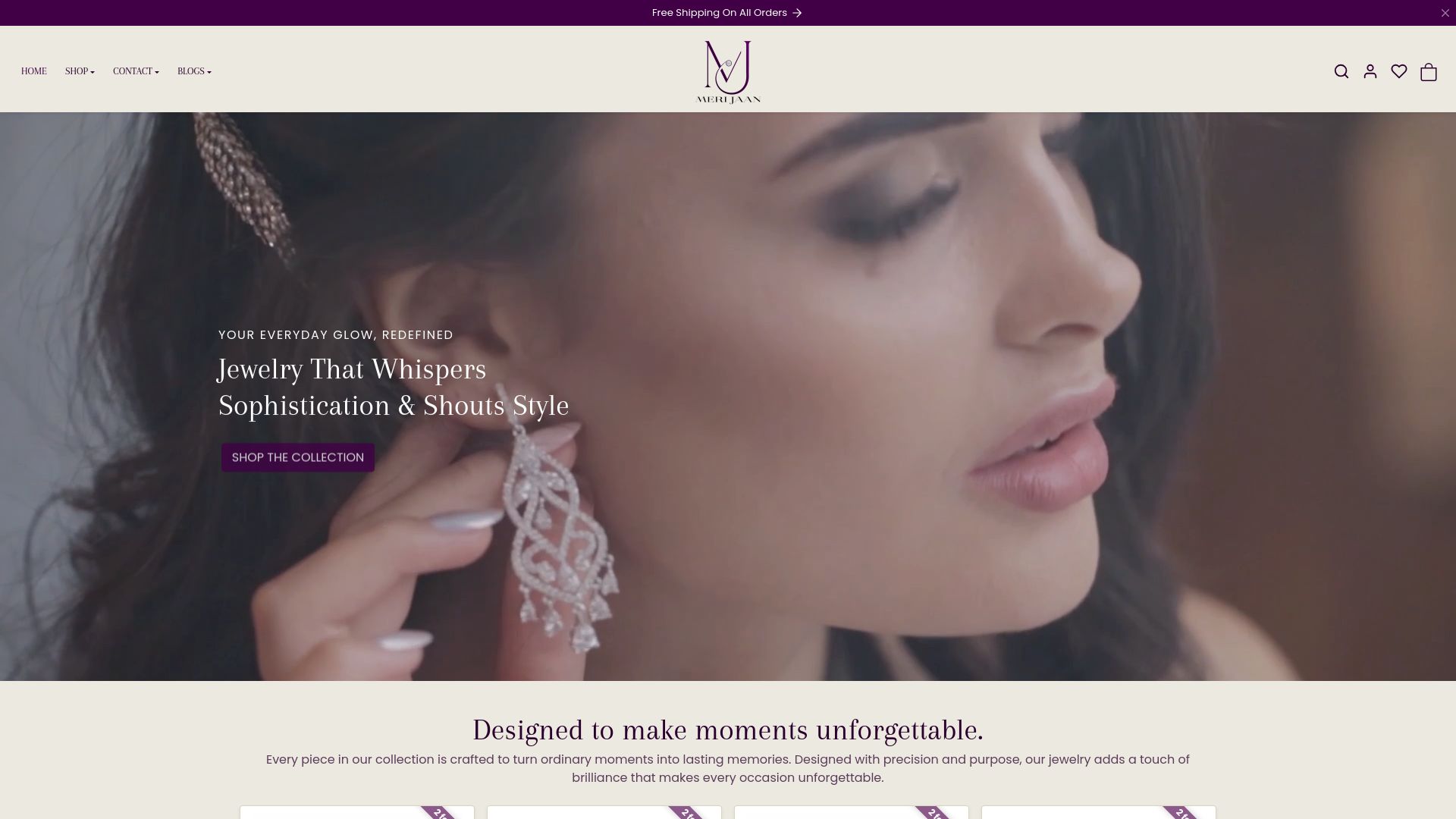
Prefer a different style? Browse tennis bracelets, necklaces or the full range on merijaan.co. Prices and availability are on each product page.
What to do if you still want to sell
Sometimes plans change. If you decide to sell a moissanite piece, work through this order:
- Check your warranty or exchange options first. Exchanging may give you more than a sale would, and it avoids the hassle.
- Gather everything. Box, receipt, product details, and photos in daylight.
- Describe it accurately. Say it is lab-created moissanite, give the size in millimeters, the color, the metal and its marks. Do not describe it as a diamond.
- Choose the channel. Private sale or marketplace usually gives a higher price than a dealer, but takes more time. A dealer is faster but must record the purchase and your identity under Swiss rules, and may price mainly the metal.
- Be ready for a modest number. A realistic expectation avoids disappointment and helps you decide quickly.
If you are unsure what you have, ask a qualified jeweler. Remember that Swiss metals control offices do not provide official valuations or authenticity checks, so that is a private service.
FAQ
Does moissanite hold its value?
Not in the way a natural diamond does. Lab-created stones lack natural scarcity, and moissanite has no universal grading standard, so secondhand prices are modest. Its real value is the low purchase price and the durability that lets you wear it daily.
Is moissanite a real gemstone?
Moissanite is a genuine gem material, silicon carbide, but the moissanite used in jewelry is made in a laboratory because natural gem-quality crystals are extremely rare. It is not a diamond, and it looks different: it has strong fire and a slightly different sparkle. Our article on lab-grown moissanite and the science behind the sparkle explains how it is made.
Can I sell moissanite jewelry to a Swiss jeweler?
Some jewelers take pieces in, but many focus on precious metal or brands they know. Professional buyers in Switzerland must record the purchase price, your identity and the weight of the piece, so bring ID. Ask what they pay for the stone and what they pay for the metal separately.
How do I know if moissanite is worth buying?
Compare the price with how often you will wear it, and check the warranty, exchange terms and metal marks. If the piece gives you the look you want at a price you are comfortable with, it is good value regardless of resale. For price ranges, see our guide on lab diamond and moissanite pricing.
Is moissanite as durable as a diamond?
It is very close for everyday wear. GIA lists its Mohs hardness at 9.25, compared with 10 for diamond, and it is known for brilliance, intense fire and durability. Our guide to moissanite brilliance shows how that translates into sparkle.
Sources
- GIA: An Introduction to Imitation Diamonds and Other Gems
- GIA 4Cs: Diamond Alternatives for Engagement Rings
- Diamond Critics: Round Diamond vs Moissanite, 2026 Comparison
- FOCBS: Professional purchase of old precious metals
- FOCBS: Precious metals control, goods traffic
- FOCBS: Guideline on precious metals control
- FOCBS: Buying watches, jewellery and precious metals abroad
- Financial Times: Platforms race to take a slice of the vintage jewellery market

