

For maximum balanced sparkle, choose a round brilliant. For the biggest face-up size per budget, look at cushion or oval. For an architectural, quieter look, choose emerald. For daily durability, prioritize cuts with rounded or protected corners. Whatever shape you land on, verify it against seller video and check that it fits your intended setting before you buy. The details on each tradeoff follow below.
TL;DR:
- Only the round brilliant cut has a standardized grade that reliably predicts light performance, whereas fancy shapes require visual verification with videos and high-resolution photos.
- Shapes with open tables, sharp points, or elongated designs, such as emerald, pear, marquise, and trillion, need careful scrutiny of light and symmetry before purchase.
- Protect fragile points with V-prong or bezel settings to prevent chipping while optimizing light entry through fewer prongs for better brilliance.
- Request specific evidence like a 360-degree video, light map images, and precise proportions to assess fancy-shaped moissanite before buying.
- Use electrical conductivity testers or certificates for definitive identification, as thermal testers can mistake moissanite for diamond.
Table of Contents
- How cut controls a moissanite’s brightness, fire and scintillation
- A quick catalogue of common moissanite cuts and who they suit
- How to choose the right cut: a buying checklist
- Settings and protection: pairing cuts with prongs and bezels
- Evaluating fancy shapes visually before you buy
- Identification, care and common buyer pitfalls
- A jeweler’s honest take on cut and setting choices
- Your next step: picking a cut from Meri Jaan
- Sources
- FAQ
How cut controls a moissanite’s brightness, fire and scintillation
A gem’s cut determines three things you actually see when you look at it: brightness, fire and scintillation. Brightness is the white light bouncing straight back at your eye. Fire is the rainbow flash you get when light splits into color as it exits the stone, a property gemologists call dispersion. Scintillation is the on-off sparkle pattern you notice when the stone or your hand moves. GIA defines these three properties as the core metrics for judging cut performance, and they apply just as much to moissanite as to diamond.
Statistic: Moissanite carries notably higher dispersion than diamond, which is why a well-cut moissanite throws more visible rainbow fire in direct light than a diamond of comparable size and shape. That extra fire is the single biggest optical difference buyers need to plan around when picking a cut and a setting, a point covered in more depth in our comparison of moissanite and diamond brilliance.
Here is the catch: only the round brilliant cut carries a standardized, universal cut grade from GIA. Princess, cushion, oval, pear and the rest of the fancy shapes have no equivalent scorecard. That means a “very good” polish and symmetry rating on paper tells you almost nothing about how a fancy-shaped stone actually performs in your hand. You have to look at the light yourself, or ask for evidence that someone else has.
That evidence comes in four forms, and you should request all of them before buying a fancy cut:
- A 360-degree video of the actual stone, filmed under normal indoor light and near a window, not under a jeweler’s spotlight.
- An ASET or IdealScope image, which uses colored light maps to show where light is escaping instead of returning to your eye.
- High-resolution macro photos from at least two angles, showing the crown and the pavilion.
- Written proportions: table percentage, depth percentage, and length-to-width ratio for elongated shapes.
Our breakdown of what makes a gemstone sparkle covers the underlying optics in plainer terms if you want the fundamentals before you shop.
A quick catalogue of common moissanite cuts and who they suit
Each shape trades size, sparkle style and durability differently. Scan the list below to shortlist two or three before you dig into proportions.
- Round brilliant. The most researched cut for light performance, with 57 or 58 facets built to maximize brightness and fire evenly. It hides inclusions well and suits almost any setting, though it returns the smallest face-up size per carat weight of any shape on this list.
- Princess. A square cut with pointed corners that reads larger than round for the same weight and shows a checkerboard sparkle pattern. The corners are the weak point, so a V-prong or protective setting matters more here than on any other shape.
- Cushion. A softened square or rectangle with rounded corners, popular for its warm, fire-heavy look and forgiving durability. Poorly proportioned cushions show windowing, a washed-out patch in the center where light passes straight through instead of bouncing back.
- Oval. Elongated and face-up large, oval is the shape most prone to a bow-tie, a dark shadow running across the center that shifts with viewing angle. Video review before purchase is essentially mandatory for this shape.
- Emerald. A step-cut rectangle with an open table that shows fewer, larger flashes of light instead of the tiny scintillation of a brilliant cut. It suits buyers who want an architectural, quieter look, but its open facets mean inclusions and cutting flaws are harder to hide.
- Pear. A teardrop shape that combines a rounded end with a pointed tip, prone to both bow-tie near the center and a fragile point that needs protection. It suits buyers who want an elongated look with a bit more personality than oval.
- Radiant. A cropped-corner rectangle or square cut with brilliant-style facets rather than step facets, giving it more fire than emerald with slightly more forgiveness for inclusions. It is a solid middle ground for buyers torn between emerald’s structure and round’s sparkle.
- Marquise. A narrow, pointed-oval silhouette that maximizes apparent size and finger coverage more than almost any other shape. Both tips are fragile and prone to chipping, so protective prongs are non-negotiable.
- Trillion. A triangular cut most often used as a side stone rather than a center stone, valued for bold geometric sparkle. Its three points all need protection, making it a poor fit for daily-wear rings unless bezel-set.
- Heart. A romantic, symmetrical shape that is genuinely difficult to cut well: the cleft and the two lobes must match precisely, or the whole stone looks lopsided. It suits buyers prioritizing sentiment over low-maintenance wear.
Shapes with open tables, sharp points, or elongated silhouettes (emerald, pear, marquise, trillion) reward the extra scrutiny described in the sections ahead. Round, cushion and radiant are the more forgiving choices if you would rather not spend time evaluating proportions.
How to choose the right cut: a buying checklist
Start by naming your own priority, because it determines everything else. Then work through the steps below in order.
- Identify your main goal. Decide whether you want maximum sparkle (round, radiant), the biggest face-up size for your budget (cushion, oval, marquise), an understated architectural look (emerald), or maximum durability for daily wear (round, cushion, bezel-set anything).
- Shortlist two or three shapes. Use the catalogue above to match your goal to a short list rather than a single shape, since setting and lifestyle often shift the final decision.
- Request seller evidence. Ask for a 360-degree video, an ASET or IdealScope image if the seller has one, and the exact table, depth and length-to-width proportions for the specific stone you are considering, not a generic listing photo.
- Confirm setting compatibility. Check that your chosen shape works with the setting style you want. A pear or marquise needs V-prongs; an emerald needs a setting that supports its rectangular outline without exposing the corners.
- Ask about the return policy before you pay. A cut that looks right in a photo can look different on your hand, so confirm you can exchange or return the piece if it does not perform the way you expected.
Pro Tip: If a seller cannot produce a video of the actual stone, ask why, because a generic stock photo tells you nothing about how that specific gem handles light.
Settings and protection: pairing cuts with prongs and bezels
The setting changes both how safe your stone is and how much light reaches it, so the pairing matters as much as the cut itself.
- Fragile-corner shapes (princess, pear, marquise, trillion) do best in V-prong or bezel settings, which cover and reinforce the vulnerable points instead of leaving them exposed to knocks.
- High-fire shapes (round, radiant, cushion) can look calmer and more refined in a lower-profile setting, since less metal exposure around the crown slightly softens the intensity of the flash.
- Active lifestyles favor low-profile or full bezel settings across almost any shape, since a raised prong setting catches on fabric, hair and gym equipment far more than a flush-mounted stone.
- More prongs generally mean more security but also more metal blocking light entry, so a six-prong setting protects a stone better than four prongs while very slightly muting its face-up brilliance.
Pro Tip: A higher prong count reads as a bigger, more substantial setting even on a modest stone, so if you want your ring to look more “set” without upsizing the gem, add prongs rather than carats.
Our guide to moissanite’s daily wear durability goes deeper on which setting and shape combinations hold up best over years of use, and our notes on choosing cuts for active lifestyles covers gym, manual work and travel scenarios specifically.
Evaluating fancy shapes visually before you buy
Since fancy shapes lack a formal grade, you are the inspector. For ovals and pears, request a 360-degree video and watch for a bow-tie: a dark band across the center of the stone that some guides grade on a five-tier severity scale, with a length-to-width ratio in a moderate range generally balancing elongation against bow-tie visibility. A more elongated oval tends to show a stronger bow-tie, so decide how much shadow you are willing to accept before you commit to a very slim silhouette.

For cushions and radiants, look for windowing, a flat, glassy patch near the center that signals the table and depth proportions are letting light pass straight through instead of returning to your eye. A stone with visible windowing in normal room light will show the same flaw on your hand.
For marquise and pear shapes, check that the point sits centered and that both halves of the outline mirror each other. An off-center point or lopsided lobe is a cutting flaw, not a design feature, and no amount of setting can hide it once the ring is on your finger.
Identification, care and common buyer pitfalls
Standard thermal diamond testers can misread moissanite as diamond because moissanite conducts heat in a similar range. Definitive identification requires an electrical conductivity tester or laboratory spectroscopy, or simply a clear certificate from a seller who states the stone’s identity plainly.
Clean moissanite with warm water, mild dish soap and a soft brush every few weeks. Oil and lotion buildup dulls fire faster on moissanite than on diamond because of how strongly it disperses light in the first place.
The most common buying mistakes are skipping the video request, choosing a fragile-corner shape without a protective setting, and mistaking intense fire for a flaw rather than a known trait of the material.

A jeweler’s honest take on cut and setting choices
Meri Jaan builds everyday jewelry around lab-grown moissanite, and the cuts we return to most often are round, oval and cushion because they balance sparkle with we arability for daily use. We favor V-prong and bezel details on any shape with a vulnerable point or corner, not because it looks better, but because it holds up. If a cut or setting does not sit right on your hand once you have it, that is a fit problem worth fixing rather than living with. Request a 360-degree video of your specific stone before you order, and use the return process if what arrives does not match what you expected.
— Ammar
Your next step: picking a cut from Meri Jaan
Choosing a cut is easier once you can compare real pieces instead of theory. Meri Jaan builds rings, necklaces, bracelets and earrings around lab-grown moissanite, each priced without the markup that comes with mined stones, and backed by a lifetime warranty on the piece itself.
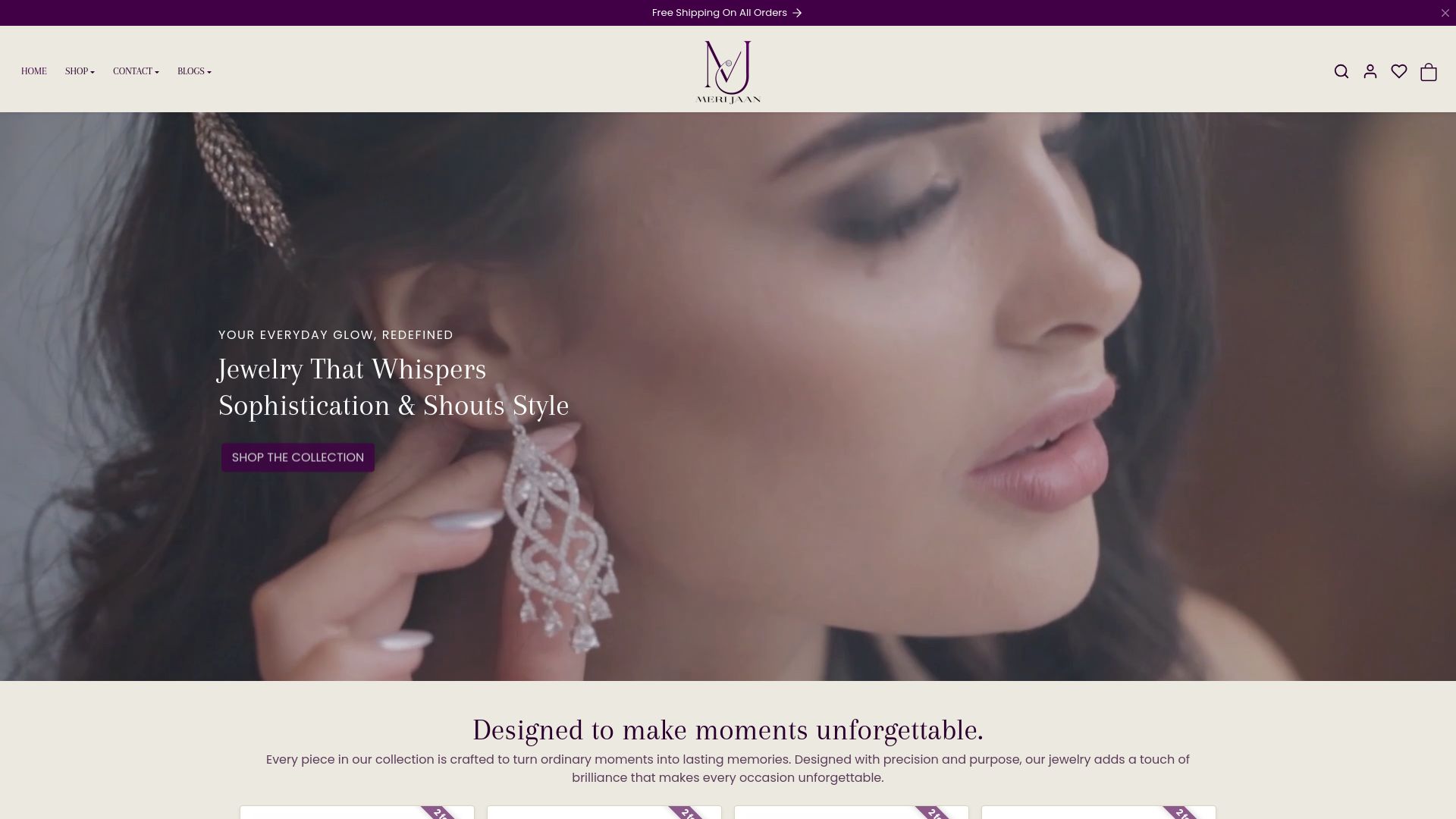
A few starting points if you know your priority:
- Want maximum sparkle in a classic silhouette: browse our women’s rings for round and cushion options.
- Want a face-up-large, romantic shape: our vintage rings collection leans toward cushion and oval cuts in detailed settings.
- Prefer a pendant over a ring: our women’s necklaces collection shows how the same cuts read differently in a drop setting.
If you are unsure which cut suits your hand or your lifestyle, contact us for a 360-degree video of the specific piece you are considering before you order. Club members get unlimited exchanges if the cut or setting is not right once it arrives. Start browsing at Merijaan.
Sources
FAQ
Is moissanite considered a valuable gemstone?
Moissanite has real value as a durable, brilliant gem with Mohs hardness around 9.25, but it does not hold the resale market or pricing history that mined diamonds do. Its value comes from its performance and affordability rather than rarity or investment potential.
Is moissanite better than diamond?
Neither is strictly better: moissanite shows more fire (rainbow flash) than diamond and costs far less, while diamond is prized for its rarity, market history and calmer, whiter sparkle. The right choice depends on whether you prioritize brilliance and budget or traditional diamond status.
What cut types exist for gemstones in general?
Common gemstone cuts fall into a handful of families: round and other brilliant cuts (princess, cushion, oval, radiant, marquise, pear, heart, trillion) and step cuts like emerald and asscher, which use flat, parallel facets instead of triangular ones. Each family produces a distinct sparkle pattern, from the fiery scintillation of a brilliant cut to the calmer, mirror-like flashes of a step cut.
Which is better, moissanite or cubic zirconia?
Moissanite outperforms cubic zirconia on durability and long-term sparkle retention, since it sits much higher on the Mohs hardness scale and resists scratching and clouding far better over years of wear. Cubic zirconia is cheaper up front but tends to lose its shine and pick up a duller, glassy look sooner than moissanite does.

