

Carat measures weight, not size, and one carat equals 0.20 grams no matter what stone you’re weighing. Because moissanite is slightly less dense than diamond, a moissanite of the same carat weight usually shows a bit more face on your finger. A 5.0 mm round runs about 0.5 carat, and a 6.5 mm round is the number most shoppers use as their 1.0 carat visual benchmark.
TL;DR:
- A one-carat moissanite weighs 0.20 grams, but its face size appears larger than a diamond of the same weight due to lower density.
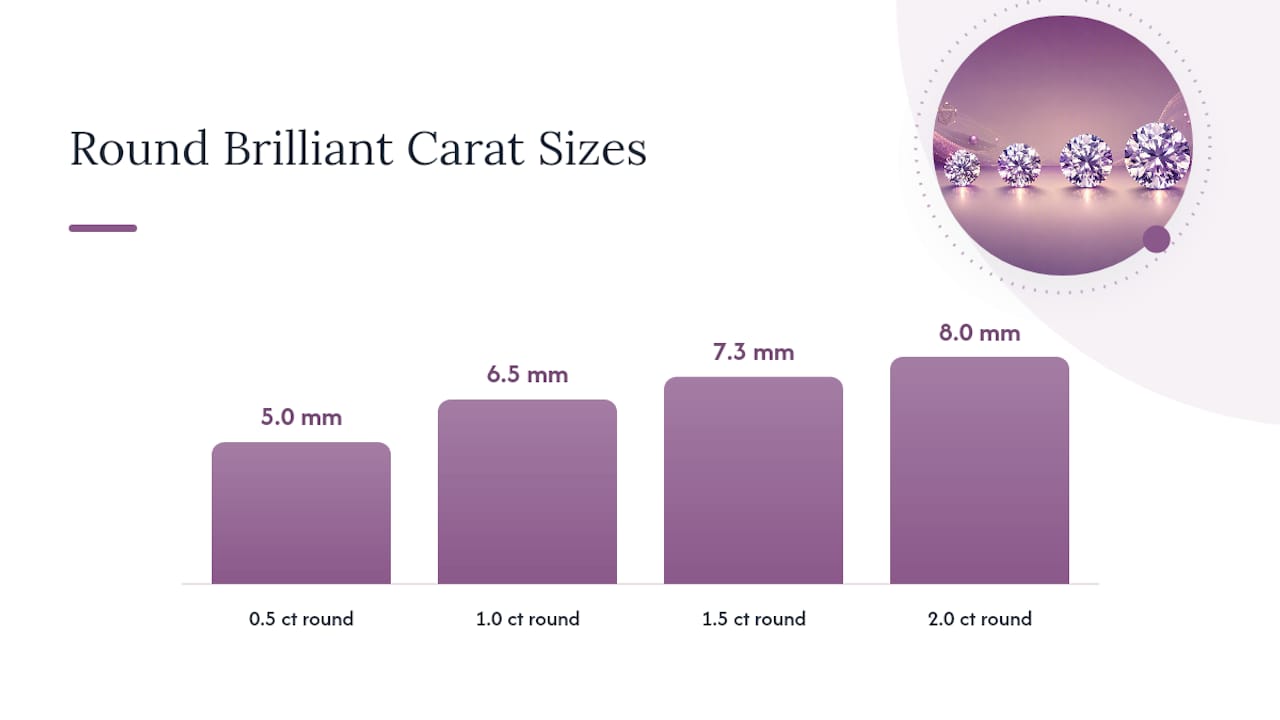
- Relevant size benchmarks include 5.0 mm for 0.5 carats, 6.5 mm for 1.0 carats, 7.3 mm for 1.5 carats, and 8.0 mm for 2.0 carats, for round stones.
- A moissanite’s actual weight is often less than its diamond equivalent weight due to density differences, with typical 6.5 mm stones weighing around 0.88 carats.
- Shape and setting style significantly influence perceived size, with elongated cuts and halo settings making stones appear larger.
- Meri Jaan lists precise millimeter measurements, actual carat weight, and diamond equivalent weight to avoid buyer confusion and mismatch.
Table of Contents
- Understanding Moissanite Karat Grösse: The Full Size Chart
- Why Does Weight Differ From Physical Size?
- How Shape and Setting Change the Way a Stone Looks
- How Do I Choose the Right Moissanite Size?
- Why Meri Jaan’s Size Reporting Is Different
- Why We Report Size the Way We Do
- Not Sure Which Size Fits You? Start Here
- Where These Numbers Come From
- Sources
Understanding Moissanite Karat Grösse: The Full Size Chart
Once you know your target millimeter size, the carat weight follows a fairly predictable curve. It’s not linear (a stone twice as wide isn’t twice the weight; it’s closer to eight times, since volume scales with the cube of the diameter), which is why size charts exist in the first place. Below is the round brilliant breakdown most retailers use, including Charles & Colvard, the company that pioneered lab-grown moissanite jewelry.
Fancy shapes don’t follow the same numbers because they distribute weight differently across their outline. An oval or pear looks bigger than a round of the same carat weight because more of that weight sits near the surface, spread across a longer outline, rather than piled up in a compact circle.
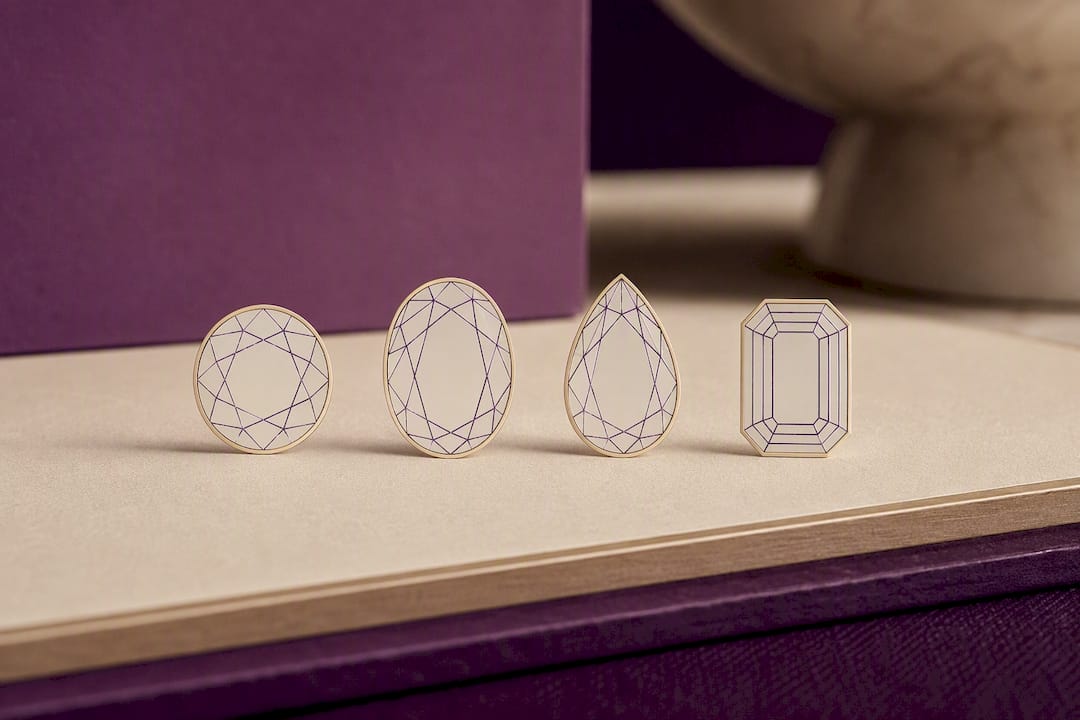
Look at that table again. Four completely different shapes, all landing near 1.75 carats, and all four will read differently on a finger. That’s the whole reason a millimeter chart matters more than a carat number when you’re actually shopping.
The four benchmarks most shoppers ask about, distilled from industry size charts, are these: 0.5 carat sits around 5.0 mm, 1.0 carat sits around 6.5 mm, 1.5 carat sits around 7.3 mm, and 2.0 carat sits around 8.0 mm for a round brilliant. Memorize those four pairs and you can mentally convert almost any listing you come across.
Why Does Weight Differ From Physical Size?
Carat weight and millimeter size diverge because moissanite and diamond aren’t the same density. Moissanite weighs approximately 3.21 grams per cubic centimeter, while diamond weighs approximately 3.52 grams per cubic centimeter, according to carat conversion data from Aurelia. Diamond packs more mass into the same volume, so at an identical millimeter diameter, a diamond will weigh slightly more than a moissanite cut to the same proportions.
Flip that comparison around and you get the effect buyers actually notice: a moissanite cut to look like a 1.0 carat diamond, at roughly 6.5 mm, will typically weigh less than 1.0 carat in raw moissanite terms, sometimes around 0.88 carat. Retailers solve this labeling problem with Diamond Equivalent Weight (DEW), a number that tells you what a diamond of the same visual size would weigh, separate from the moissanite’s actual carat weight.
- One carat always equals 0.20 grams, regardless of gemstone type.
- A 5.0 mm round moissanite weighs about 0.50 carat, or roughly 0.10 grams.
- DEW describes visual size; actual carat weight describes what’s really on the scale.
- Reputable listings show both numbers side by side, not just one.
Quick calculation: to go from millimeters to grams for a 5.0 mm round, take the 0.50 carat weight and multiply by 0.20 grams per carat. That gives you 0.10 grams of actual stone, which is the featured-snippet fact that shows up across nearly every moissanite buying guide because it’s the cleanest entry point into the whole conversion system.
Confusing actual weight with DEW is the single most common mix-up in online reviews. A shopper reads “1 carat” on a listing, expects the moissanite scale weight to hit 1.00 carat, and then wonders why the paperwork says 0.88 carat. Nothing’s wrong. That’s just DEW doing its job.
How Shape and Setting Change the Way a Stone Looks
Two stones with an identical carat weight can look meaningfully different depending on their outline and how they’re mounted. Elongated shapes, ovals, pears, marquise, and emerald cuts, spread their weight across a longer silhouette, so they cover more visible finger real estate than a round of the same weight. That’s why a 1.5 carat oval frequently reads as larger than a 1.5 carat round sitting right next to it, even though the scale says they’re identical.
Setting style pushes perceived size even further. A halo setting rings the center stone with small accent stones, adding visual footprint without adding actual carat weight to the center stone itself. A bezel setting wraps metal around the stone’s edge, which can make a smaller stone look more substantial by giving the eye a defined border to measure against. A solitaire setting does the opposite: it puts the stone on full display with minimal distraction, which favors stones that already have strong cut quality since there’s nothing else drawing the eye.
- Elongated cuts (oval, pear, marquise) create more apparent size per carat than round or cushion cuts.
- Halo settings add perceived size and sparkle without increasing the center stone’s actual carat weight.
- Bezel settings make smaller stones look proportionally bigger by framing the outline.
- Facet pattern and cut precision affect how much light returns to the eye, which shapes how “big” a sparkle reads even at a fixed size.
Pro Tip: If your budget caps out around 1.0 carat but you want a statement look, put that carat weight into an oval or pear shape with a halo setting instead of a round solitaire. You’ll get more visible surface area and more sparkle points for the same money.
How Do I Choose the Right Moissanite Size?
Picking a size isn’t really about picking a carat number first. It’s about deciding what look you want, then working backward to the millimeter measurement that gets you there.
- Decide your visual target. Dainty typically lands around 5.0 mm (0.5 ct), classic engagement-ring presence lands around 6.5 mm (1.0 ct visual), and a statement piece starts around 8.0 mm (1.75 to 2.0 ct).
- Measure your finger and test proportions. Wrap a strip of paper or string around your finger, or borrow a ring you already own and measure its stone with a millimeter ruler, to get a feel for how a given diameter actually sits against your hand.
- Match the setting to your lifestyle. A bezel or low-profile setting handles daily wear better than a tall prong solitaire, which is worth weighing before you fall in love with a specific carat size. Our durability guide covers this in more depth if daily wear is a priority.
- Confirm four numbers with the retailer before you buy: the exact millimeter measurement, the actual moissanite carat weight, the diamond equivalent weight, and the mounting measurements for your chosen setting.
Budget matters here too. Because moissanite runs a fraction of the cost of a diamond at the same visual size, many buyers use the savings to go up a full millimeter size rather than banking the difference, which changes how you should think about your ceiling. Our pricing breakdown walks through what different carat weights actually cost in a finished ring.
Why Meri Jaan’s Size Reporting Is Different
Meri Jaan lists exact millimeter measurements, actual moissanite carat weight, and diamond equivalent weight on every product page, not just one figure buried in fine print. That transparency exists because the biggest source of buyer regret in this category isn’t the stone itself, it’s a mismatch between what a shopper expected and what showed up in the box.
Getting the size right the first time means fewer surprises and fewer exchanges, which is exactly why we treat millimeter and carat labeling as core information, not an afterthought.
Every piece is lab-grown moissanite, chosen for its combination of sparkle and sustainability, and every dollar of profit goes directly back to the artisans who make it. If you’re comparing a specific size against a competing ring, check the mounting dimensions listed on the product design pages before ordering, since a setting built for a 6.5 mm stone won’t necessarily fit an 8.0 mm one without adjustment.
Why We Report Size the Way We Do
I’ve read enough moissanite reviews to know that vague size language is the number one reason people feel misled after a purchase, even when the seller did nothing wrong. “Looks like a full carat” means something different to everyone, but “6.5 mm, 1.0 ct DEW” means the same thing to everyone. That precision is the whole point.
Our team labels mm and ct on every listing, offers sizing help before you order, and stands behind an easy exchange policy if the stone doesn’t match what you pictured. If you’re unsure whether a 7.0 mm or 8.0 mm stone fits your hand and your budget, reach out to our support team before you commit. That conversation costs you nothing and it’s the fastest way to get this right the first time.
— Ammar
Not Sure Which Size Fits You? Start Here
Most first-time buyers land in one of three spots: 5.0 mm for a dainty everyday look, 6.5 mm for the classic 1.0 carat engagement-ring presence, or 8.0 mm when they want a genuine statement piece. Each size behaves differently on the hand, and knowing which category you’re in before you start browsing saves you from second-guessing every listing you open.
Meri Jaan is the alternative to guessing at size from a photo. Every ring, necklace, and stacking piece on our site lists the exact millimeter measurement alongside actual carat weight and diamond equivalent weight, so what you see in the listing is what arrives at your door. Every stone passes quality checks before it ships, and if the size doesn’t feel right once it’s on your hand, our exchange policy makes swapping to a different mm size straightforward rather than a hassle. Browse the collection, note the mm and ct specs on any piece you like, and reach out if you want a second opinion before you check out.
Where These Numbers Come From
The millimeter and carat figures throughout this guide draw from Charles & Colvard’s carat size chart and industry mm-to-carat charts, both of which break down density, DEW, and cut-specific measurements in more detail. Always confirm the exact mm and actual carat weight on a retailer’s product page before buying, since cut proportions can shift these numbers slightly from stone to stone.
Sources
- Moissanite Carat Size Chart: mm to Carat Converter | Aurelia | Moissanite by Aurelia
- Moissanite Carat Size Chart - ONE MOISSANITE

