

Setting style in jewelry is defined as the technique used to mount a gemstone, and it directly determines how much you pay. The role of setting style in jewelry price goes far beyond aesthetics. Labor, metal use, stone count, and manufacturing complexity all shift based on which mounting technique a jeweler chooses. A basic four-prong solitaire can cost as little as $100 to $300 for the setting alone, while a pavé or halo configuration runs $1,000 to $3,000. Knowing this before you shop puts you in control of your budget without sacrificing the look you want.
What are common jewelry setting styles and their cost impact?
Setting style adds $100 to $3,000 to the final ring price depending on complexity. That range is not arbitrary. It reflects real differences in how much metal is used, how many stones are placed, and how many hours a bench jeweler spends on the piece.
The most common setting styles, ranked from lowest to highest cost impact, are:
- Prong setting: The most affordable option. Four or six metal claws grip a single stone. Minimal metal, minimal labor. Setting cost typically falls in the $100–$300 range.
- Bezel setting: A metal rim wraps around the stone’s edge. Slightly more metal and labor than prong, but still moderate in cost. Bezel settings also offer better stone protection.
- Channel setting: Stones sit in a groove between two metal walls. Common in wedding bands. Requires precise alignment, which adds labor time.
- Pavé setting: Dozens of tiny stones are set close together across the band surface, each held by tiny prongs or beads. Labor-intensive and visually dramatic. Cost climbs quickly.
- Halo setting: A ring of small stones surrounds a center stone. Combines pavé-style work with a central focal point. Setting cost reaches the $1,000–$3,000 range.
Pro Tip: If you love the look of pavé but want to control cost, ask about a partial pavé design. It covers only part of the band, cutting stone count and labor hours significantly.
The key insight here is that visual complexity and price complexity move together. A setting that looks busier almost always costs more to make. That relationship is worth understanding before you fall in love with a style online.
How does setting style influence labor and craftsmanship cost?
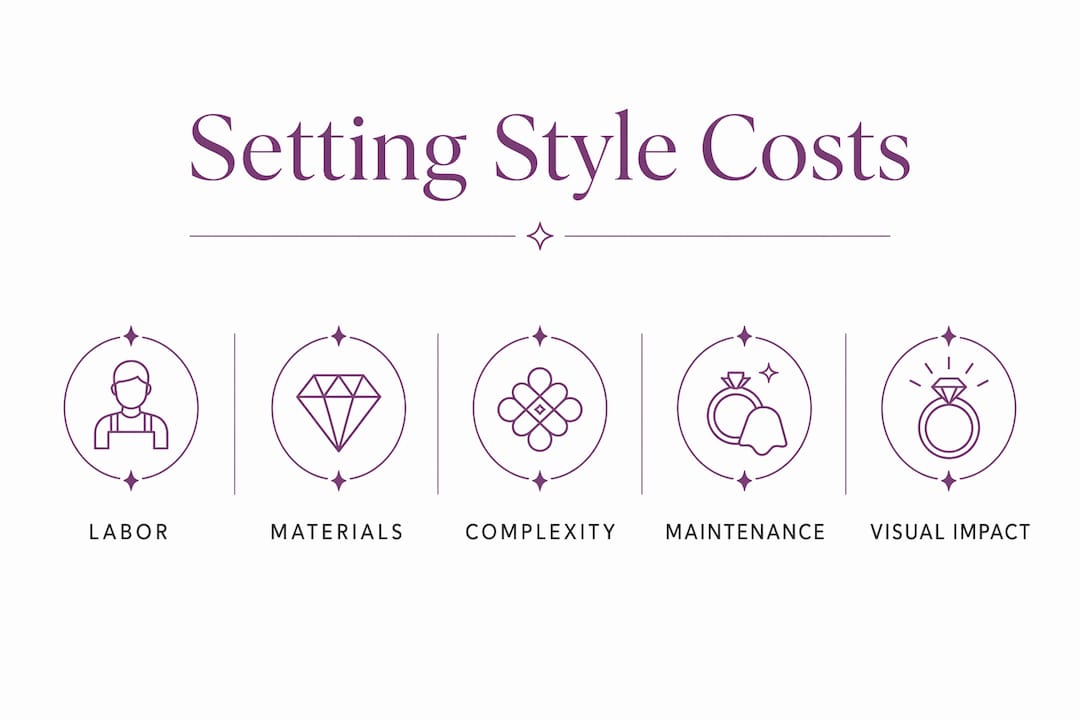
Labor is the most underestimated cost factor in jewelry pricing. Labor accounts for 20%–40% of the total price of a ring, and setting style is the primary variable that determines where in that range your piece lands.
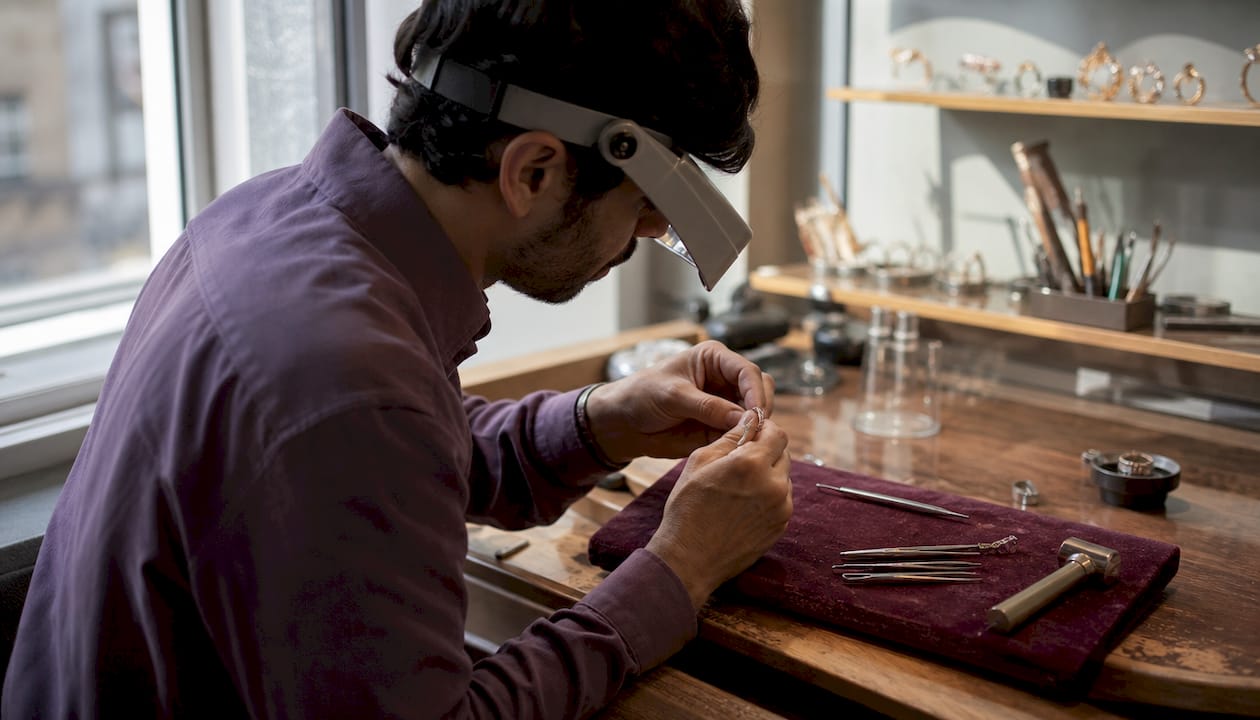
Simple settings like prong or bezel require a skilled jeweler, but the work is straightforward. A four-prong solitaire can be set in under an hour. Pavé work is a different matter entirely. Each tiny stone must be placed individually, often under magnification, with micro-tools. A full pavé band can require several hours of bench time for a single piece.
Setting complexity acts as a labor multiplier. Complex configurations can double or triple the labor hours compared to a simple solitaire. That multiplier applies on top of the metal cost and stone cost, not instead of them.
Manufacturing technique adds another layer. Hand-assembled settings cost 30%–50% more than cast or mass-produced equivalents. The extra cost reflects better finish quality and tighter tolerances, which matter for durability over time.
- Simple settings (prong, bezel): 1–2 hours of bench labor; lower total cost
- Mid-complexity settings (channel, tension): 2–4 hours; moderate cost increase
- High-complexity settings (pavé, halo, cluster): 4+ hours; significant cost premium
- Hand-assembled vs. cast: 30%–50% price difference for comparable designs
Pro Tip: When comparing prices across jewelers, ask specifically whether the setting is hand-assembled or cast. That single question explains a large portion of price differences you will see for visually similar pieces.
How can strategic setting choices optimize your jewelry budget?
The smartest buyers treat setting style as a budget tool, not just a style choice. The right setting can make a smaller, less expensive stone look significantly larger and more impressive.
Halo and cluster settings reduce center stone cost by 25%–40% while maintaining the same visual impact. The surrounding stones create the illusion of a larger center stone. A buyer who chooses a 0.75ct center stone in a halo setting often gets a result that looks equivalent to a 1.0ct solitaire, at a fraction of the price difference.
Here is a practical framework for making setting style work for your budget:
- Decide your visual priority first. Do you want maximum sparkle, a clean modern look, or vintage detail? Each preference points to a different setting family.
- Set a total budget, not a stone budget. Many buyers allocate most of their budget to the stone and treat the setting as an afterthought. Setting cost can equal or exceed stone cost in complex designs.
- Use halo or cluster settings to reduce stone size. Redirect the savings toward better metal quality or a higher-clarity stone.
- Choose simpler settings when stone quality matters most. A prong or bezel setting shows off a high-quality stone without competing with it visually.
- Factor in the Vals ring approach. Pieces designed with balanced setting complexity and stone quality deliver the best value per dollar spent.
| Setting style | Relative setting cost | Center stone size needed | Best use case |
|---|---|---|---|
| Prong solitaire | Low | Standard | Showcasing a high-quality single stone |
| Bezel | Low to moderate | Standard | Durability and clean aesthetics |
| Channel | Moderate | Smaller accent stones | Wedding bands and stackable rings |
| Halo | High | Smaller center stone | Maximum visual impact on a budget |
| Pavé | High | Standard or larger | All-over sparkle and luxury appearance |
The table makes one thing clear. Halo settings let you spend less on the center stone without sacrificing the wow factor. That trade-off is the single most powerful budget tool available to jewelry buyers.
What maintenance and long-term value do different settings require?
Setting style affects your wallet long after the purchase. Complex settings drive higher long-term maintenance costs because stones loosen and snag more frequently. Pavé bands, in particular, are prone to losing tiny accent stones over time. Each lost stone requires a jeweler to source a matching replacement and reset it, which adds up.
Simple settings like prong and bezel are far easier and cheaper to maintain. A prong check costs very little and takes minutes. A bezel setting rarely needs adjustment because the metal rim holds the stone on all sides.
The manufacturing technique matters here too. Hand-assembled settings last longer and hold stones more securely than mass-produced cast pieces. The 30%–50% upfront premium often pays for itself in reduced repair costs over five to ten years of daily wear.
- Pavé and multi-stone settings: Inspect every six months; budget for occasional stone replacement
- Halo settings: Check prongs on accent stones annually; center stone is generally secure
- Prong solitaire: Annual prong check; low repair frequency
- Bezel setting: Lowest maintenance of all common styles; metal rim rarely loosens
The true cost of a jewelry setting is not just what you pay at purchase. It includes every repair, inspection, and replacement over the life of the piece. A $200 setting that requires $50 in repairs every two years costs more over a decade than a $400 setting that never needs service.
Buyers who focus only on upfront price often underestimate this. A Horgen bracelet with a well-executed bezel setting, for example, delivers years of wear with minimal upkeep. That kind of long-term thinking separates a good purchase from a great one.
Key Takeaways
Setting style is the single biggest variable in jewelry pricing after the stone itself, because it controls labor hours, metal use, and long-term maintenance costs.
| Point | Details |
|---|---|
| Setting style drives price range | Basic prong settings cost $100–$300; pavé and halo settings reach $1,000–$3,000. |
| Labor is 20%–40% of total cost | Complex settings multiply bench labor hours and push total price significantly higher. |
| Halo settings save on stone cost | Surrounding accent stones reduce the required center stone size by 25%–40% without losing visual impact. |
| Maintenance cost varies by style | Pavé and multi-stone settings require more frequent inspection and repair than prong or bezel styles. |
| Hand assembly costs 30%–50% more | The premium reflects better durability and finish quality that reduces long-term repair needs. |
Why buyers get setting prices wrong more often than they expect
Most buyers walk into a jewelry purchase thinking the setting is a fixed, minor cost. It is neither. Setting price varies widely based on metal weight, stone count, and bench labor rates, none of which are standardized across jewelers.
What I find most buyers miss is the transparency problem. Outdated costing models inflate setting prices in many retail environments. A jeweler using old pricing tables may charge you a premium that no longer reflects actual metal or labor costs. Asking for an itemized breakdown of metal weight, stone count, and labor hours is not rude. It is the right question.
The other thing buyers overlook is the visual balance issue. A highly complex setting sometimes requires a larger center stone to look proportional. That hidden dependency can push your total budget well past your original plan. Knowing this upfront lets you choose a setting that works with your stone size, not against it.
My honest advice: pick your setting style before you pick your stone. The setting determines how much of your budget is left for the stone, not the other way around. Buyers who reverse that order often end up compromising on both.
— Ammar
Merijaan’s approach to setting style and price
Merijaan builds each piece with a clear philosophy: the setting should serve the stone and the buyer’s budget equally.
Every Merijaan design uses lab-grown moissanite, which delivers exceptional sparkle without the price premium of mined stones. That choice frees up more of your budget for the setting style you actually want. The Saint-Moritz Necklace is a strong example of this balance, pairing a thoughtfully crafted setting with a stone that performs beautifully at an honest price. For buyers drawn to halo-style designs, the Morcote halo ring shows exactly how setting complexity and stone quality can align without inflating the final cost. Merijaan also returns 100% of profits to the artisans who make each piece, so every purchase supports the people behind the craftsmanship.
FAQ
What is a jewelry setting style?
A jewelry setting style is the technique used to mount and secure a gemstone within a piece of jewelry. Common styles include prong, bezel, pavé, halo, and channel settings, each with different cost and durability profiles.
Why do pavé settings cost so much more than prong settings?
Pavé settings require a jeweler to individually place and secure dozens of tiny stones under magnification, which multiplies labor hours. Labor accounts for 20%–40% of total ring cost, and pavé work sits at the top of that range.
Can a halo setting save me money on the center stone?
Yes. Halo and cluster settings can reduce the required center stone size by 25%–40% while maintaining the same visual impact, making them one of the most effective budget tools in jewelry design.
How often do complex settings need maintenance?
Pavé and multi-stone settings should be inspected every six months because accent stones loosen with regular wear. Simple prong and bezel settings typically need only an annual check.
Does the manufacturing method affect setting quality?
Hand-assembled settings cost 30%–50% more than cast equivalents but offer better durability and finish quality. That upfront premium often reduces long-term repair costs significantly.

